
Experimental birch tar suppressed staphylococcus — ScienceDaily
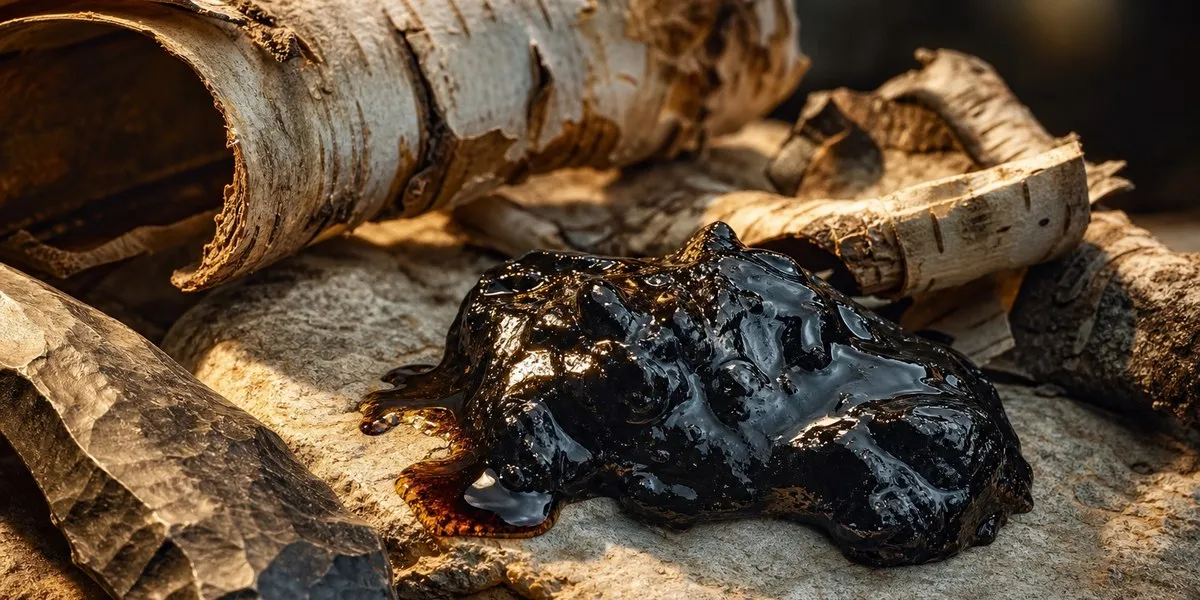
Experimentally produced birch tar, which Neanderthals may have used to attach stone tools to handles, suppressed the growth of Staphylococcus aureus, a bacterium often associated with wound infections. This was established by an international group of researchers from the University of Cologne, the University of Oxford, the University of Liège, and Cape Breton University, ScienceDaily reports.
Prehistoric methods recreated
Birch tar is a thick, sticky substance obtained by heating birch bark. Archaeologists have found traces of it at numerous Neanderthal sites in Europe, including on ancient stone tools. The material was primarily associated with the production of composite tools: it could have been used to secure stone blades or points to wooden handles.
The scientists produced tar from tree species that existed during the time of the Neanderthals, recreating several production methods reconstructed from archaeological evidence. In one of them, bark was heated in a closed underground pit with limited access to oxygen. Under such conditions, dry distillation occurred, producing substances from which tar could be collected.
More current news is available on the UA.News Telegram channel Telegram.
Another method involved burning birch bark near a hard surface, such as a stone. Resinous vapors condensed on the cooler surface, leaving a sticky deposit that could be collected.
Activity against bacteria
All obtained samples of birch tar were able to suppress the growth of S. aureus. The antibacterial activity proved independent of the specific tar-production method used in the experiment.
The results were published in the journal PLOS One. They do not prove that Neanderthals actually applied tar to wounds, but they show that a substance they were capable of producing had properties potentially useful for protecting wounds from infection. The researchers also warn that the ability to suppress bacteria under laboratory conditions does not mean that such a remedy is safe or effective for treating human wounds.




