
17.6-meter wave off Canada called likely the most extreme — ScienceAlert
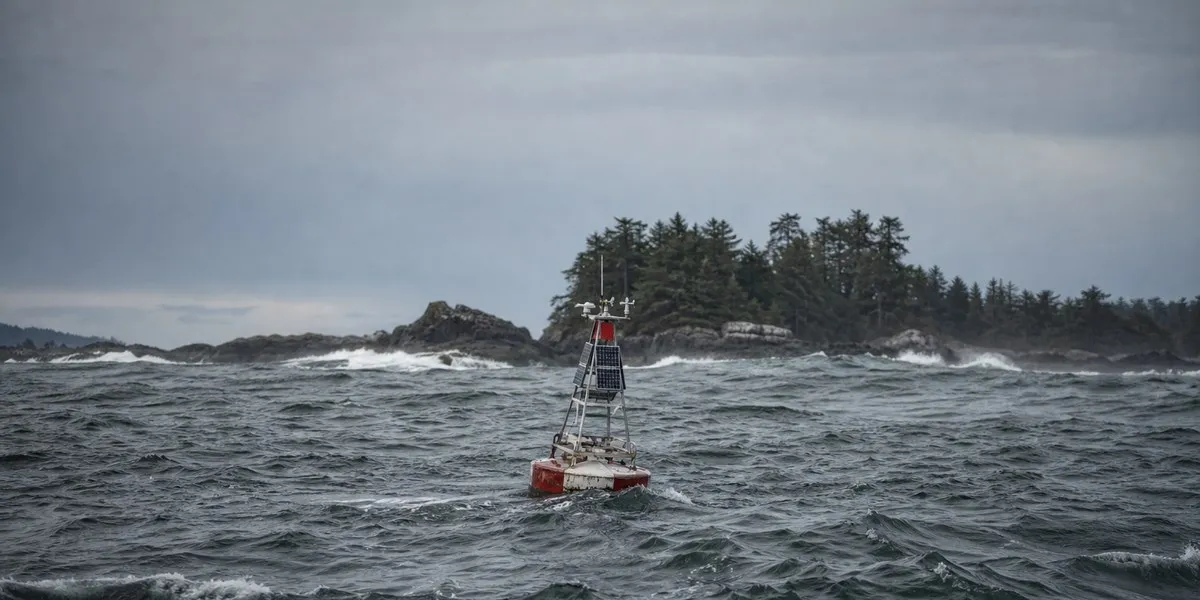
Near Ucluelet on the west coast of Vancouver Island in Canada, a buoy recorded a 17.6-meter wave on November 17, 2020. It is considered likely the most extreme recorded rogue wave in terms of the ratio of its height to the surrounding waves, ScienceAlert reports.
Scientists call rogue waves those that are more than twice as high as the waves around them. Near Ucluelet, the recorded wave was nearly three times higher than neighboring waves. In 2022, University of Victoria physicist Johannes Gemmrich noted that proportionally, it was likely the most extreme of all directly recorded waves.
Not the tallest, but the most anomalous
The wave near Ucluelet was not the tallest among known phenomena of this kind. In 1995, the 25.6-meter Draupner wave struck an oil platform about 160 kilometers off the coast of Norway. At the same time, the surrounding waves were about 12 meters high.
The event near Canada, researchers estimate, may occur roughly once every 1,300 years. It was recorded thanks to a buoy that MarineLabs deployed in the open sea along with dozens of other devices to study maritime hazards.
More current news is available on the UA.News Telegram channel Telegram.
Attempts to improve forecasting
Researchers are still determining the mechanisms behind the formation of rogue waves and ways to forecast them. They measure such waves in real time and model the impact of wind on their formation. MarineLabs CEO Scott Beatty said that the unpredictability and great force of these waves make them dangerous for maritime operations and people.
In February 2026, a team led by researchers from the University of South Florida published an analysis of buoy data and global wave models in Ocean Science. The authors concluded that the models systematically underestimate the extremeness of rare high waves. They were most often recorded in winter near the U.S. West Coast, while the North Atlantic Ocean ranked second in concentration.
The researchers also identified a possible sign for early warning: in about three-quarters of the analyzed rogue waves, a sharp drop in wave correlation was followed by a rapid recovery before the large wave appeared. The study of the wave near Ucluelet was published in Scientific Reports.




