
Scientists dyed a section of the ocean pink
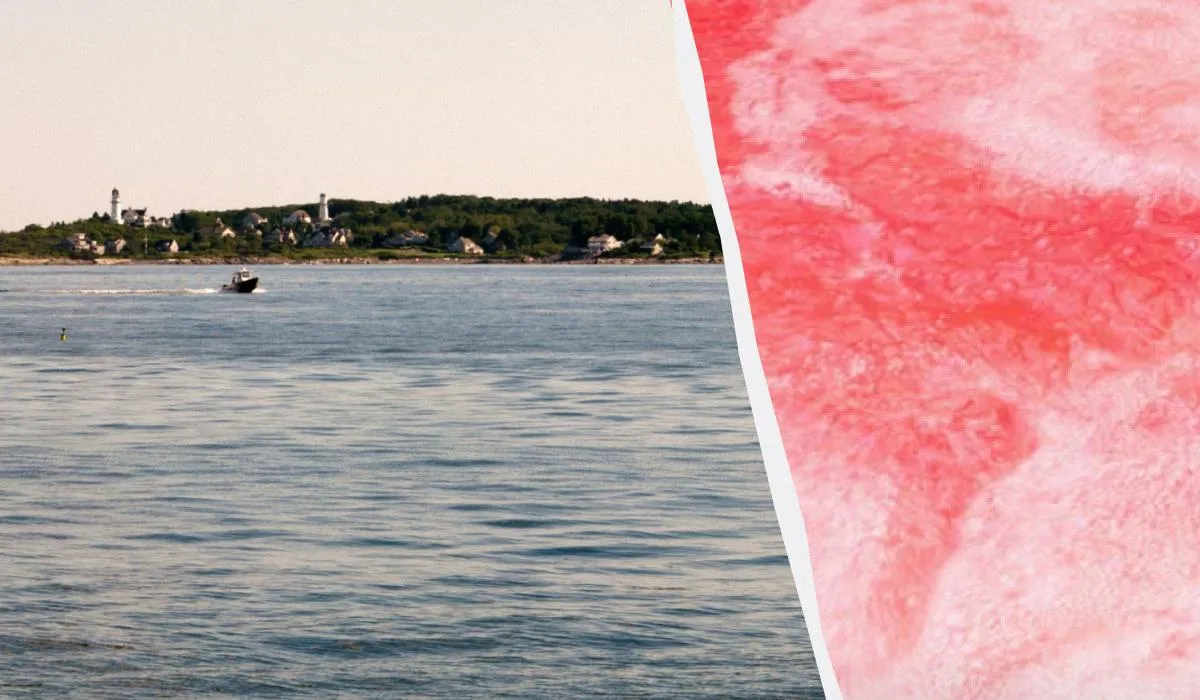
In the Gulf of Maine in the United States, scientists conducted an unusual experiment—they added a solution of alkali and a special pink dye to the water. The researchers were testing whether this could help the ocean absorb more carbon dioxide and slow the acidification of seawater.
Initial results showed that the experiment was fully controlled, and no noticeable impact on marine organisms was observed during the study. At the same time, scientists emphasize that it is still too early to say whether the technology is safe for large-scale use.
In the Gulf of Maine in the eastern United States, scientists conducted an unusual experiment that attracted a lot of attention. They added a solution of caustic soda to the seawater and, to track its spread, dyed a section of the ocean bright pink.
This was the first federally approved experiment in the U.S. to increase the alkalinity of the open ocean.
Why did the scientists do this?
The goal of the study was not to change the color of the ocean at all. The scientists wanted to test whether artificially increasing the alkalinity of seawater would help it absorb more carbon dioxide from the atmosphere. The ocean already naturally absorbs about a quarter of all CO₂ emissions produced by humanity. Researchers suggest that increasing alkalinity could make this process even more effective.
In addition, the technology has the potential to slow ocean acidification, which poses a serious threat to oysters, mollusks, corals, plankton, and other marine organisms that form shells or skeletons from calcium carbonate.
Why the Water Turned Pink
An unusual dye was used for the experiment. The water’s pink color came from a special dye called Rhodamine Water Tracer, which has long been used in scientific research to track the movement of water masses. At the same time, approximately 16,500 gallons of a highly purified caustic soda solution were gradually added to the sea over the course of six hours.
From a second research vessel, scientists continuously monitored the pH level, alkalinity, concentration of dissolved carbon dioxide, temperature, and salinity of the water. In addition, the movement of the pink plume was tracked using drones, satellites, and underwater vehicles.
Research leader Adam Subgas noted that the experiment demonstrated a high degree of control precision. “Preliminary results have shown that small releases can be designed, tracked, and controlled with high precision,” he said.
What the Initial Results Showed
The pink blot was tracked for about five days. Its movement almost perfectly matched the predictions of computer models, and the pH level and dye concentration returned to normal exactly when the researchers expected.
During the experiment, the scientists also analyzed the condition of marine organisms. According to preliminary data, no noticeable differences were found between the study area and the surrounding waters in terms of bacteria, phytoplankton, zooplankton, or fish and lobster larvae.
However, the project’s authors emphasize that this does not yet mean the method is completely safe. They have not yet assessed the potential impact on large marine animals, fisheries, and the ecosystem as a whole. That is why further research is needed before the technology can be applied on a large scale.
The experiment was tested for over a year
Permission to conduct the study was granted only after a lengthy federal review. Preparations took over a year and included two rounds of public consultations totaling 75 days. In addition, the project team held more than 50 meetings with representatives of fishing communities, Indigenous peoples, and government regulators.
Scientists emphasize that this is only the first step. The study has not yet provided a definitive answer as to whether increasing the ocean’s alkalinity could be an effective and safe way to combat climate change. That is why work on the project will continue. EcoNews reports on this.




