
Ukraine’s demographic crisis: catastrophic population decline amid war
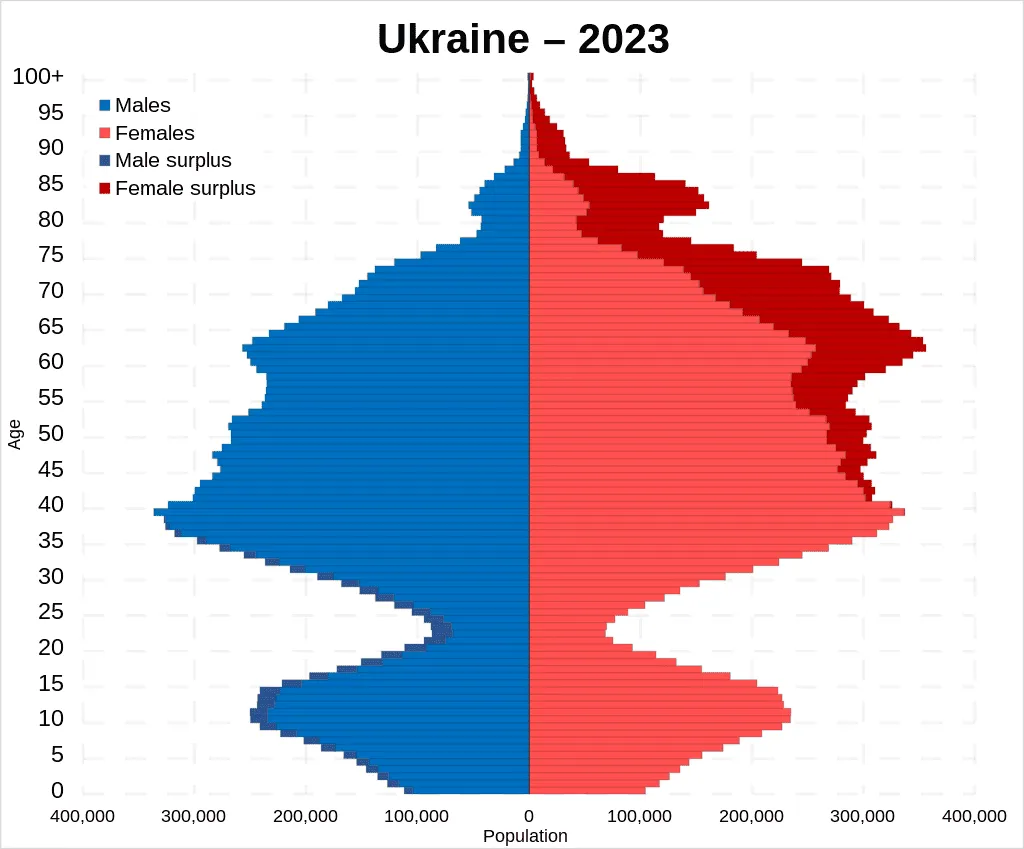
Ukraine’s population pyramid for 2023 is among the most depressing globally and does not yet include the full demographic damage caused by ongoing conflict. According to UN projections, Ukraine’s population could shrink to 15 million by the end of the century from 52 million in 1992; however, that forecast assumed hostilities would end in 2023.
The demographic peak in Ukraine occurred during the 1980s, marked by a baby boom and the predominance of the Russian language. The collapse of the Soviet Union in 1991 was a demographic catastrophe for Ukraine, with consequences for its population and statehood that in many ways surpassed even the famine and World War II. A brief recovery in birth rates was recorded in the early 2000s but was soon undermined by political crises such as the Orange Revolution, the Maidan protests, and the loss of control over Crimea and other territories.
Ukrainian demographers, in particular Ella Libanova from the Institute of Demography, emphasize the profound demographic crisis caused by the war, characterized by excess mortality, a shortage of births, and migration losses, leading to rapid population aging and decline. Key points: the crisis is not just a crisis, but a demographic catastrophe; maintaining the population at 30 million will require massive migration, and the return of migrants after the war will be minimal (about 30 people per 1,000).
This demographic trend raises serious concerns about Ukraine’s future, as the shrinking population threatens not only socio-economic stability but also national security. The anticipated continued population decline calls for urgent government strategies aimed at restoring the country’s demographic potential.


