
The Day of the Baptism of Kievan Rus' 2026: The History of the Holiday, When It Is Celebrated, and How Its Meaning Has Changed
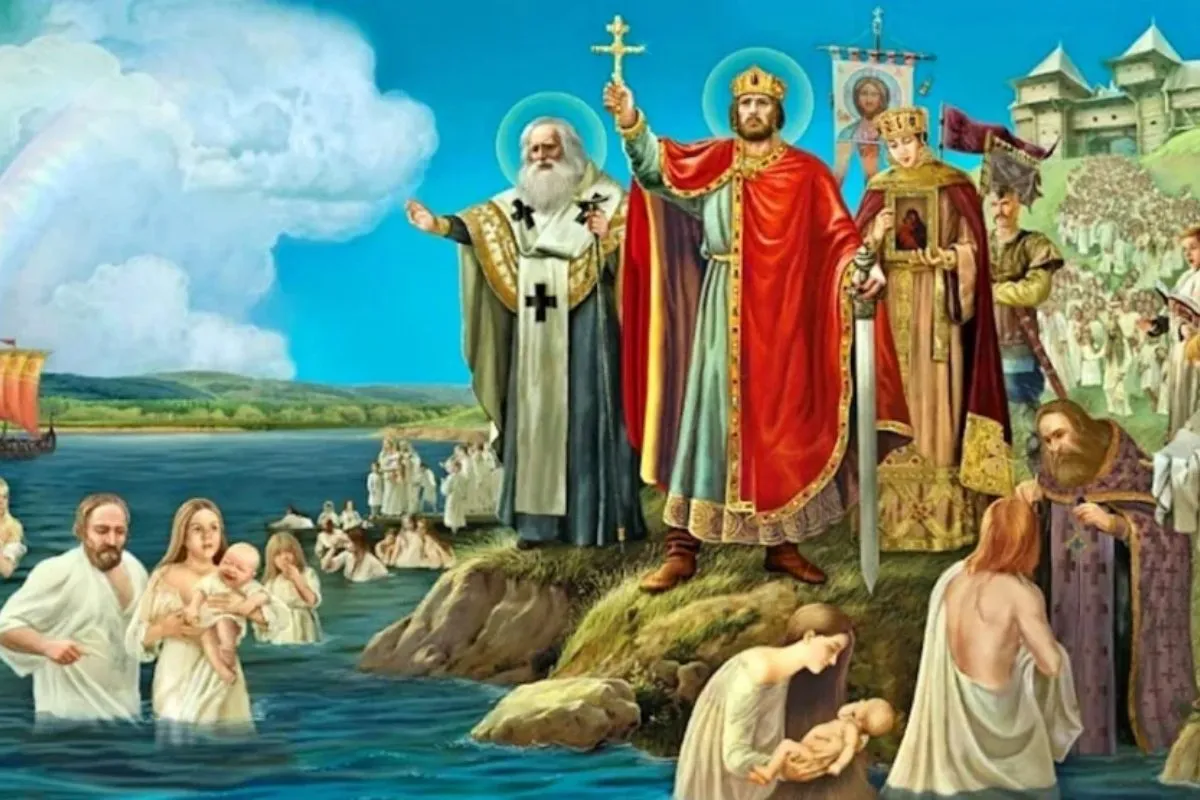
Every year on July 15, Ukraine celebrates the Day of the Baptism of Kievan Rus’—Ukraine. This is a national holiday dedicated to one of the most important events in Ukrainian history—the adoption of Christianity by Prince Volodymyr the Great in 988.
After the Orthodox Church of Ukraine and the Ukrainian Greek Catholic Church switched to the New Julian calendar, the date of the celebration changed. Whereas the Day of the Baptism of Kievan Rus’ used to fall on July 28, it is now officially observed on July 15—the day commemorating Prince Vladimir, Equal to the Apostles, according to the new church calendar.
UA.News explains how this national holiday came to be, when it began to be celebrated in Ukraine, why it has been the subject of political controversy for decades, and how perceptions of it are changing today.
On July 15, Ukraine celebrates two important national holidays at once
This year, on July 15, Ukrainians will celebrate not only the Day of the Baptism of Kievan Rus’—Ukraine but also Ukrainian Statehood Day. Both holidays now fall on the same date, as they are linked to Prince Volodymyr the Great and the history of the formation of the Ukrainian state.
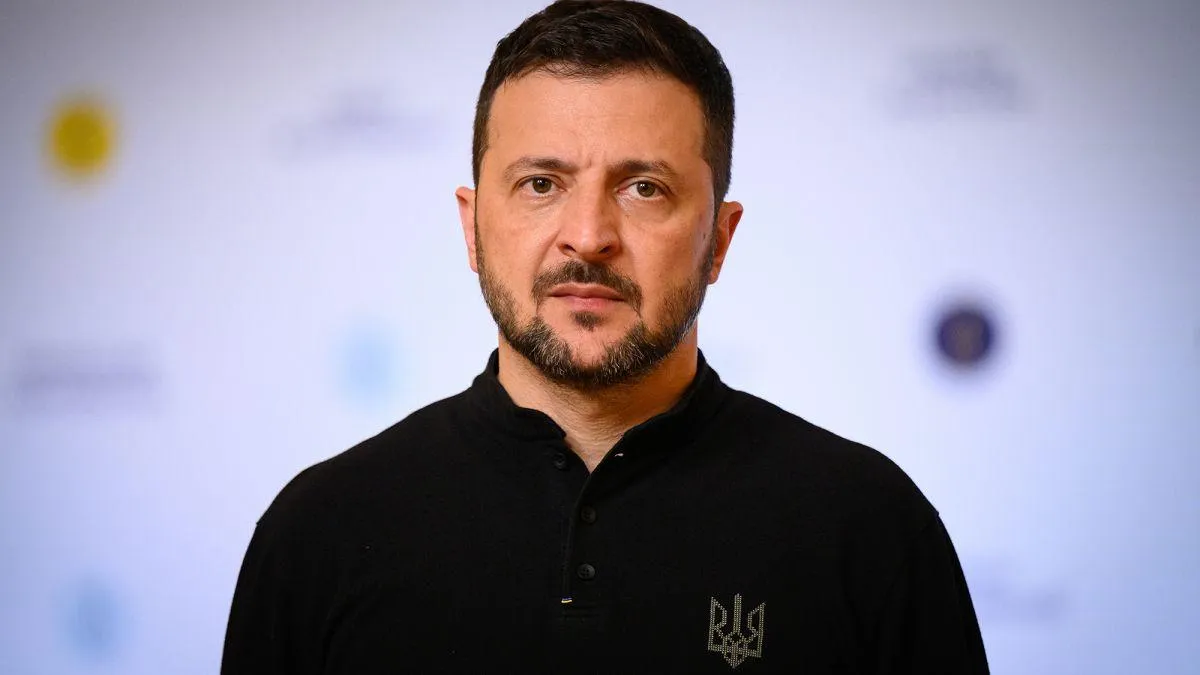
Ukrainian Statehood Day was established by a decree of President Volodymyr Zelenskyy in 2021. Its main purpose is to remind people that Ukrainian statehood has a history spanning more than a millennium and traces its origins specifically to Kievan Rus’, rather than to events of the 20th century.
That is why today this date symbolizes not only the Christianization of Rus’ but also the historical continuity of Ukrainian statehood—from Kyiv during the time of Prince Volodymyr to modern-day independent Ukraine.
The History of the Baptism of Kievan Rus’: What Happened in 988
The event now known as the Baptism of Kievan Rus’ is traditionally dated to 988. It was then that Prince Volodymyr the Great decided to make Christianity the state religion of Kievan Rus’.
According to the chronicles, prior to this, the prince had studied various religious doctrines and maintained diplomatic contacts with many states. Ultimately, he chose Byzantine-rite Christianity, a choice that significantly altered the state’s subsequent development.
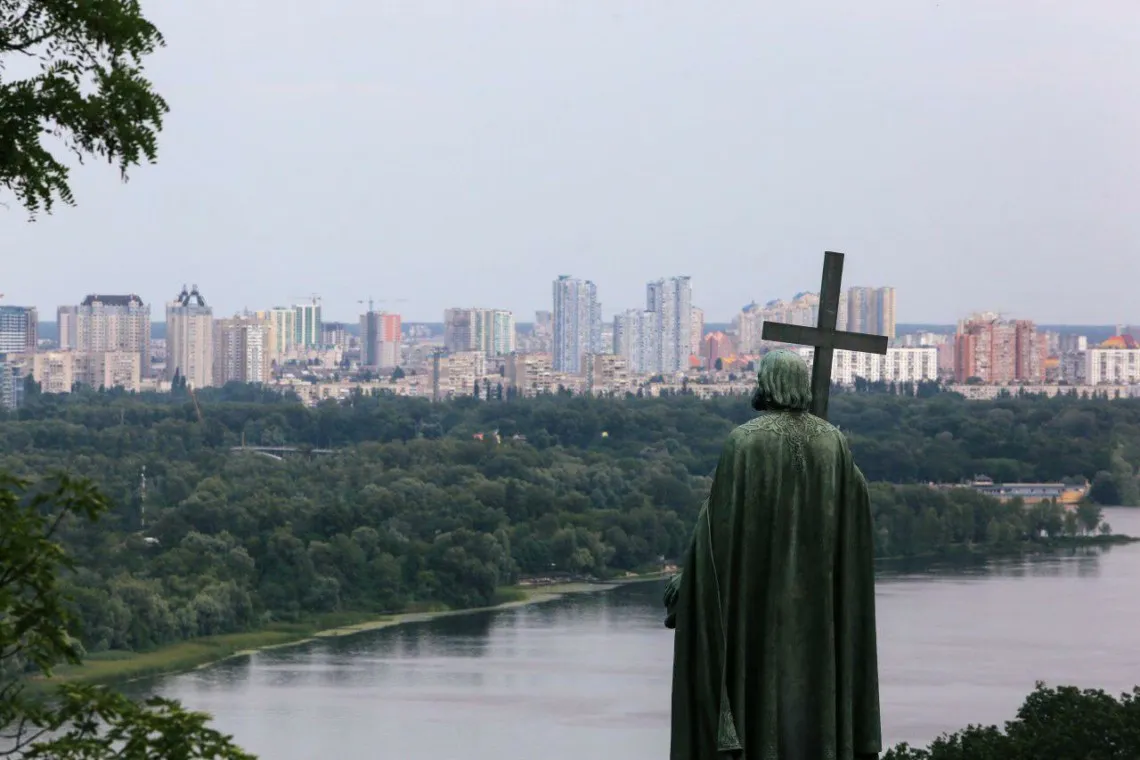
After his own baptism, Vladimir ordered the people of Kyiv to be baptized in the waters of the Dnieper and its tributary, the Pochayna. This event is considered the symbolic beginning of the Christianization of Rus’.
Historians note that this process did not occur all at once. In various regions, the new faith continued to spread for many decades, and in some places, even centuries. At the same time, Prince Volodymyr’s decision itself was a turning point that determined the civilizational direction of the state’s development.
The adoption of Christianity had far-reaching consequences. It contributed to the development of education, literacy, church construction, diplomatic relations with European states, and the formation of a new political culture in Kievan Rus’.
When the Feast of the Baptism of Kievan Rus’ Was Established in Ukraine
Although the historical event itself took place over a thousand years ago, the Day of the Baptism of Kievan Rus’ did not become a national holiday until the 21st century.
In 2008, during the celebration of the 1,020th anniversary of the Baptism of Rus’, the topic received special attention both in Ukraine and abroad. It was then that large-scale celebrations took place with the participation of government officials, churches, and international guests.
Shortly thereafter, Ukrainian President Viktor Yushchenko signed a decree establishing the Day of the Baptism of Kievan Rus’—Ukraine as a national commemorative holiday.
July 28 was chosen for the celebration—the day commemorating Saint Vladimir, Equal to the Apostles, according to the Julian calendar, which was then used by most Orthodox churches in Ukraine.
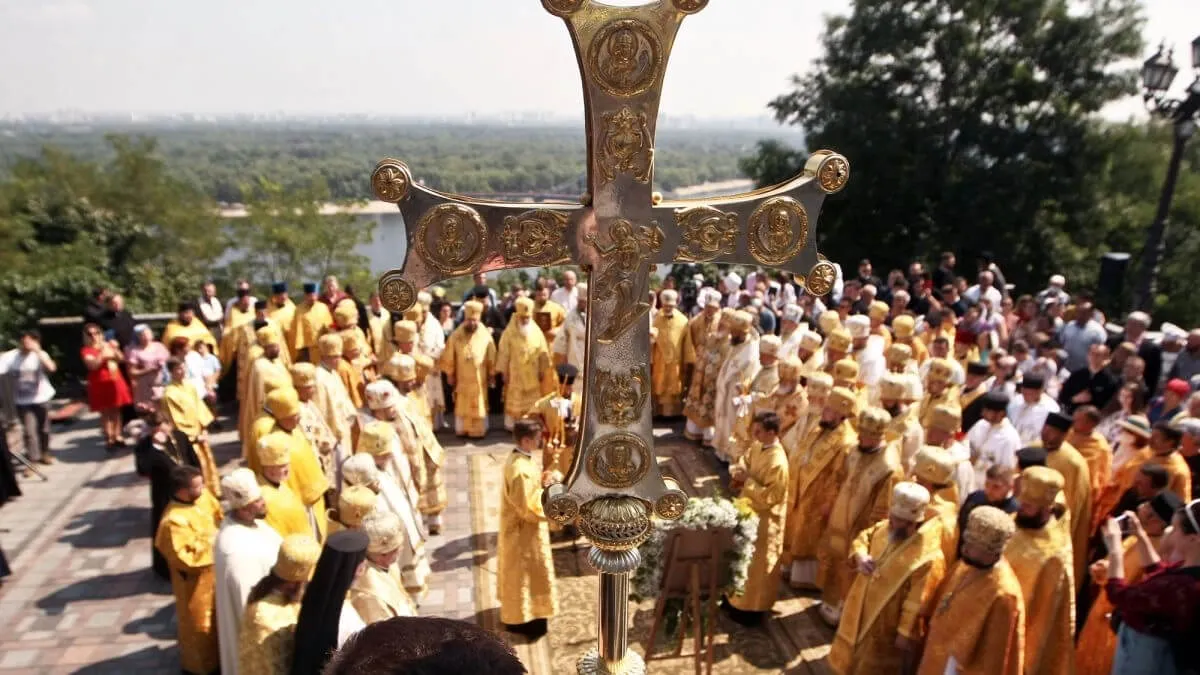
Since then, every year on this day, religious services, commemorative events, flower-laying ceremonies at monuments to Prince Vladimir, conferences, and historical exhibitions have been held.
Why the Day of the Baptism of Kievan Rus’ is Now Celebrated on July 15
In 2023, the Orthodox Church of Ukraine and the Ukrainian Greek Catholic Church switched to the New Julian calendar.
As a result, most fixed church holidays were moved up by 13 days. Along with the day commemorating Prince Volodymyr, the date of the national holiday also changed.
That same year, the Verkhovna Rada made the necessary amendments to the legislation, and from now on, the Day of the Baptism of Kievan Rus’—Ukraine is officially celebrated on July 15.
In this way, the state synchronized the official date of the celebration with the new church calendar, which is now used by most Ukrainian Orthodox communities.
How the Day of the Baptism of Kievan Rus’ Became Part of the Information War Between Ukraine and Russia
After the collapse of the USSR, the history of Kievan Rus’ gradually became not only a subject of academic debate but also a political tool. This issue became particularly acute after the start of Russian aggression against Ukraine in 2014.
How Russia Uses This History
For years, the Russian government has been promoting the idea that modern Russia is the primary heir to Kievan Rus’. One of the main proponents of this concept is dictator Vladimir Putin.

In July 2021, he published a policy paper titled “On the Historical Unity of Russians and Ukrainians,” in which he referred to the Baptism of Rus’ the “common spiritual cradle” of Russians, Ukrainians, and Belarusians and effectively denied the existence of a distinct Ukrainian historical tradition.
After the start of the full-scale invasion, this rhetoric only intensified. The Kremlin regularly uses the image of Prince Vladimir, Kievan Rus’, and the Baptism of Rus’ to promote the concept of the so-called “Russian World,” which is intended to justify Russia’s claims to Ukrainian territories and historical heritage.
The Russian Orthodox Church plays an equally important role in this. Its leader, Patriarch Kirill, has repeatedly stated that Russia, Ukraine, and Belarus are supposedly united by “one holy Rus’,” and he has used the events of 988 as an argument in favor of the spiritual unity of the three states.
How Ukraine Responds to These Historical Narratives
Ukraine emphasizes that Kievan Rus’ emerged with its center in Kyiv, whereas Moscow appeared much later. This is why Ukrainian historians speak of the continuity of Ukrainian statehood from Rus’ to modern Ukraine.
It was this very idea that became one of the reasons for the establishment of Ukrainian Statehood Day in 2021. In introducing the new holiday, President Volodymyr Zelenskyy emphasized that Ukraine’s state-building tradition spans over a thousand years and begins not with the declaration of independence in 1991, but with Kievan Rus’.
Following the granting of the Tomos and the establishment of the Orthodox Church of Ukraine, this historical lineage has also taken on a religious dimension. The Ukrainian state increasingly emphasizes that Prince Volodymyr, Kyiv, and the Baptism of Rus’ are an integral part of Ukrainian history and culture.
Amid a full-scale war, this holiday has taken on new symbolism. It is increasingly associated with the defense of Ukraine’s own history, cultural memory, and the right to independently define its identity without externally imposed interpretations.
That is why the Day of the Baptism of Kievan Rus’—Ukraine—is today not only a commemoration of the events of 988 but also a reminder of the historical continuity of the Ukrainian state, which has its origins in Kyiv and continues as the independent Ukraine of the 21st century.


