
Up to 12 years in prison: Parliament toughens penalties for bank card fraud
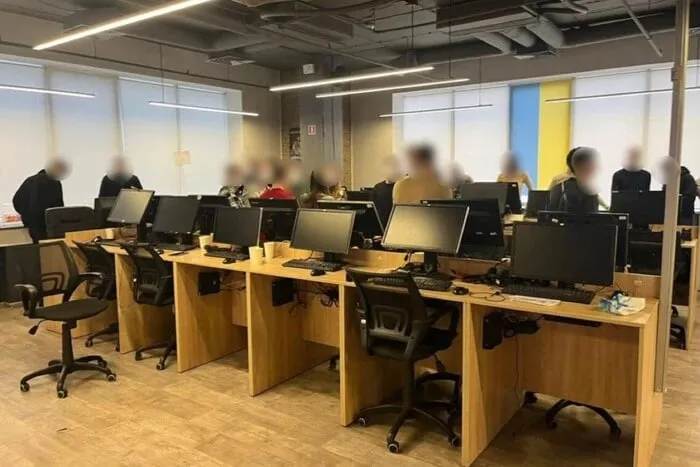
A specialized committee of the Verkhovna Rada reviewed presidential bills No. 16013 and No. 16014, which provide for a significant increase in penalties for bank fraud.
In the first six months of 2026, the State Financial Monitoring Service identified more than 12,000 people linked to money-laundering schemes. The total volume of financial transactions involving these individuals exceeded 18.5 billion hryvnias. This was reported during a meeting of the Verkhovna Rada Committee on Law Enforcement, where draft laws regarding illegal transactions involving bank accounts and the operations of fraudulent call centers were considered.
These are bills No. 16013 and No. 16014, submitted by President Volodymyr Zelenskyy as urgent. The first concerns liability for illegal actions involving payment instruments and bank accounts. The second provides for stricter liability for the organization of fraudulent electronic communications organizations, which often operate as call centers.
Bill No. 16013 aims to combat the use of so-called “drops”—people whose bank cards or access to accounts are used to carry out illegal transactions. The bill proposes establishing liability, in particular, for the unlawful transfer of a payment instrument or access to a bank or payment account. It also addresses the receipt or possession of another person’s payment instruments for the purpose of committing fraud or other offenses.
During the discussion, lawmakers specifically raised the issue of bona fide bank account users. Committee members emphasized that liability should apply specifically to the illegal transfer of a card or access to an account for such purposes. At the same time, the account holder may issue an additional payment card for family members or other individuals.
Another initiative—Bill No. 16014—addresses fraudulent call centers. As explained during the meeting, their operators may pose as employees of law enforcement or government agencies. Using electronic communications, they trick people into revealing personal data, banking information, payment card details, and authentication codes. Pensioners, military personnel, their family members, and internally displaced persons are particularly likely to fall victim to these schemes.
Lawmakers noted that it is currently difficult for law enforcement to hold the organizers of such schemes accountable, as it is necessary to prove a specific case of fraud and embezzlement. The proposed amendments would allow for punishment for the mere creation and operation of such a fraudulent organization.
The bill proposes a sentence of seven to 12 years of imprisonment with confiscation of property for establishing or leading such an organization. For participating in or aiding the organization’s activities, the penalty is five to 10 years; for intentionally recruiting new members, three to five years.
For public officials who use their position to facilitate such schemes, the bill proposes a prison term of eight to 12 years, confiscation of property, and a ban on holding certain positions for up to three years.
Separately, there is a provision allowing a member of such an organization to be exempt from criminal liability. To qualify, the individual must, prior to being notified of suspicion, voluntarily inform law enforcement of the organization’s activities and actively assist in exposing the organizers and shutting down the scheme. This option will not apply to individuals who founded or led the organization.
During the session, attention was also drawn to a change in the operating format of fraudulent call centers. Whereas law enforcement previously uncovered large offices housing 50–60 people, such groups are now increasingly splitting into small cells operating out of apartments, with only a few people working in each.
A debate has arisen regarding Bill No. 16014, as parliament is already considering Bill No. 10190 on liability for electronic communications fraud. It was introduced in October 2023, and on May 22, 2024, the Verkhovna Rada adopted the document in principle. It is currently being prepared for its second reading.
Some deputies stated that the new presidential initiative essentially duplicates the parliamentary committee’s work over many years. Other participants in the session supported the need to adopt new provisions, proposing to align them with the current Criminal Code. In particular, they discussed replacing the phrase “fraudulent criminal organization” with “fraudulent organized group.” Representatives of the Cyber Police and the National Police stated that they support the revised version of Bill No. 16014.
This was reported with reference to an online broadcast.
Billions in Call Centers: Will Zelenskyy’s Law Break Up Fraud Networks?
Photo: Fraudulent call centers were exposed in Dnipro; computers and weapons were seized.


