The structure of the Ukrainian economy has changed significantly as a result of the pandemic and the war.
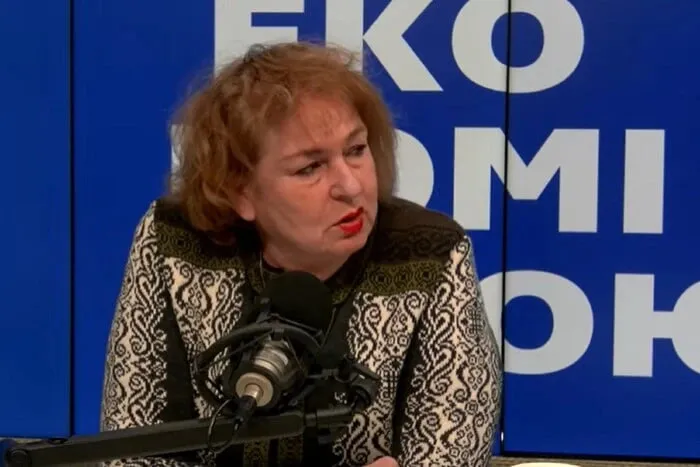
Ella Libanova, Director of the Institute of Demography and Social Studies at the National Academy of Sciences of Ukraine, notes that the role of the manufacturing sector is growing and emphasizes the need to change attitudes toward so-called “non-office” work.
Analyst Ella Libanova spoke about the transformation of the Ukrainian economy under the influence of the pandemic and the war, as well as new challenges in the labor market. According to her, today’s economic realities cannot be compared to those that existed before 2020.
“The economy of 2025, the economy of 2019, and the pre-pandemic economy are different things. There’s no doubt about that. Moreover, I would say that the structure has changed. Well, let’s put it this way: we need fewer sales managers today,” Ella Libanova noted.
According to Libanova, manufacturing is now coming to the forefront. The expert considers this a positive sign for the country’s stability.
“There is a greater focus on the manufacturing sector, the so-called real sector of the economy. And that’s good; from my point of view, it’s good because, first COVID, then the war showed that the prospects are better—not just for survival, but for the development of those countries where there is the broadest possible production cycle,” the analyst noted.
At the same time, Libanova explained what employers are currently looking for. According to her, the institute’s research revealed an interesting gap between employers’ expectations and the aspirations of employees themselves.
“We conducted an interesting study where we spoke with employers and employees. The questions asked were somewhat different, but we found that employers really need teamwork skills, while employees want to develop leadership skills,” the expert noted.
According to the analyst, one of the biggest challenges for Ukraine remains the prejudiced attitude toward blue-collar professions. Despite the fact that the economy needs specialists in the real sector, young people still overwhelmingly seek degrees to work in offices.
“People seek higher education. They believe that with a college degree, they’re more likely to become leaders in an office setting. And the second thing is that we’ve inherited from not even our parents, but our great-grandparents, the idea that jobs that aren’t, as they say, office jobs, are dirty work. And that’s what we need to break,” Ella Libanova concluded.
As a reminder, thelabor market has found itself in a difficult situation due to AI.
Top 10 professions of the future: what will be trending in 2026–2035.
How artificial intelligence is changing the labor market: even Stanford graduates are struggling to find jobs.