
Artem Shilo, a suspect in UA.News investigations, is in court: The High Anti-Corruption Court has scheduled the first hearing in the case involving the embezzlement of millions from Ukrainian Railways
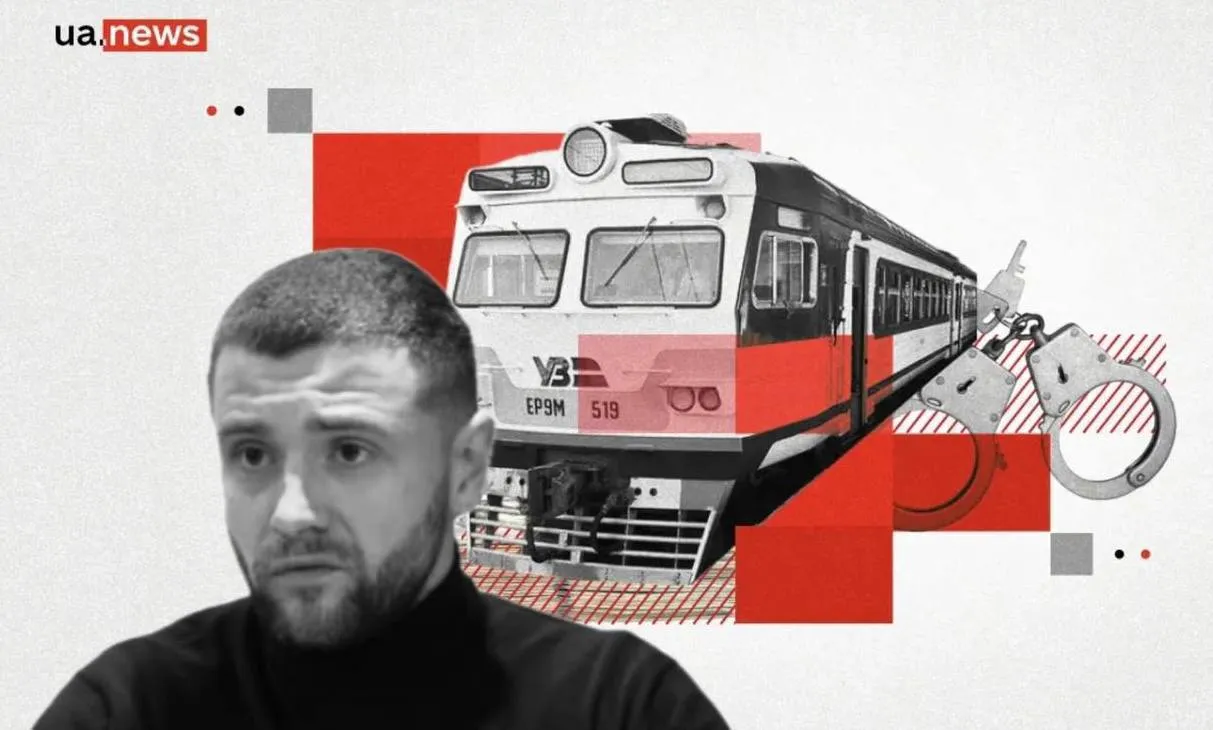
The scandalous case involving Ukrzaliznytsia’s “back office” has moved to the court phase: Artem Shilo, a former adviser to the Office of the President whom investigators believe to be the leader of an organized crime group, will appear before the High Anti-Corruption Court. Along with three associates, he is accused of embezzling 240 million hryvnias through the procurement of cables and transformers and laundering over 175 million hryvnias through luxury real estate.
The 240-Million-Hryvnia Scheme: How Shilo’s “Back Office” Operated at Ukrzaliznytsia
As established by the investigation conducted by NABU and the SAPO, the organized group led by Artem Shil operated through two main schemes, effectively turning into an informal “back office” for Ukrzaliznytsia that controlled procurement in exchange for kickbacks:
- The cable scheme (losses of 140 million UAH): During 2021–2022, Shil’s group created conditions for companies controlled by former MP Viktor Bondar’s group to win tenders; these companies supplied cable and wire products at significantly inflated prices.
- Transformer scheme (losses of 100 million UAH): In 2022–2024, the “back office” facilitated the procurement of power transformers through a company controlled by a Belarusian citizen with ties to the Russian Federation. To weed out competitors with cheaper offers, Shilo, while serving as first deputy head of an SBU department, personally arranged for an official letter to be sent to Ukrzaliznytsia regarding an alleged “threat to national security.”
Beauty salons and luxury real estate: how the funds were laundered
In total, through criminal schemes, the group’s leader laundered over 175 million hryvnias (the initial suspicion cited 155 million hryvnias). The money was funneled through front individuals and legal entities under the guise of “payments for beauty salon services,” after which luxury penthouses, apartments, houses, and commercial real estate were purchased for individuals under their control.
As part of the investigation, law enforcement officials secured the seizure of the suspects’ property and assets totaling over 1.4 billion hryvnias.
Shila was dismissed from his position as head of the SBU’s Main Directorate for Counterintelligence Protection of State Interests in the Sphere of Economic Security in the spring of 2024—after charges were filed against him. In addition to corruption at Ukrzaliznytsia, the media linked the official’s name to pressure on businesses and the easing of detention conditions in pretrial detention centers for Ihor Kolomoyskyi.
The Shadow Bosses of “Ukrzaliznytsia”: A Consortium of a Security Official, a Member of Parliament, and a Businessman
According to a UA.News investigation, a coalition of politicians, security services, and front companies was behind the large-scale embezzlement schemes at Ukrzaliznytsia. Three individuals served as the architects of this corruption empire:
- Artem Shilo (a former SBU employee and former member of the Presidential Office)—the “gray cardinal” and head of the “back office,” who used his influence within the SBU to ensure the elimination of competitors;
- Viktor Bondar (Member of Parliament, former Minister of Transport)—responsible for providing political cover and overseeing the operations of controlled companies (including the “Ukrkabel” plant);
- Volodymyr Kotlyar (businessman)—an intermediary responsible for registering shell companies, handling documentation, and distributing financial flows.
Profits were distributed clearly: two-thirds went to Kotlyar’s companies, and one-third to Bondar’s organization. In total, at least 16 people were involved in the schemes: Ukrzaliznytsia officials, lawyers, accountants, as well as those in his inner circle (for example, the mother of People’s Deputy Halyna Bondar, in whose name a whole series of specialized enterprises were registered).
Who else is mentioned in the case files
During the court hearing on pretrial measures, prosecutors presented transcripts of phone conversations and testimony that mentioned high-ranking officials at the very top:
- Leadership of the Office of the President: The case files contain remarks stating that Shilo “goes to Tatarov with Yermak,” and MP Bondar himself complained that he had been ordered to resolve all matters involving the Office of the President exclusively through Shilo.
- Former officials and Ukrzaliznytsia executives: In 2019, MP Bondar appealed to then-Minister of Infrastructure Vladyslav Krykliy with a request to cancel open tenders for cable procurement for Ukrzaliznytsia. The former head of Ukrzaliznytsia, Oleksandr Kamyshin, was also mentioned in the context of these connections.
How the Schemes Worked: 5–7% Kickbacks and a “Belarusian” Transformer
The investigation established that the Bondar-Kotlyar group had been working for Ukrzaliznytsia since 2019, and in the fall of 2021, Shilo’s “back office” joined them. The parties agreed: Shilo, using his influence within the Security Service of Ukraine (SBU), would guarantee wins in tenders at prices inflated by 30–60%, and Bondar would pay him a kickback of 5–7% of the contract amounts.
In the case of the transformers, a front company controlled by a Belarusian citizen with ties to Russia was brought in. It purchased equipment in Uzbekistan and resold it to Ukrzaliznytsia at double the markup. Shilo personally blocked competitors offering cheaper products by citing a letter from the Security Service of Ukraine (SBU) regarding “threats to national security”—while at the same time completely “overlooking” the Russian-Belarusian connection to the supplier under his control.
Preventive Measures and Legal Charges
Artem Shilo: suspected under Part 3 of Article 27, Part 5 of Article 191 (organizing embezzlement on an especially large scale), and Part 1 of Article 263 (illegal handling of weapons). After his arrest in April 2024, he was released on bail of 30 million hryvnias.
Viktor Bondar: suspected of violating Part 3 of Article 27 and Part 5 of Article 191 of the Criminal Code of Ukraine. In February 2025, he was remanded in custody with bail set at 100 million UAH.
Volodymyr Kotlyar: faces similar charges (Part 3 of Article 27, Part 5 of Article 191) and a pretrial detention order with bail set at 100 million UAH.
Dubai apartments, a “sham” divorce, and mobilization: how the Shil case was stalled
The NABU and SAPO completed their pre-trial investigation into the “Ukrzaliznytsia” case back in the spring of 2025, but the process of holding the suspects accountable was procedurally delayed. This may have been to allow the suspects to minimize the legal consequences and save their assets. For example, the transfer of assets to Dubai: according to investigations by journalists (in particular, the “Schemes” project), between December 2021 and June 2022, Shila’s wife, Iryna, purchased 9 propertieselite real estate properties (8 apartments and a hotel room in the Jumeirah Gate Tower) in Dubai for a total of approximately $4.3 million. While investigative actions and procedural measures were ongoing, these properties were completely resold and the funds were transferred out.
The suspect’s ex-wife left Ukraine, and the assets were transferred to third parties. Experts assessed the sham divorce and the registration of beauty salons and hotel rooms as a premeditated scheme to launder and conceal funds diverted from government procurement contracts.
Additionally, reports circulated in the media about Shil’s intentions to enlist in the Armed Forces of Ukraine. Under current law, the mobilization of a defendant is grounds for suspending legal proceedings against him, which allows the sentencing process to be “put on hold” and helps to dampen public attention surrounding the case.
Despite his high-profile arrest in the spring of 2024 and the revelation of losses totaling over 240 million hryvnias, Shilo was released on bail of 30 million hryvnias.
The BEB’s Shadow Supervisor: “Mindich’s Files” and Shilo’s Coercive Influence
In parallel with the investigation into “Ukrzaliznytsia,” Artem Shilo’s name came to the forefront in another high-profile scandal related to the unofficial control of the Bureau of Economic Security (BES).
According to Yaroslav Zheleznyak, a member of parliament and deputy chairman of the Verkhovna Rada’s Finance and Tax Committee, Shilo acted as an “external supervisor” of the BEB and coordinated the preparation of analytical materials for third parties. The MP informed the public that during searches of businessman Timur Mindich’s office, dossiers containing classified information were discovered. In terms of form, structure, and metadata, these “files” fully corresponded to the standards of the BEB’s analytical department under its previous leadership. The MP’s investigation indicates that Shilo, while holding concurrent positions at the SBU and the Office of the President, used the state’s law enforcement and analytical agencies as a private tool for gathering compromising information and exerting pressure.
New Allegations: Surveillance of Journalists, Dossiers on NABU, and the “Midas” Case
In early 2026, a new high-profile scandal erupted surrounding Artem Shilo. Based on materials from the Temporary Investigative Commission (TIC) of the Verkhovna Rada and appeals from lawmakers, law enforcement launched an investigation into his alleged role as the coordinator of illegal surveillance of journalists and the collection of confidential data (Article 163 of the Criminal Code of Ukraine—violation of the secrecy of correspondence, punishable by up to 7 years in prison).
According to the “NABU tapes,” Shilo is identified as the organizer of a collection of private dossiers discovered in business circles. A total of 527 files were recorded, containing confidential information on 15 NABU detectives (who were investigating corruption in the energy sector), as well as analytical data on well-known journalists and public figures.
Among the journalists and investigators on whom information—including details about their private lives and professional activities—was collected are Yuriy Butusov, Yuriy Nikolov, Marina Ansiforova, Volodymyr Fedorin, Stanislav Rechynskyi, Olga Chaika, Andriy Kulikov, as well as the late Volodymyr Mostovyi and Oleksiy Shalayskyi.
NABU detectives investigated Shil’s involvement not only in surveillance but also in abuse of official position (Article 364 of the Criminal Code of Ukraine) and the unauthorized disclosure of restricted-access information from the state apparatus’s automated systems.
At the same time, the Appeals Chamber of the High Anti-Corruption Court upheld the 9-year prison sentence with confiscation of property for attorney Artem Shil (who shares the defendant’s full name or is a close associate of his) and officials of the State Fiscal Service in the case involving the extortion of a $36,000 bribe.
Fintech Under the “Cover”: How Shil’s Deputies Covered Up $1 Million in Fraud at 4bill
As UA.News investigators discovered, the influence of Artem Shil and his power group extended to the electronic payment systems market as well. According to materials from the Main Investigative Directorate of the National Police (criminal cases No. 757/7812/24-k and No. 12024000000000202), law enforcement officials blocked an investigation into large-scale corporate raiding and fraud to benefit fintech entities under their control.
The essence of the financial scheme: In 2023, an internal audit of the international payment system 4bill exposed top manager Dmytro Rukin and his accomplices in the embezzlement of over $1 million. The perpetrators siphoned off working capital, manipulated merchant fees, transferred money to relatives’ cards, and subsequently carried out a hostile takeover of a regional branch, launching their own brand (LaFinteca) using the stolen assets and creating a network of shell companies in Spain and Peru.
Despite criminal cases being filed under Parts 3 and 4 of Article 190 of the Criminal Code of Ukraine (fraud on an especially large scale), the suspects managed to evade punishment. When representatives of the victimized company attempted to block the activities of the suspects’ accomplices (the CrossPay/Corytech group), Shil’s associates intervened. According to sources at 4bill, Shil’s deputy, named Oleksiy, directly contacted the management of the victimized company, demanding that they “leave CrossPay alone,” since their business is under the personal “protection” and patronage of the SBU’s counterintelligence department.
NSDC sanctions as a tool for business showdowns: cleaning up the gambling market
In addition to direct pressure through criminal proceedings and “back offices,” the activities of Artem Shil and his associates involved the use of the highest-level state mechanisms, in particular decisions by the National Security and Defense Council (NSDC).
According to estimates by investigative journalists (notably Serhiy Lyamets) and an analysis of the case involving People’s Deputy Anna Skorokhod, the sanctions mechanism may have served as a lever to eliminate competitors and redistribute assets: In April 2025, Alona Shevtsova, a former co-owner of the liquidated “iBox Bank,” was placed under NSDC sanctions. Experts assess this move with 95% certainty as a planned operation to remove her from the gambling business in the interests of a group linked to Timur Mindich and Artem Shil.
The 215 million in restitution, agreements with VAKS, and the wife’s “backroom” schemes
In parallel with the court proceedings in the criminal cases, anti-corruption agencies and the corporate security department of JSC “Ukrzaliznytsia” took measures to recover embezzled state funds:
According to the SAPO, during 2025, 215 million hryvnias were transferred from private companies and individuals to the accounts of “Ukrzaliznytsia” and the state budget as compensation for damages caused by the “back-office” operations. In total, since 2023, thanks to the efforts of the National Anti-Corruption Bureau of Ukraine (NABU), the SAP, and Ukrzaliznytsia, over 336 million hryvnias have been recovered, of which nearly 120 million hryvnias were allocated to the needs of the Armed Forces of Ukraine.
In June 2025, the High Anti-Corruption Court (HACC) approved two plea agreements with defendants in the case of fraud at Ukrzaliznytsia—Denis Khomyakov, a representative of the private firm “Uzelektro,” Denis Khomyakov and the director of the same company, Natalia Koltasheva.
In addition, the investigation established that a portion of the more than 150 million hryvnias obtained from corrupt procurement deals, was laundered under the guise of payments for services provided by the “365 STUDIO” chain of beauty salons (owned by Shil’s wife) and was also used to purchase luxury real estate in the Lypky neighborhood of Kyiv.
Special Confiscation: The Fight for $4.3 Million in Dubai Assets
A separate track in countering the consequences of Artem Shil’s group’s activities involves the legal efforts of anti-corruption agencies to recover and dispose of assets transferred abroad.
According to NABU’s responses to inquiries from UA.News journalists, the suspect’s luxury assets abroad are subject to special confiscation measures:
These include nine luxury real estate properties in Dubai (UAE) with a total value of approximately $4.3 million (eight apartments and a hotel room in the Jumeirah Gate Tower 2 complex), which were registered in the name of Shil’s then-wife, Irina, between 2021 and 2022.
Although attempts were made between 2022 and 2024 to quickly resell this property to complicate the seizure process, NABU and the SAP, using international tools and leaked data (notably from OCCRP), traced the original source of these funds to corrupt schemes involving “Ukrzaliznytsia” tenders.
The Shil case was spun off into separate proceedings: the perpetrators were in court, while the mastermind awaited the end of summer
In May 2026, the Specialized Anti-Corruption Prosecutor’s Office (SAPO), in response to a request from UA.News, officially confirmed that the case materials concerning Artem Shil had been separated into a separate criminal proceeding. At that time, the key suspect was in the process of reviewing the case materials:
- Back in February 2025, SAP prosecutor Vadym Kedruk decided to separate the episode involving the misappropriation of “Ukrzaliznytsia” funds and the subsequent legalization of assets directly by Artem Shil into a separate case (No. 52025000000000084).
- The main indictment against the other members of the group (No. 52022000000000169) was referred to the High Anti-Corruption Court on March 9, 2026. Among the defendants are the first deputy director of the “Production Support Center” branch of JSC “Ukrzaliznytsia,” the deputy director for security, and two other members of the group (the case is being heard by a panel of judges headed by T. V. Litvinko). According to the High Anti-Corruption Court, neither Artem Shilo nor his ex-wife Iryna Popova (Shilo) are parties to this specific proceeding.
- Artem Shilo retains the status of a suspect in a separate case. The process of submitting his indictment to the court is currently on hold while his attorneys review the case materials. By a ruling of the High Anti-Corruption Court dated January 22, 2026, the defense was given a deadline to review the case materials—August 7, 2026. Only after that date can the indictment against the former SBU officer be submitted to the court.
- Status of the Ex-Wife: The Special Anti-Corruption Prosecutor’s Office (SAPO) has also officially stated that Iryna Popova (Shilo) has not yet been notified of any charges in connection with the aforementioned proceedings.
First Hearing at the High Anti-Corruption Court: Proceedings Have Begun
According to the hearing schedule on the court portal, the first hearing at the High Anti-Corruption Court was scheduled for the morning of August 12. The UA.News editorial team continues to monitor the trial and awaits the judges’ first procedural decisions.


