
Archaeologists have discovered an ancient Sarmatian burial site containing weapons in the Kherson region
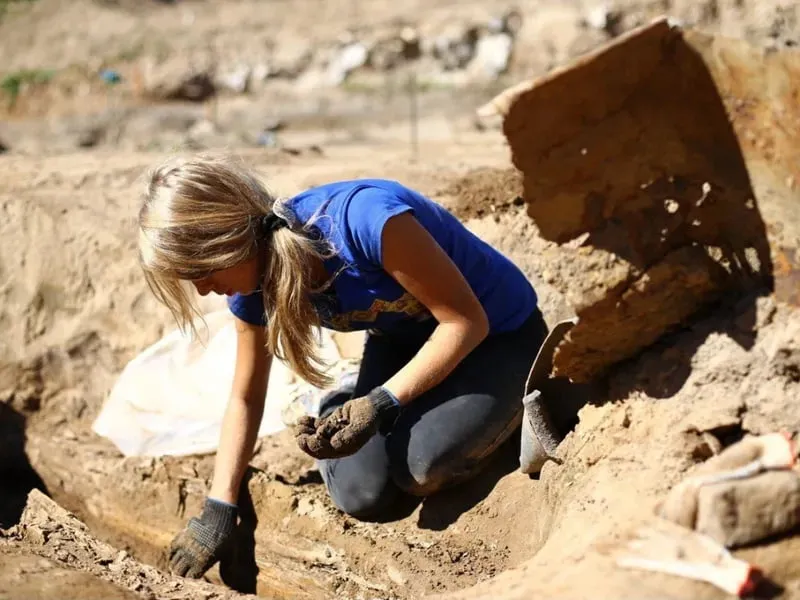
Ukrainian archaeologists have examined a Sarmatian-period burial site in a Bronze Age burial mound on the Arabat Spit. Inside the grave, they found the remains of a man aged approximately 25–35, who was buried with weapons and grave goods.
The burial mound is located in the northern part of the Arabat Spit, near the temporarily occupied village of Shchaslyvtseve in the Kherson region. It was investigated during archaeological excavations in 2018–2019.
The burial mound was originally constructed during the Bronze Age. At the time of the investigation, its height was about 1.3 meters, and its diameter was approximately 42 meters. Due to years of plowing, the structure had been significantly damaged.
Inside the burial mound, archaeologists discovered 36 graves dating from various historical periods—ranging from the Bronze Age to the late Middle Ages. The Sarmatian grave was located near the top of the mound.
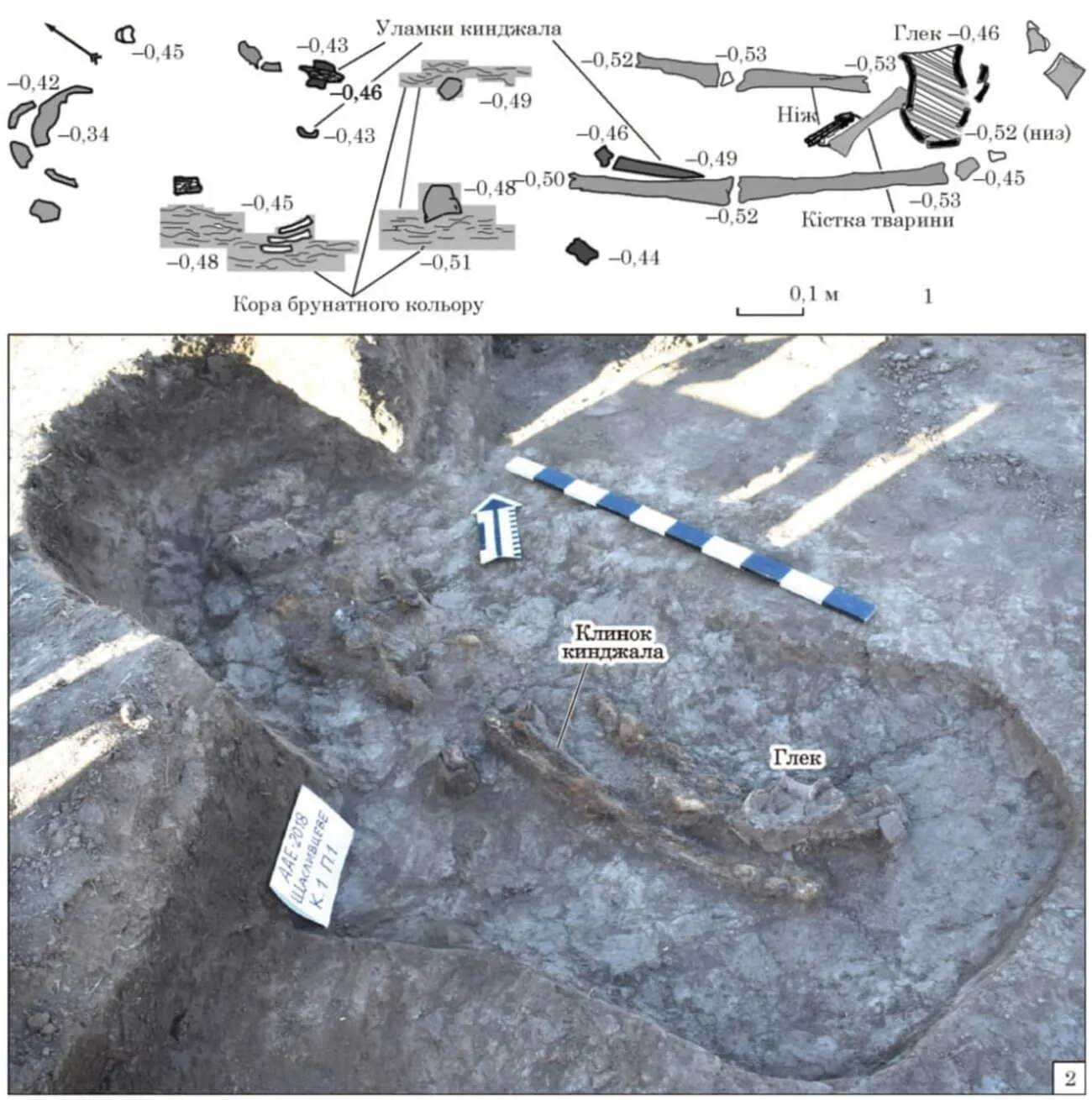
The burial consisted of a narrow pit about 1.8 m long and 0.6 m wide. The man was laid on his back, his head turned toward the northwest, and his arms extended along his body. The condition of the bones was very poor.
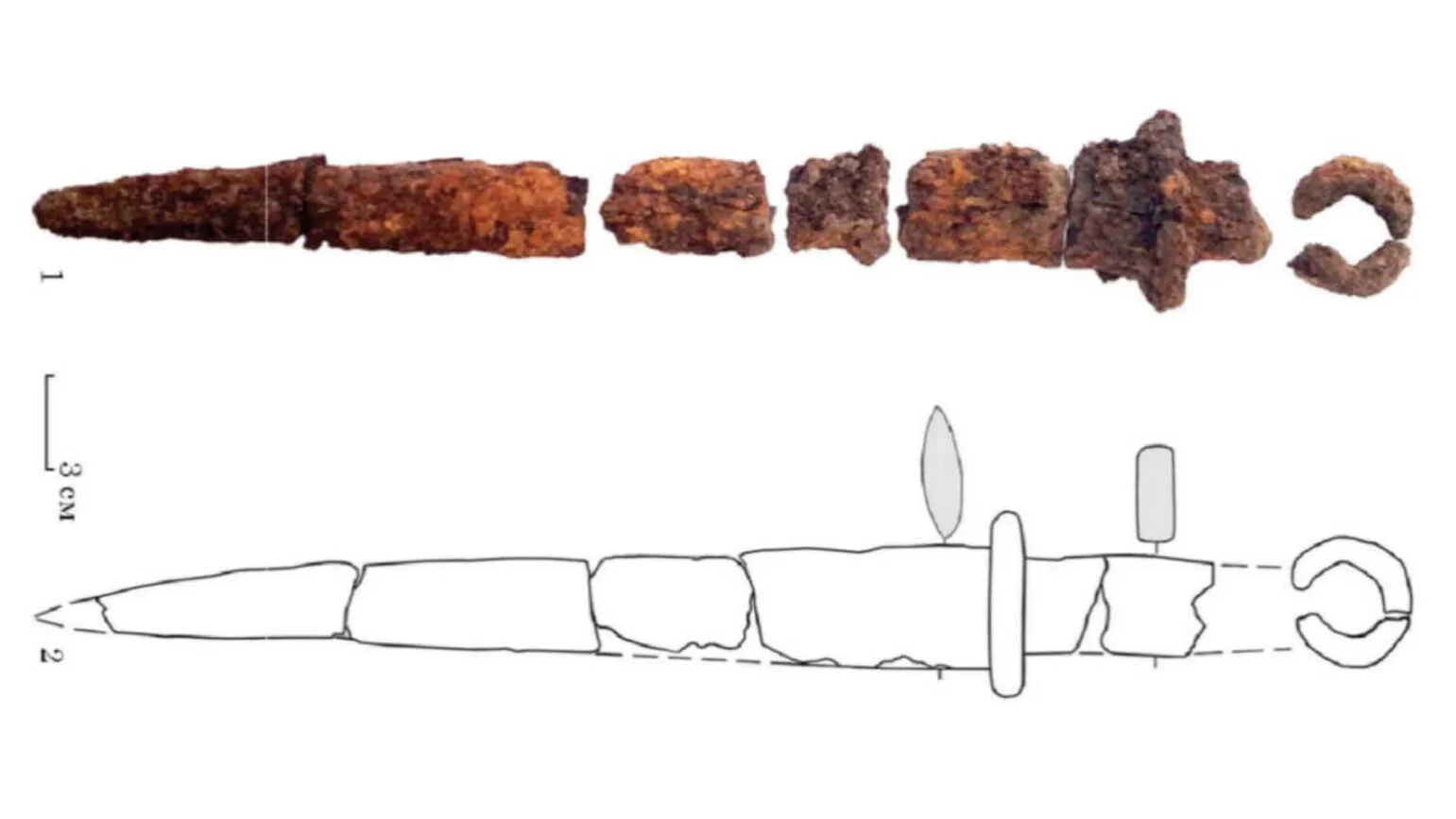
The most notable find was an iron dagger approximately 45–47 cm long. It had a ring-shaped pommel and a straight crossguard. Parts of the hilt lay near the chest, and the blade was near the right thigh.
Beneath it, archaeologists discovered traces of a wooden scabbard.
A sheep’s leg bone and shoulder blade, as well as a small iron knife, were placed near the buried individual’s feet. A red clay jug with a single handle lay on top.
Researchers note that meat offerings were characteristic of the burial traditions of nomadic communities during the Early Iron Age.
The exact date of the burial could not be determined. Based on the characteristics of the dagger and the ceramic vessels, the study’s authors date it to the period from the 1st century BCE to the 1st century CE.
The fact that the deceased was buried with his head facing northwest is also significant. The researchers note that Sarmatian burials from this period with a northward orientation in Ukraine are primarily associated with the Roxolani—one of the Sarmatian tribes.
According to the authors, the deceased may have belonged to a community that controlled this section of the Black Sea coast. Salt and fresh water were important resources in the region, and later the area may have been linked to trade routes between the Bosporus and settlements along the Lower Dnieper.
Thus, the burial mound on the Arabat Spit was used for burials over several millennia, and the Sarmatian grave was one of the latest burials there.
Source: Institute of Archaeology of the National Academy of Sciences of Ukraine
Earlier, archaeologists discovered new artifacts from the 10th–15th centuries in the Poltava region.
The remains of 89 soldiers were exhumed at the Holosky Cemetery in Lviv.
Prior to this, the Polish Institute of National Remembrance stated that Ukraine had authorized exhumation work at the site of the former village of Huta Penyatska. This involves the search for and exhumation of the remains of victims of the Volhynia tragedy.
In Volyn, Ukrainian and Polish experts have completed exhumation work in the areas of the former villages of Ostrivky and Volia Ostrovetska, where they investigated mass graves dating back to World War II.




