
Dozens of dead cetaceans have been found on the coast of Odesa Oblast
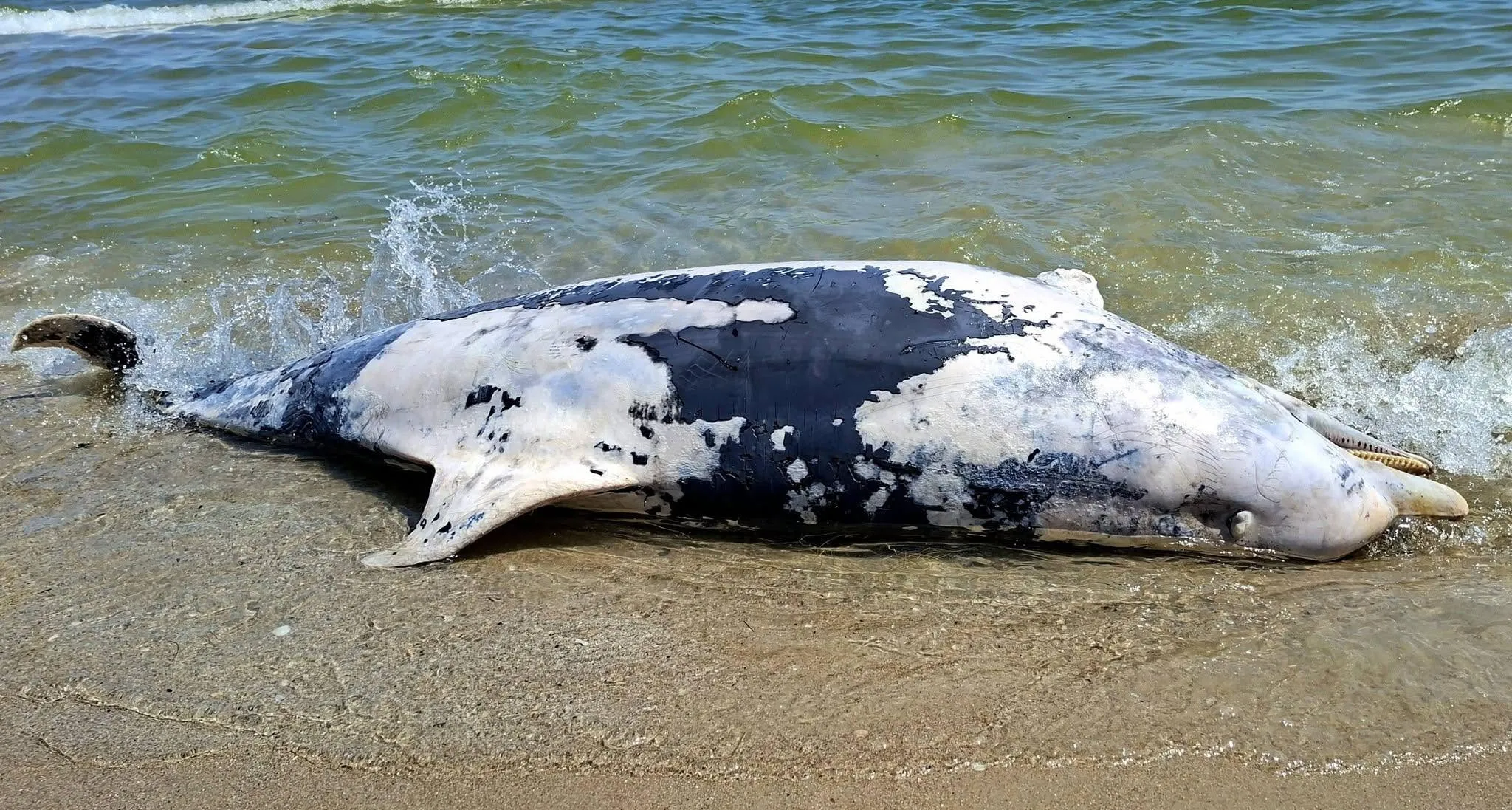
On the coast of the Tuzly Estuaries National Nature Park in the Odesa region, scientists discovered 22 dead cetaceans in a single day. For Ukraine, this is one of the largest incidents of marine mammal deaths since the start of the full-scale war.
Environmentalists warn that the bodies found represent only a small fraction of the actual situation. Most of the dead animals remain in the sea, so the actual losses could be significantly higher.
Scientists surveyed about 25 kilometers of the coastline of the Tuzly Estuaries National Park and discovered 22 dead cetaceans. These include dolphins and other members of the cetacean family that inhabit the Black Sea.
According to renowned ecologist Ivan Rusev, such a large number of dead animals in a single day has not been recorded in Ukraine since the start of Russia’s full-scale invasion. “In Ukraine, since 2022, we haven’t found this many dead cetaceans in a single day,” Rusev noted. Ecologists emphasize that the deaths of these animals may have various immediate causes, but the main factor remains the same—war.
The Black Sea has been under constant impact from military operations for over three years. Explosions, missile strikes, military equipment operations, and other consequences of the war are altering the environment in which marine life thrives. Powerful sound waves are particularly dangerous for dolphins and other cetaceans. These animals navigate using echolocation. It is through sound that they find food, communicate with one another, and avoid danger.
When the sea is constantly shaken by explosions, this system begins to malfunction. “Constant shelling, even when it doesn’t kill the animals, disorients them with sonar waves,” explain ecologists. Due to this loss of orientation, dolphins may fail to find food, lose contact with their pod, or venture into dangerous areas.
The environmental consequences of the war remain no less of a threat to marine animals. This primarily refers to water pollution from fuel, lubricants, and petroleum products. Once these substances enter the sea, the animals suffer serious damage to their internal organs.
According to experts, cetaceans may develop pancreatitis, nephritis, hepatitis, and other dangerous diseases. Pollution also affects the food supply of marine mammals, further reducing their chances of survival. Experts emphasize that the tragedy is not limited to the Ukrainian coast.
In late May, cases of cetacean deaths began to be recorded in Bulgaria and Romania as well. Dead dolphins and other marine mammals were found along various stretches of the Black Sea coast. This indicates that the consequences of the war are affecting the entire marine ecosystem of the region.
The Black Sea is a shared natural space for several countries, so environmental problems quickly extend beyond the borders of a single nation. Environmentalists are particularly concerned about the fate of three species of cetaceans that inhabit the Black Sea. These are the white-beaked dolphin, the bottlenose dolphin, and the Azov dolphin. All of these species already have limited populations, and additional pressure from the war could significantly reduce their numbers.
Scientists warn that it takes years or even decades for marine mammal populations to recover. Every animal that dies represents not only the loss of an individual but also a blow to the future of the entire species. Experts note that even after the war ends, the consequences for the Black Sea will linger for a long time.
Damaged ecosystems will require a long-term recovery, and some changes may prove irreversible. That is why ecologists describe what is currently happening in the Black Sea as a form of ecocide. This is not just about the death of individual animals, but about a massive impact on the natural environment that has been shaped over millennia. And as long as the war continues, the number of such losses can only increase. This is reported by .
As of June 8, 14 beach areas have been officially opened in Odesa, all of which fully comply with safety requirements under martial law.


