According to Sofiya Sadogurska, an expert with the climate department of the NGO “Ekodia,” changes in water temperature and the climate in general trigger a process known as “climatic replacement,” in which some species gradually lose their foothold while others quickly take their place. “Climate change can cause shifts in species’ ranges. Species less tolerant of warming and arid conditions may be replaced by species better adapted to these conditions,” the expert explains.
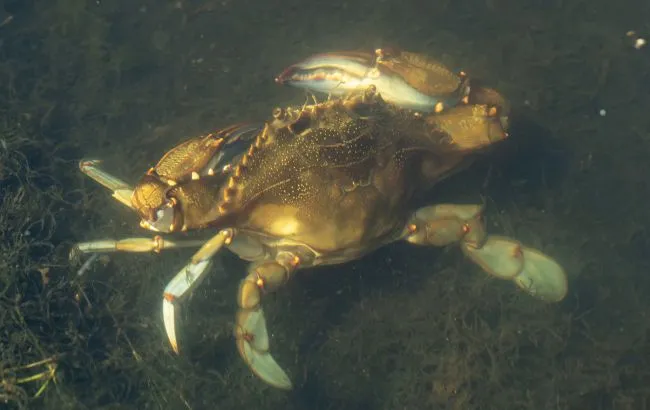
This is not just about animal migration, but also about competition for survival, where weaker local populations are gradually displaced by more resilient species. In recent years, new “visitors” from other regions of the world have been increasingly recorded in the Black Sea, species that were either previously absent from the area or unable to reproduce actively there. “In recent years, non-native species such as the American blue crab, the Japanese river shrimp, and even the now-familiar barnacles,” notes Sofya Sadogurska.
According to her, these species adapt well to new conditions and begin to actively compete with native marine life, which could gradually alter the entire food web of the ecosystem. Ecologists warn that invasive species do not simply “add to” nature but often alter its structure by displacing or destroying local populations. This means that the natural balance could be disrupted, and some species that have historically lived in the Black Sea may gradually disappear or see their populations decline sharply.
According to experts, this situation requires not only monitoring but also clear decisions at the state level, as without regulation, these processes could spiral out of control. “Such a major problem with the spread of invasive species requires legislative regulation at the state level, as well as specific measures within nature conservation areas and communities,” concludes the representative of “Ekodia.”
Experts emphasize that climate change is already shaping a new reality for the Black Sea, and the pace of these processes is only accelerating. Sofia Sadogurska, an expert from the climate department of the NGO “Ekodia,” spoke about this in an interview with RBC-Ukraine.