
NABU is investigating whether government officials are among the hidden owners of defense companies
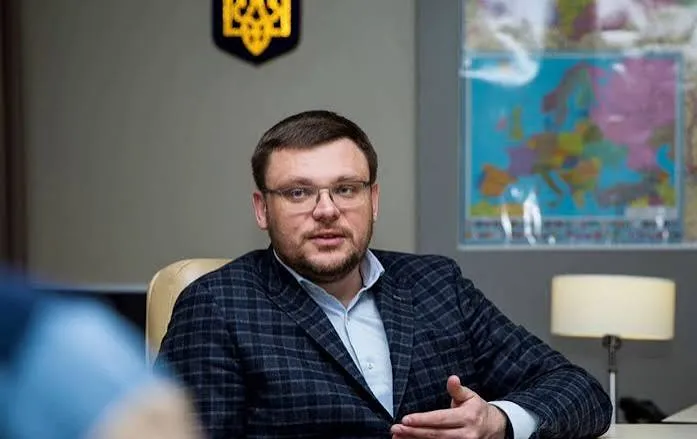
Influential officials may gain covert control over companies that supply weapons and other military equipment to the state. The National Anti-Corruption Bureau of Ukraine (NABU) is investigating who is actually behind these companies, how they secure defense contracts, and whether they are eliminating competitors during procurement processes.
The National Anti-Corruption Bureau is investigating the possible influence of high-ranking officials on companies that receive government orders to supply weapons. According to the bureau, this goes beyond officials who can directly influence procurement decisions. Detectives are also investigating whether officials hold hidden stakes in the companies themselves. “In large arms-supplying companies, influential figures may appear as both beneficial owners and officials in law enforcement agencies, parliament, and the government.” “And they effectively become co-beneficiaries of these companies,” said Kryvonos.
In other words, on the surface, such a company may look like an ordinary private supplier. However, behind it may be people who have access to government decisions and influence over the procurement system. This is precisely what NABU detectives are currently trying to investigate.
How Companies Secure Defense Contracts
According to Kryvonos, the bureau is interested in more than just who is listed as the company’s owner. Detectives are also investigating exactly how companies secure government contracts and whether they are given artificial advantages during the procurement process. A separate focus of the investigation is the possible suppression of unfair competition.
NABU is tracking the companies’ financial transactions, verifying their ultimate beneficiaries, and analyzing the connections and influence of the people who may be behind the companies. In other words, investigators are trying to get the full picture: who controls the company, where the money comes from, how it secures contracts, and whether anyone is using their official position to make a profit.
Kryvonos emphasized that corruption in the defense sector has particularly serious consequences. “Corruption in the defense sector undermines defense capabilities. This is an absolute fact,” stated the NABU director.
NABU cannot change the procurement system on its own
At the same time, Kryvonos noted that criminal investigations alone are not enough to eliminate corruption risks in defense procurement. NABU and the Specialized Anti-Corruption Prosecutor’s Office can investigate specific crimes. But they cannot single-handedly reform the entire public procurement system.
According to the head of NABU, a significant portion of the work must take place directly within the Ministry of Defense. The Ministry of Defense, in particular, must identify weaknesses in the procurement system and modify procedures to reduce opportunities for abuse. Therefore, the fight against corruption in the defense sector, according to Kryvonos, should consist not only of investigating crimes that have already been committed but also of preventing new schemes.
The Ministry of Defense has turned to NABU for an analysis for the first time
Kryvonos also spoke about NABU’s cooperation with the Ministry of Defense. According to him, over the past six months, the Ministry of Defense approached the bureau for the first time with a request to analyze corruption risks in the defense sector. NABU carried out the necessary work and submitted its analysis to the ministry.
The goal is to identify areas within the system where corruption risks may arise, even before they develop into criminal cases. Thus, NABU is now investigating not only individual suspicious procurements but also possible links between influential officials and companies that receive government defense contracts. At the same time, it is important to note that allegations of officials’ possible involvement in such schemes are currently under investigation. The mere fact that NABU is conducting an investigation does not mean that a specific individual has already been found guilty of a corruption offense. NABU Director Semen Kryvonos stated this during a press briefing.
In the first half of the year, as of August 10, courts handed down 55 convictions in cases investigated by NABU and the Specialized Anti-Corruption Prosecutor’s Office (SAPO). Among those convicted are four high-ranking government officials, 11 heads of state-owned enterprises, as well as judges and prosecutors.
The state-owned enterprise “NAEK Energoatom” does not have the status of an aggrieved party in the “Midas” criminal case. At the same time, according to Kryvonos, as of August 10, the investigation had established that more than $100 million had been transferred through a so-called “laundromat”—a back-office operation for money laundering.
The level of corruption in Ukraine is not decreasing, and corruption among top officials, according to SAPO Head Oleksandr Klymenko, is even on the rise. He stated that the fight against bribery is hampered, in particular, by a lack of political will and a number of problems in the functioning of the anti-corruption system.
The Appeals Chamber of the High Anti-Corruption Court has remanded one of the suspects in the “Midas” case, Ihor Myronyuk, in custody. Bail in the amount of 85 million hryvnias was set as an alternative to pretrial detention, but it has not yet been posted.
As a reminder, NABU and the Specialized Anti-Corruption Prosecutor’s Office (SAPO) announced new charges against a former Energoatom official in connection with the “Midas” case. According to “Suspilne,” citing case materials, the suspect is Dmytro Basov, the company’s former executive director for physical protection and security.


