
Following attacks on gas stations, Nova Poshta called for changes to fuel sales regulations
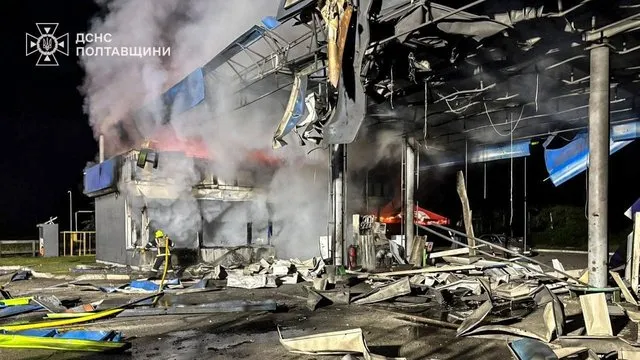
Russian strikes on gas stations and oil depots are increasingly damaging Ukraine’s fuel infrastructure. Against this backdrop, Volodymyr Poperechnyuk, co-founder of Nova Poshta, proposed revoking licenses for retail fuel sales in order to quickly establish more refueling stations and reduce risks to logistics.
In his view, this would help make the system more resilient to attacks and prevent fuel shortages.
Volodymyr Popereshnyuk, co-founder of Nova Poshta, believes that due to constant Russian shelling of gas stations, Ukraine urgently needs to revise the rules governing the fuel market.
On Facebook, he stated that large, stationary gas stations are becoming easy targets for Russian strikes. That is why, in his view, fuel sales should be distributed among a larger number of small outlets. “It’s time to abolish fuel sales licenses… we need to open many new sales points—from small, mobile stations to even barrels and canisters,” Popereshnyuk wrote.
He is convinced that Ukrainian businesses are capable of quickly organizing such a system. The main obstacle, he said, remains existing licenses and government regulation. “Therefore, we must urgently abolish regulations and licenses for the retail sale and storage of fuel, at least in the frontline regions, and preferably throughout the country,” noted the co-founder of “Nova Poshta.”
Russia is increasingly targeting fuel infrastructure
In recent weeks, Ukrainian gas stations and oil depots have been regularly targeted by Russian strikes. In late June, Andriy Pyvovarskyi, CEO of the WOG network and former Minister of Infrastructure, reported that more than 150 gas stations had been destroyed in just two months as a result of the attacks. According to him, the Russians attack not only gas stations but also oil depots and other fuel infrastructure facilities almost every week.
Following this, on the night of July 1, a WOG gas station in the Dnipropetrovsk region was struck. A female station attendant was killed in the attack. According to Mykola Lukashuk, chairman of the Dnipropetrovsk Regional Council, the Russians attacked five gas stations in the region that same night. He also noted that similar strikes have recently been recorded in the Kharkiv, Mykolaiv, and Kherson regions.
Losses at gas stations and oil depots are mounting
Other major operators have also reported significant losses. According to Vasyl Danylyak, CEO of Group OKKO, the company has lost four oil depots in the last two months alone, and eight more gas stations have sustained damage of varying degrees. Vyacheslav Chaus, head of the Chernihiv Regional Military Administration, also reported a series of Russian strikes on the region. Three of them specifically targeted gas stations.
On the night of July 2, an oil depot in Kyiv was damaged during a Russian attack. Economy Minister Oleksiy Sobolev reported that as a result of the strike, approximately 350 metric tons of petroleum products and emulsion spilled into Lake Kyrylivske. The following day, Serhiy Kuyun, director of the A-95 consulting group, wrote that Russian troops had attacked several gas stations simultaneously in various regions of the country. “Three gas stations have just been attacked in Pyriatyn—on the border between the Poltava and Kyiv regions. Two more are on fire in Sumy. At least one burned down today in Kharkiv. Update: another station south of Pyriatyn has been attacked,” he reported.
Experts Warn of Risks
Viktoria Strakhova, an advisor to the Office of the President, also drew attention to the situation with the fuel infrastructure. After analyzing the attacks, she stated that the risks are becoming increasingly serious. “Very soon, there is a risk of seeing a widespread situation similar to that in Russia—only they don’t have gasoline, while we don’t have fuel infrastructure,” she wrote.
According to Strakhova, she discussed the situation with one of the executives of a major fuel company and noted that solutions to the problem exist, although they have not yet been publicly announced.
Mobile gas stations have already begun operating
Some of these solutions are already being implemented. For example, on July 2, the Trostyanets City Council in Sumy Oblast announced the launch of mobile fuel sales points. This decision was made after stationary gas stations were damaged by Russian shelling.
Fuel is sold from small mobile refueling vehicles. Their routes are constantly changing to make it more difficult for the Russians to launch a new attack. Sales are temporarily suspended during air raid alerts, and residents are notified of the mobile gas stations’ locations via the city council’s official Telegram channel. Thus, Volodymyr Poperechnyuk’s proposal effectively echoes a practice already in use in some frontline communities. At the same time, no decisions have yet been made to change licensing rules or state regulation of the fuel market. This was mentioned in a city council announcement on Telegram on Thursday.
The company “Nova Poshta” has launched a pilot project for nighttime delivery of packages to parcel lockers, through which nearly 160,000 packages were delivered in May alone.


