
Artem Shyl's case at the High Court of Criminal Appeals: the court refused to close the proceedings, the prosecutor's office demands 12 years in prison for OZG Shyl
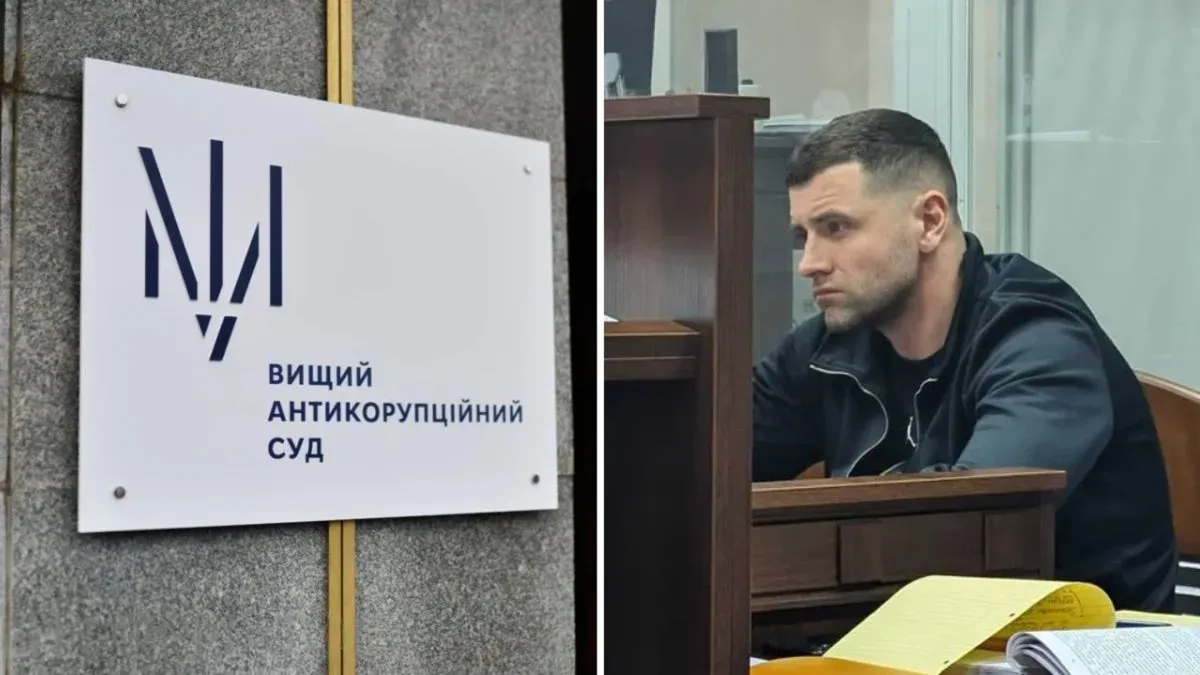
The High Anti-Corruption Court held a hearing in the case involving the embezzlement of millions at Ukrzaliznytsia. In the dock—albeit virtually—were former advisor to the Office of the President and former Security Service of Ukraine (SBU) official Artem Shilo, along with other defendants. This was a preliminary hearing, and the discussion this time focused not on corruption schemes involving transformers and cables, but on the schedule and the countdown.
The defendants’ attorneys are demanding that the criminal case be dismissed in its entirety based on paragraph 10 of part 1 of Article 284 of the Criminal Procedure Code of Ukraine, citing alleged failures by NABU and the Special Anti-Corruption Prosecutor’s Office (SAPO) to meet the deadlines for the pre-trial investigation.
Everyone supports one another, but each has their own timeline
The defense argues that the investigators made a “gross error,” and that the investigation deadlines in the case were exceeded not just once, but twice. The attorneys argued to the judges that, due to procedures involving the separation and consolidation of case materials, some of the episodes are essentially “up in the air,” and the deadlines for them have long since passed—some cite March 2024, others August 2026. This surprised the presiding judge: “I understand that lawyers aren’t good at math and perhaps someone made a mistake somewhere. But I can’t understand this: four or five defense attorneys, making similar arguments, have different calculations of exactly when the pretrial investigation period ended? You support each other’s motions, but with different dates,” the judge noted.
SAP Response: “The Unified Register of Pre-Trial Investigations is a database, not a procedural document”
A prosecutor from the Specialized Anti-Corruption Prosecutor’s Office took the stand with a heavy stack of papers—written objections and 60 pages of procedural documents arranged in chronological order—to methodically refute the defense’s allegations.
The SAP emphasizes that no procedural deadlines were violated, and that the attorneys’ arguments are based on a misinterpretation of the law and the technical features of the Unified Register of Pre-trial Investigations (URPI) system. Specifically, the defense’s claim that the separation of cases involving other defendants was intended to shift the deadlines for Shil is refuted by established Supreme Court precedent. The separation of proceedings concerning individual persons does not affect the deadlines in the main case.
“All criminal offenses that are the subject of the indictment existed in these proceedings at the time the notice of suspicion was served. The connection to them has not disappeared,” the prosecutor concluded, urging the court to fully deny the defense’s motion to dismiss the case. And he secured his first victory in the hearing. VAKS Judge Mykhailenko, having considered the defense attorneys’ motion to dismiss the criminal proceedings due to allegedly missed deadlines (the “Lozovoy amendments”), announced her decision: to deny the defense’s motions in their entirety.
Immediately after the refusal to dismiss the case, the defense attorneys moved on to the next contentious procedural issue—a motion to return the indictment to the prosecutor. The defense attorneys argue that they were denied the right to properly review the new expert opinion, and therefore the indictment was drafted in violation of procedural rules and must be returned to the Specialized Anti-Corruption Prosecutor’s Office (SAPO).
The defense demands that the indictment be returned to the prosecutor
The indictment must be returned due to the vagueness and inaccuracy of the charges set forth, — the defense attorneys insisted, submitting a series of written motions and scientific-legal opinions to the court, breaking down the indictment into several key episodes. Defense attorney Krugovoy drew the court’s attention to contradictions in the SAPO’s procedural documents. The indictment lists the amount of fictitious income from Shil’s wife’s beauty salons as approximately 50–52 million hryvnias, but for unclear reasons, the final amount of alleged money laundering was reduced to 17.9 million UAH.
The defense also noted that when calculating the damages to “Ukrzaliznytsia” under two contracts, the prosecutors unjustifiably included Value-Added Tax (VAT) in the amount of damages caused. The attorneys emphasize that VAT is a mandatory government tax, not the property of the company, and therefore cannot be charged as funds directly embezzled from the victim.
In the money laundering calculations regarding another defendant (Melnik), the attorneys discovered a discrepancy between two amounts—12.75 million UAH and 12.53 million UAH—noting that “211,000 hryvnias have gone missing.” Finally, on the title page of the indictment for one of the defendants (Kovalyuk), he is listed as an accomplice (Part 5 of Article 27 of the Criminal Code), but in the section on legal classification, he was suddenly reclassified as an organizer (Part 3 of Article 27 of the Criminal Code).
The realtor’s defense: “He was just doing his job”
The attorney for another defendant, Oleksandr Viskovetskyi, stated that his client is an ordinary real estate agent who was performing his civil-law duties and advising clients. According to the investigation, Viskovetsky helped launder funds through the purchase of luxury real estate.
“My client genuinely does not understand the nature of the charges. He asks: What did he violate as a real estate agent while searching for properties? Was it the fact that he knew where Shilo worked, or that the property was registered in the names of his wife and driver? These are abstract inferences by the prosecutor that do not prove direct intent or knowledge of the source of the funds,” the attorney argued.
The defense attorney also pointed out a significant discrepancy in the figures: in the initial charges, Viskovetsky was accused of laundering 95 million hryvnias, but in the final indictment, this amount suddenly rose to 110 million hryvnias without any additional explanation.
Judge Mykhailenko reminded the defense that, under the Code of Criminal Procedure, the defendant’s subjective “lack of understanding” is not an automatic ground for returning the indictment, and that the court hears only the indictment, not the initial charges.
“Here is the formatted and structured section. All your facts, figures, and names have been preserved, but the text has been adapted to a journalistic style: repetitions have been removed, chronological and logical inconsistencies have been corrected, and it has been formatted into a clear, reader-friendly structure.
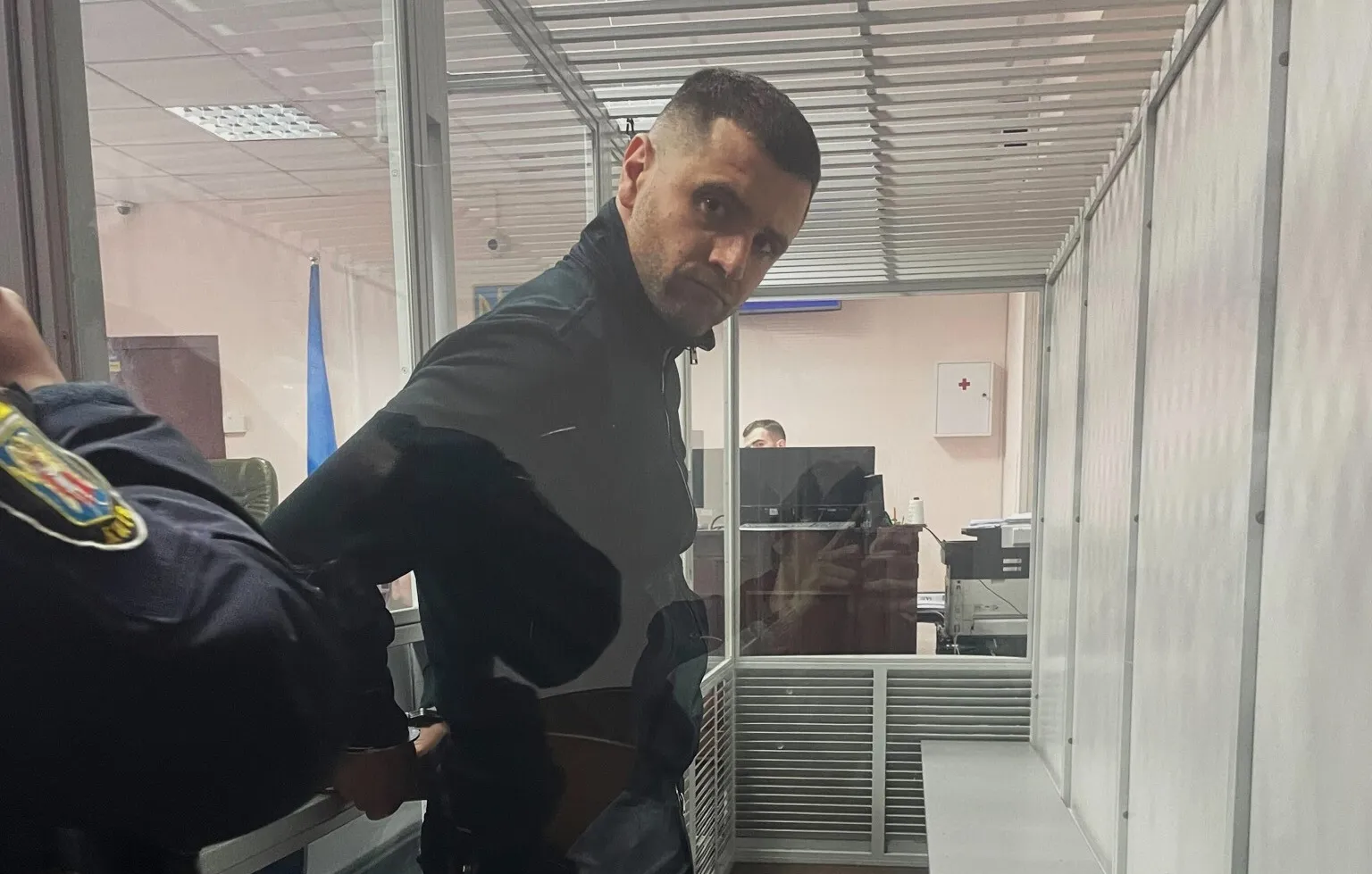
Defendant Artem Shilo
What Shilo is being tried for: the Ukrzaliznytsia “back-office” scheme
Former SBU official Artem Shilo and his associates are accused of embezzling 240 million hryvnia through the procurement of cables and transformers and laundering over 175 million hryvnia through luxury real estate.
As established by the investigation conducted by NABU and the SAPO, the group led by Artem Shilo effectively became an informal “back office” for Ukrzaliznytsia, controlling procurement in exchange for “kickbacks” amounting to 5–7% of the contract value. The scheme unfolded in two main phases:
- The Cable Scheme (losses of 140 million UAH): During 2021–2022, the group created conditions for companies controlled by the group of People’s Deputy Viktor Bondar (in particular, the “Ukrkabel” plant), which supplied products at prices inflated by 30–60%.
- Transformer scheme (losses of 100 million UAH): In 2022–2024, the “back office” facilitated the purchase of power transformers through a front company controlled by a Belarusian citizen with ties to Russia. This company purchased equipment in Uzbekistan and resold it to Ukrzaliznytsia at double the markup. To eliminate competitors with cheaper offers, Shilo, while serving as first deputy head of an SBU department, personally sent letters to “Ukrzaliznytsia” alleging a “threat to national security”—all while “overlooking” the Russian-Belarusian connection of the supplier under his control.
The corruption ring was run by three people:
- Artem Shilo (a former SBU employee and former member of the Presidential Office)—head of the “back office,” who used his influence within the SBU to block competitors;
- Viktor Bondar (Member of Parliament, former Minister of Transport)—responsible for political cover and the operations of controlled companies;
- Volodymyr Kotlyar (businessman)—an intermediary responsible for registering shell companies, handling documentation, and distributing funds (two-thirds of the profits went to Kotlyar’s companies, one-third to Bondar’s organization).
In total, at least 16 people were involved in the schemes: UZ officials, lawyers, accountants, and relatives. The case files contain recorded phone conversations and testimony mentioning top-level officials. In particular, there were remarks that Shilo “goes to Tatarov with Yermak,” and MP Bondar complained that he had been ordered to resolve all issues with the Presidential Office exclusively through Shilo. Former Minister of Infrastructure Vladyslav Krykliy and former head of Ukrainian Railways Oleksandr Kamyshin were also mentioned in connection with these ties.
In total, through criminal schemes, the group’s leader laundered over 175 million hryvnias (the initial suspicion cited 155 million hryvnias). The money was withdrawn under the guise of “payments for beauty salon services,” after which luxury penthouses, houses, and commercial real estate were purchased. Currently, law enforcement officials have frozen the suspects’ assets totaling over 1.4 billion hryvnias.
Conclusion: A Pause Before Independence Day
After hearing the arguments of the two attorneys and confirming that Artem Shilo, via the online broadcast, supported his defense team’s position, the court decided to adjourn.
Judge Mykhailenko scheduled the next hearing for August 24 at 10:00 a.m.—on Ukraine’s Independence Day, the panel will hear arguments from the remaining defense attorneys (Kulchitsky, Gotin) and the position of the SAPO prosecutors, after which it will issue a final ruling on the indictment.
As a reminder, Artem Shilo is suspected of embezzling 240 million hryvnias from “Ukrzaliznytsia.” Inflated prices in tenders, the artificial elimination of competitors, ties to aggressor countries, and the laundering of millions through shell companies—according to law enforcement officials, Shilo is involved in these schemes. Details can be found in our investigation.


