
Holiday on September 12, 2026 — Dnipro Day: 500 Years of History and Interesting Facts

On September 12, 2026, Dnipro will celebrate City Day. This year’s celebration is special because the city council has officially moved the starting point of Dnipro’s chronology from 1776 to 1526, so the city is marking the 500th anniversary of its history. To mark City Day, 24 events are scheduled for September 12 and 13—ranging from festivals and sporting events to tours, concerts, and historical performances.
Dnipro City Day is celebrated annually on the second Saturday of September. In 2026, this date falls on September 12. This rule is enshrined in the city’s territorial community charter. City Day is designated as a citywide holiday during which ceremonial, cultural, and other events are held. Among the holiday’s objectives are preserving local traditions, honoring the city’s history, and fostering a sense of community.

This year, the celebrations will not be limited to a single day. Some events will take place on September 12, and several more are scheduled for September 13. According to the preliminary program, a total of 24 events are set to take place in the city. These include festivals, concerts, sports competitions, fairs, tours, and historical performances. The bulk of the program is scheduled for Saturday, September 12.
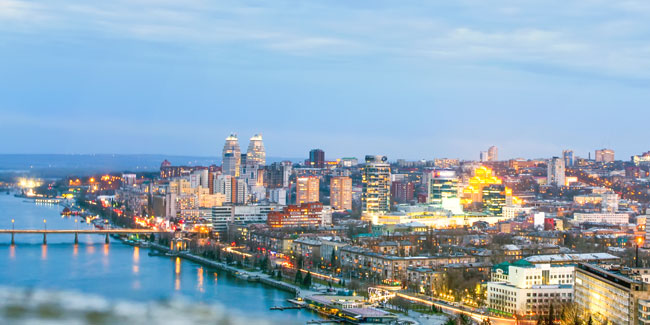
However, the final format of the celebrations will depend on the security situation. Dnipro, like other Ukrainian cities, is holding mass events during a full-scale war while under martial law. Therefore, traditional large-scale festivities may be modified or canceled depending on the situation. Organizers must account for air raid alerts and the need for people to quickly take shelter. That is why this year’s celebration will not be the same as it was in peacetime.
Why Dnipro Is Now 500 Years Old
The year 2026 became special for Dnipro even before the celebration itself. In August, the city council officially amended the Charter of the territorial community and established 1526 as the city’s founding date. Prior to this, 1776—when the establishment of Katerynoslav began—was considered the official founding date. Now, city officials link the beginning of modern Dnipro’s history to the much older settlement of Stara Samara. That is why, in 2026, the city is marking its 500th anniversary.
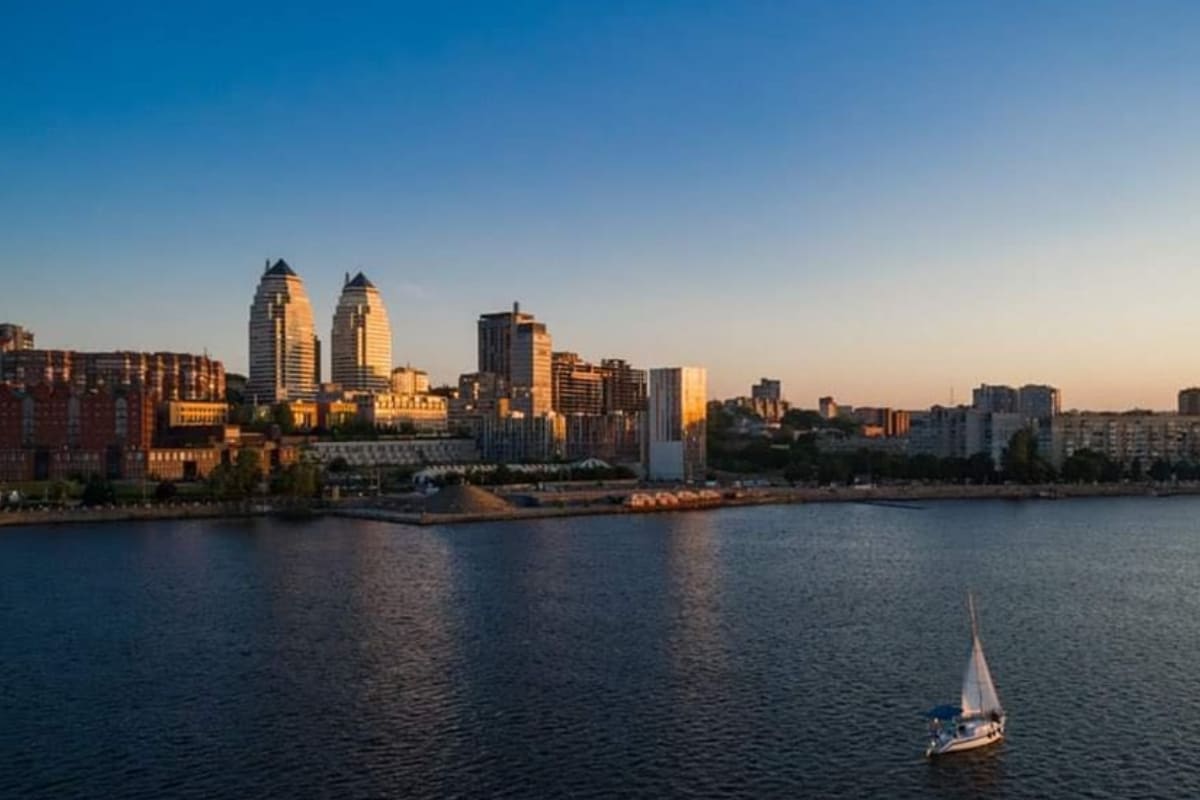
The new date is based on research by archaeologists and historians. Artifacts discovered in Stara Samara indicate the existence of a permanent settlement there in the 16th century. Among the finds are trade seals and other materials from the cultural layer. Researchers associate this area with an ancient trading and Cossack center. That is why the year 1526 has been proposed as a tentative starting point for the history of modern Dnipro.

At the same time, it is important not to present 1526 as the indisputable date of the city’s founding. Some historians emphasize that it is impossible to pinpoint the exact moment when modern Dnipro first emerged. There is also debate regarding the name “Stara Samaria” itself, as well as whether this settlement can be directly considered the origin of the modern city. “Historical Truth” refers to the year 1526 as a tentative date and notes that there is no complete consensus among researchers regarding this chronology. Therefore, it is journalistically accurate to refer to the date officially approved by the city council, rather than to a definitively proven year of Dnipro’s founding.
What Was in the Dnipro Area Before Katerynoslav
The territory of modern-day Dnipro was not uninhabited before the emergence of Katerynoslav. Cossack settlements, winter quarters, free settlements, and fortifications existed here. One of the important centers was Stara Samara, whose history is currently being actively researched by archaeologists. There was also Novy Kodak, which became an important Cossack center on the Dnipro. The settlement of Polovytsia also existed on the territory of the modern city, part of which later became part of the new Katerynoslav.
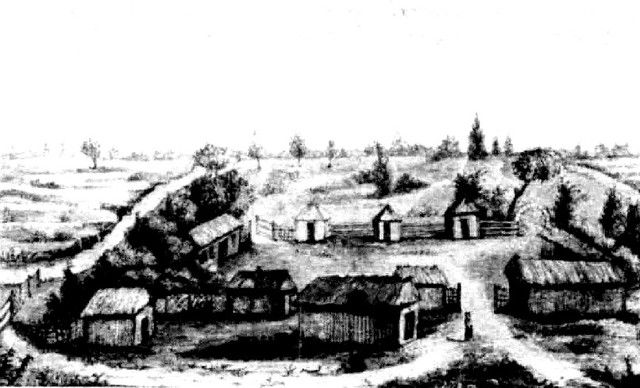
Therefore, the history of Dnipro is much more complex than the simple statement “the city was founded in 1776.” The modern city took shape gradually as various settlements and centers in the region grew, merged, and became part of a larger urban area. This is precisely what proponents of the new chronology emphasize. They believe that Dnipro’s history should be traced not only from the emergence of the imperial administrative center but also from the earlier settlements in this area. Therefore, the 500th anniversary in 2026 has become for the city not just a milestone, but an opportunity to take a fresh look at its own past.
How Katerynoslav Came to Be
For a long time, the year 1776 was considered the official starting point of Dnipro’s history. That was when construction began on the provincial city of Katerynoslav. The first Katerynoslav was not located where the center of Dnipro stands today, but on the left bank, near the Kilchen and Samara rivers. The location proved unsuitable due to flooding and other problems. After a few years, it became clear that the city needed to be relocated.
In 1784, a decree was issued to move the provincial city to the right bank of the Dnipro, closer to Kaidak. Actual construction of the new Katerynoslav began in the 1780s. The new city was established on the site of the existing Cossack settlement of Polovytsia. This is why modern Dnipro has several important historical layers—ranging from Cossack settlements to an imperial provincial center.
An interesting fact is that Katerynoslav was, in fact, founded twice. The first version of the city did not take root, and the new Katerynoslav began to be built in a different location. As a result, it was the second Katerynoslav that became the foundation of modern Dnipro. Part of the old Polovytsia gradually disappeared as the new city expanded. But traces of it remain in the history and urban planning of modern Dnipro.
How the City Changed Its Name
Throughout its history, Dnipro has changed its name more than once. In the 18th century, the city was known as Katerynoslav. At the end of the 18th century, during the reign of Paul I, it was renamed Novorossiysk. In 1802, the name Katerynoslav was restored. In 1918, the name Sicheslav—linked to the Zaporizhian Cossack heritage—was used in Ukrainian circles, although it never officially took hold.

In 1926, the Soviet authorities renamed Katerynoslav to Dnipropetrovsk. The name was derived from the Dnipro River and the surname of Grigory Petrovsky, a Soviet political figure. In May 1926, the decision to rename the city was made at the regional level, and the name was later officially adopted. The city remained Dnipropetrovsk for nearly 90 years. In 2016, as part of the decommunization process, the Verkhovna Rada renamed it Dnipro.
Why City Day Is Celebrated in September
The date of Dnipro City Day is not tied to a specific date but to a calendar rule. It is celebrated on the second Saturday of September. This allows the holiday to take place on the weekend, when more people can participate in city events. The community’s charter states that City Day should foster respect for history, love for one’s hometown, and the development of local traditions.
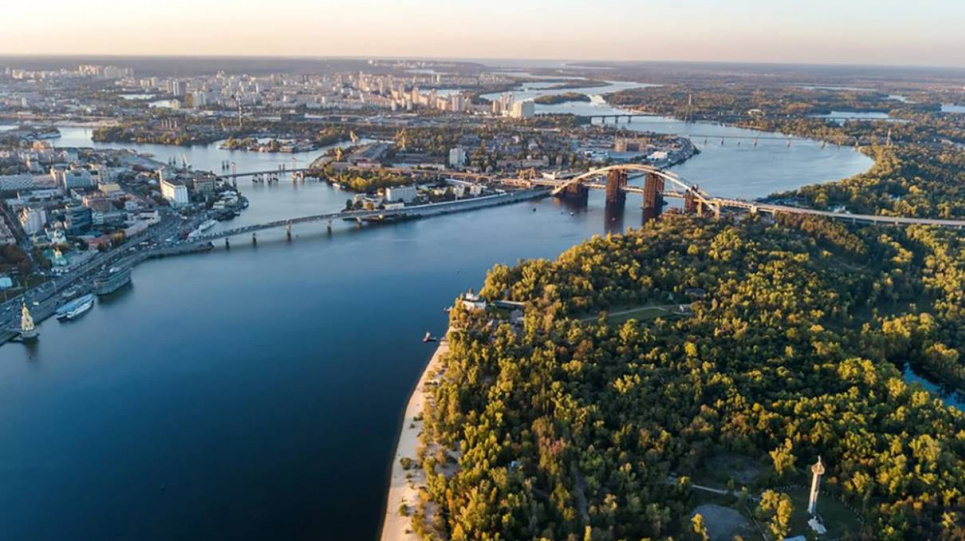
The September format became a city tradition as early as the late 20th century. Over time, concerts, festivals, sporting events, exhibitions, fairs, and various activities for children were added to the celebration. City Day gradually evolved into an entire city-wide weekend. People could do more than just attend a single concert; they could spend the entire day exploring different parts of the city. This format remains in place today, although the war has forced a scaling back of the events.
How City Day Is Celebrated in Dnipro
In peacetime, City Day in Dnipro featured a large number of concerts, festivals, sports competitions, fairs, and family events. Separate festival venues operated in different parts of the city. For children, there were game programs, workshops, and contests. Adults were invited to concerts, exhibitions, and cultural events. Often, the festive program spanned not just one day, but an entire weekend in September.
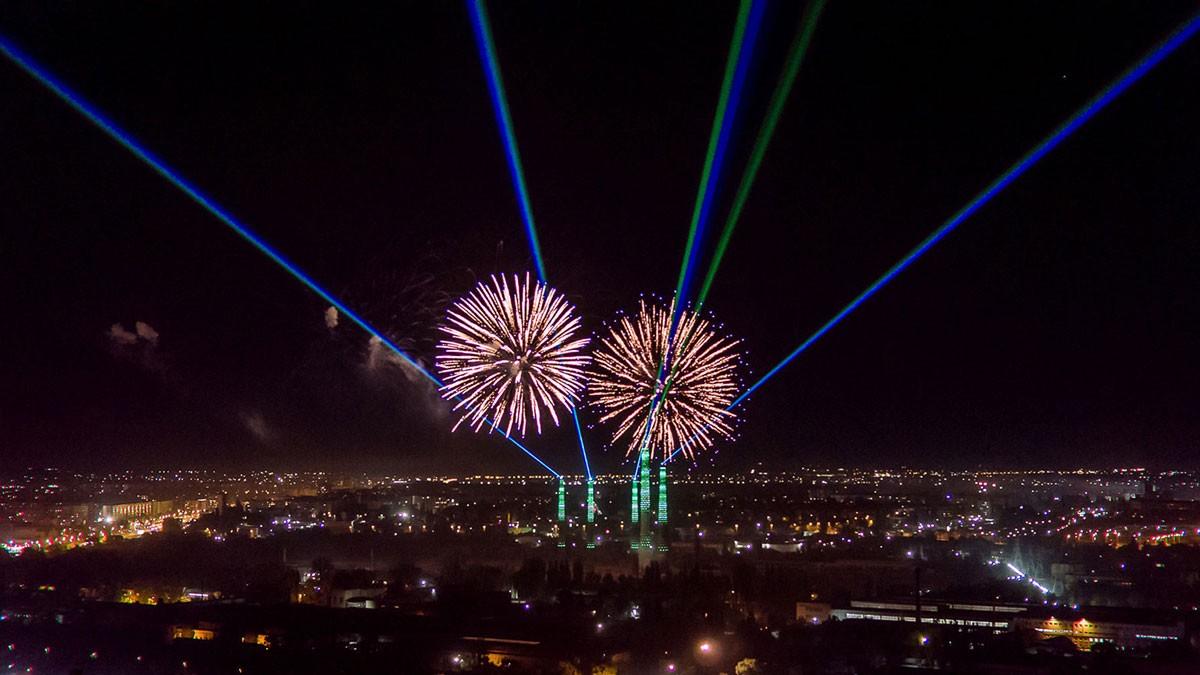
The current format has become more cautious due to the full-scale war. Mass events are held with safety in mind, and their format may vary depending on the situation. At the same time, the city’s program remains quite diverse. For 2026, organizers have prepared festivals, concerts, sporting events, tours, fairs, and historical events. In total, the preliminary list includes 24 events scheduled for September 12 and 13.
What’s Planned for City Day in 2026
The main part of this year’s program is scheduled for September 12. Among the planned events are ART Dnipro FEST “Dnipro—A Creative City,” “Dnipro-500: History on Rails,” “The Voice of Young Dnipro,” and the DNIPRO Sports Festival. The program also includes the “DNIPRO. City Day. TOGETHER” and “GavGavFest” venues, “Eco-Generation,” as well as animation and entertainment programs in city parks. Some events are also scheduled for September 13.
Separately, the organizers are bringing back the medieval battle format. Such historical reenactments were popular in Dnipro before the start of the full-scale war. Now they’ve decided to revive them specifically for City Day and the 500th anniversary. Participants will reenact medieval battles as part of a historical reenactment. The organizers emphasize that this is not just entertainment, but an opportunity to showcase one of the region’s historical periods.
Cultural and entertainment events have also been prepared for residents and will take place in various parts of the city. These include museum programs, guided tours, concerts, and activities for children. For example, the program includes events at the Dnipro National Historical Museum, family activities, and festivals. Some events are free, while others require advance registration or the purchase of a ticket.
What Are the Traditions of Dnipro Day?
One of the main traditions of City Day is the city-wide concerts. Local artistic groups, musicians, dancers, and guest performers take the stage. Another popular format is festivals, which combine music, food, sports, and various forms of entertainment. Separate areas with games and workshops are set up for children. This makes the celebration enjoyable not only for adults but also for entire families.

City tours also play an important role. Dnipro has a complex history, so during such events, visitors can learn about Cossack settlements, Katerynoslav, industrial development, old neighborhoods, and famous people. Tours related to the city’s 500-year history have become particularly relevant this year. They help demonstrate that the city’s history does not begin or end with a single date. On the contrary, it is a long process in which various settlements, eras, and people have intertwined.
Another important modern tradition is charity and support for Ukrainian troops. During wartime, city events often combine leisure activities with volunteer initiatives and fundraising. People can participate in charity fairs, fundraisers, or other community activities. In this way, City Day becomes not only a celebration but also a reminder of those thanks to whom the city continues to thrive. This is especially important for Dnipro, which remains one of the largest cities near the front lines.
Dnipro as an Industrial City
Dnipro has long had a reputation as one of Ukraine’s major industrial centers. The city began to develop particularly rapidly in the late 19th and early 20th centuries. The construction of railroads and the development of metallurgy and machine building transformed the city in just a few decades. Workers, entrepreneurs, and specialists from various regions flocked to Dnipro. The population grew rapidly, and with it, new neighborhoods and enterprises sprang up.
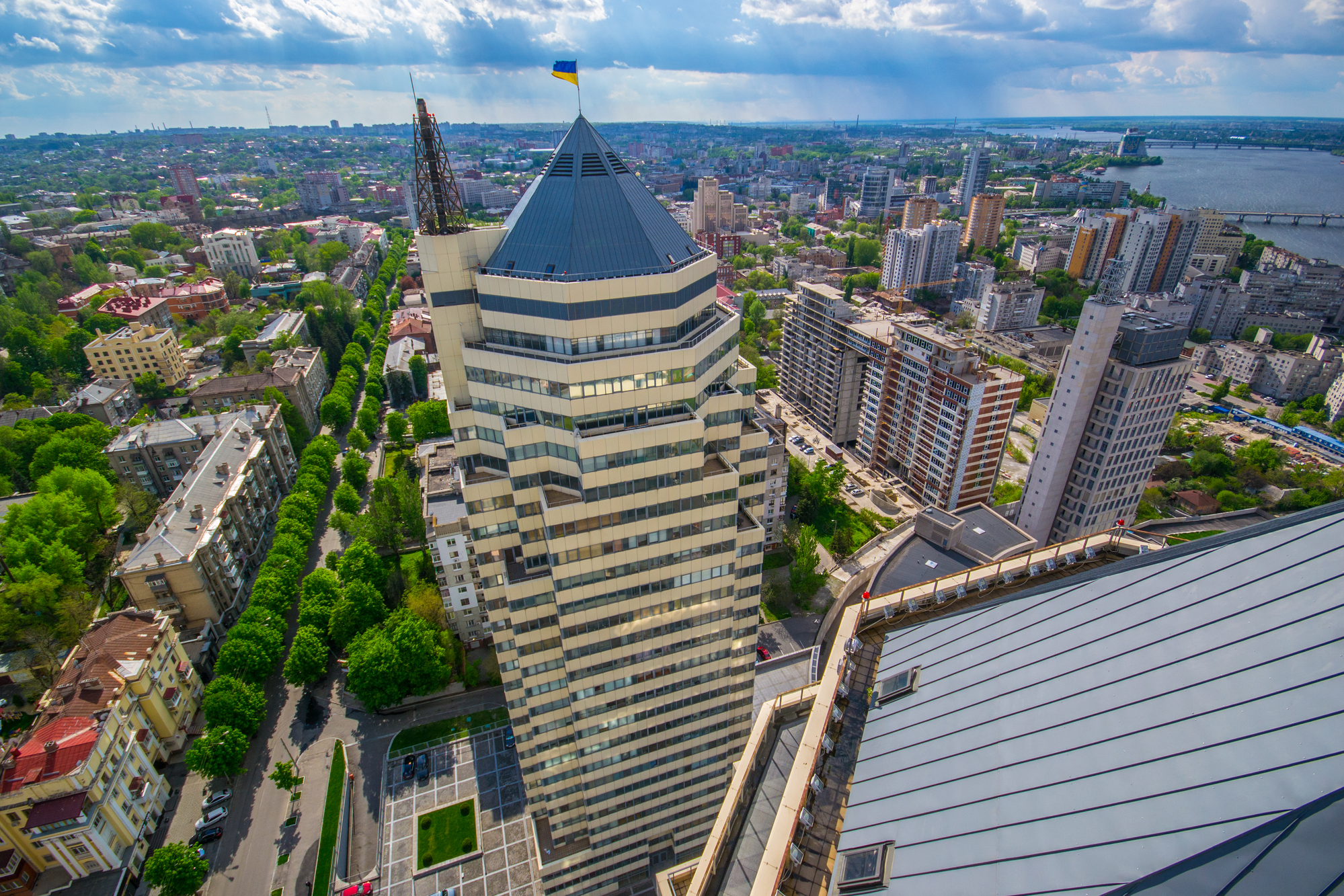
Industrial development had a profound impact on the character of the city. Dnipro became a major center for metallurgy, machine building, and the transportation system. For many years, industry shaped both its economy and its appearance. Workers’ neighborhoods, new roads, and railroad lines sprang up alongside the factories. In the 20th century, the city became one of Ukraine’s largest industrial centers.
Why Dnipro Is Called a “Space City”
Another important chapter in Dnipro’s history is the rocket and space industry. In the second half of the 20th century, the city became one of the Soviet Union’s main centers for rocket manufacturing. Enterprises engaged in the development of rocket and space technology operated here. Due to the secrecy surrounding this industry, Dnipro remained virtually off-limits to foreigners for decades. This was specifically tied to the military and space enterprises.
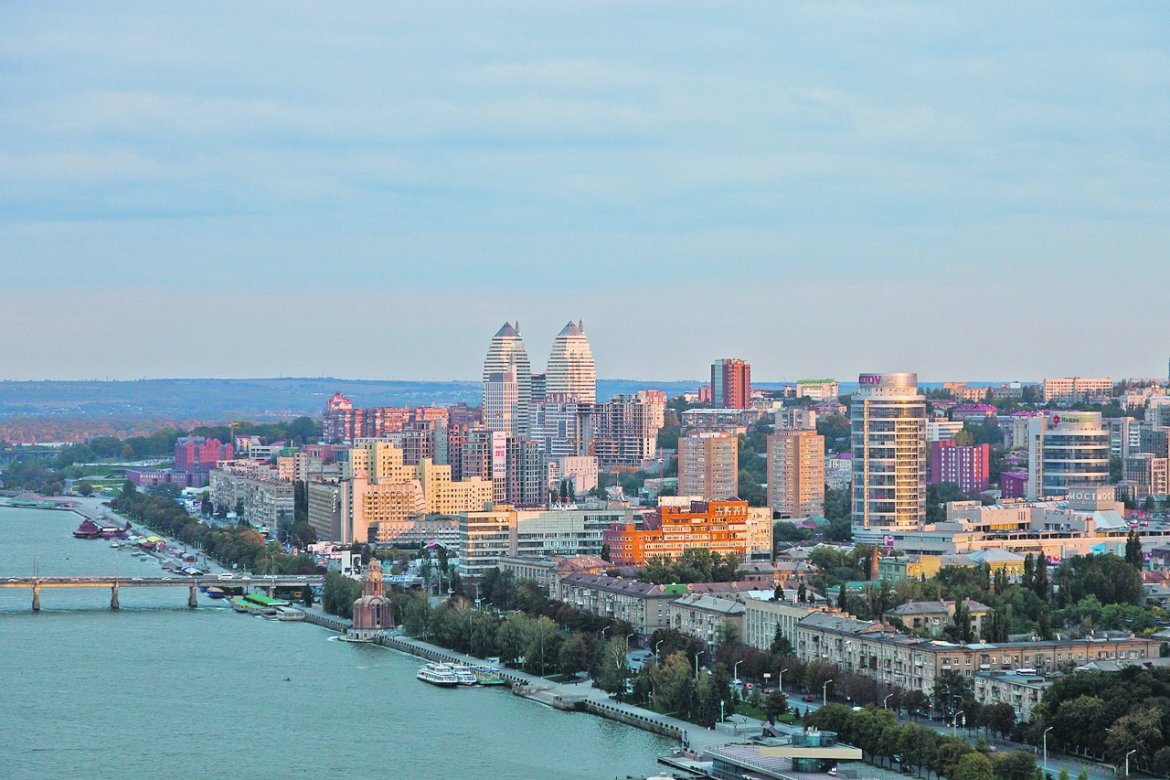
Today, the city’s space history remains an important part of its identity. Dnipro is associated with rockets, satellites, design bureaus, and engineering innovations. The city has become one of the centers of Ukrainian science and technical education. That is why, alongside its industrial side, Dnipro is also seen as a city of engineers, designers, and scientists. This part of its history is also an important component of the city’s identity.
Interesting Facts About Dnipro
In 2026, the city will officially celebrate its 500th anniversary. On August 19, the Dnipro City Council approved 1526 as the city’s founding date. Previously, the official count had started in 1776. Thus, the city’s history was officially “moved back” 250 years. At the same time, historians continue to debate the accuracy of this specific date.
Dnipro was, in fact, founded twice. The first Katerynoslav was established in 1776 on the left bank, but due to its unfavorable location, it was decided to relocate it. Construction of the new city began on the right bank of the Dnipro. It was this second Katerynoslav that became the foundation of the modern city.
Before Katerynoslav, Cossacks lived here. On the territory of modern Dnipro, there were settlements such as Novy Kodak, Polovytsia, Stara Samara, and others. Some of these were later absorbed by the city. Therefore, modern Dnipro did not spring up out of nowhere. Its history includes a much earlier Cossack period.
The city has had several names. Katerynoslav was renamed Novorossiysk, then reverted to Katerynoslav, became Dnipropetrovsk during the Soviet period, and in 2016 received its current name, Dnipro. That is why one of the city’s distinctive features is that its history can literally be traced through its names. Each name is associated with a specific political period.
Dnipro is situated on both banks of the river of the same name. It was the Dnipro River that shaped the city’s development as a transportation and industrial hub. For centuries, the river served as an important trade route. Today, it remains one of the main features of the cityscape. The riverfronts, bridges, and islands have become an integral part of the city’s image.
Dnipro has a metro system. The Dnipro Metro has been in operation since 1995. So far, it has one active line that runs through the central part of the city. The metro has become part of the city’s transportation system and one of the symbols of the great industrial city of Dnipro.
City Day During the War
For Dnipro, City Day in 2026 is taking place under conditions vastly different from those before the full-scale invasion. The city regularly suffers from Russian attacks and remains a vital humanitarian, medical, and logistical hub. Therefore, people’s safety during the festivities must take precedence over the scale of the program. If an air raid alert is sounded, events must be suspended, and participants must take shelter.
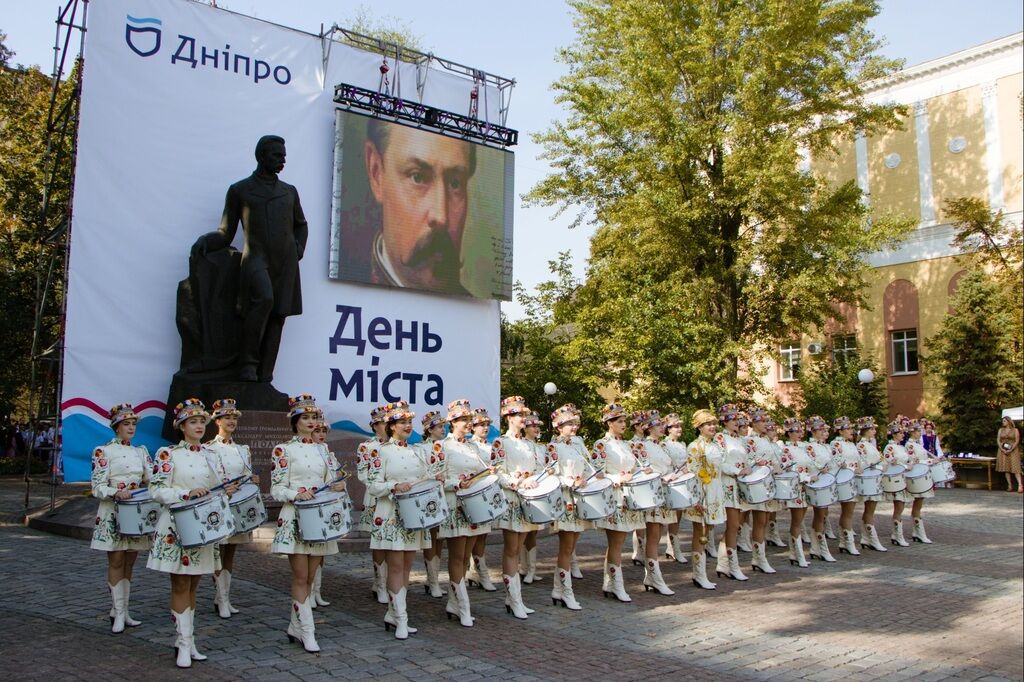
The war has also changed the very perception of the city’s holiday. Previously, Dnipro Day was associated primarily with large concerts, entertainment, and mass festivities. Now it is also an opportunity to support the military, remember the fallen, and thank those who are defending the city and the country. Some residents may choose not to participate in the festivities at all due to personal losses or because their loved ones are serving in the military. Therefore, this year’s celebration should be more subdued and sensitive to the realities of war.
Why Dnipro Day Is Important
City Day is an occasion to view Dnipro as more than just a major industrial center. Behind the modern boulevards, factories, bridges, and high-rises lies the history of Cossack settlements, old Katerynoslav, the industrial boom, the Soviet era, and independent Ukraine. In 2026, this history took another significant turn—the city officially began counting its age from 1526. Even if historians continue to debate the accuracy of this date, the discussion itself encourages people to talk more about Dnipro’s distant past.

On September 12, Dnipro will celebrate City Day as a city with an officially recognized 500-year history. Residents can look forward to cultural, sporting, family, and historical events, with part of the program continuing on September 13. This year’s celebration will bring together modern Dnipro with its Cossack past and offer a fresh perspective on the city’s history. And the main feature of this year is not just the milestone anniversary, but the fact that the very question of “how old is Dnipro?” has become the subject of a major historical debate. City Day on September 12 is an opportunity to reflect on how Dnipro has evolved from ancient settlements along the banks of the Dnipro River into one of Ukraine’s largest cities. And even during the war, the city continues to live, work, develop, and preserve its history.




