
Russia Explains How to Register Chickens and Rabbits
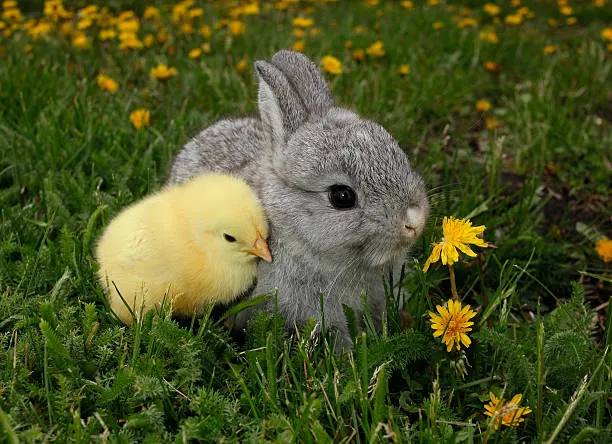
New rules for owners of poultry and rabbits took effect in Russia on September 1. If a household has more than ten such animals, they must be registered, but there is no need to bring chickens or rabbits to the Multifunctional Service Center (MFC). The Federal Service for Veterinary and Phytosanitary Surveillance (Rosselkhoznadzor) specifically refuted reports that Russians were allegedly bringing livestock en masse to public service centers.
The new rules apply to owners of private subsistence farms. Specifically, this refers to those who keep chickens and other poultry or rabbits. Rosselkhoznadzor reminded the public that, starting September 1, owners of farms with more than ten birds or rabbits must register the location where they are kept.
At the same time, messages began circulating on social media claiming that owners must personally bring their animals to the Multifunctional Centers (MFCs). The Russian agency decided to clarify separately that this is not the case. “Owners of private backyard farms do not need to bring their chickens and rabbits to the Multifunctional Center,” reported the newspaper “Veterinary Medicine and Life,” which is affiliated with Rosselkhoznadzor.
To complete the paperwork, owners should contact the state veterinary service in their district or city. There is no need to transport the animals themselves.
How to Register Chickens and Rabbits Now
According to the Russian agency’s recommendations, the owner must first register the location where the animals are kept in the “Cerber” system. After that, they must approve the animals’ identification and verify that the necessary information has been entered into “HorrioT.” This system is part of the state veterinary information system “VetIS.”
Group registration is provided for small farms. This means that each individual chicken or rabbit does not necessarily have to be assigned its own number. Poultry and rabbits can be registered as a group. In this case, the animals are assigned a single shared number, and a corresponding sign is posted on the exterior wall of the facility where they are kept.
This way, the owner does not need to catch each chicken, take it somewhere for registration, and wait in line. The primary purpose is to record the location of the facility and the animals themselves in the state veterinary system.
What happens if there are more than ten chickens
For farms that keep more than ten birds or rabbits, registration becomes mandatory under the new rules. The Federal Service for Veterinary and Phytosanitary Surveillance urges owners to check in advance whether their information has been entered into the relevant veterinary systems. This should help avoid problems and potential fines.
At the same time, a longer transition period has been established for very small farms. If the number of poultry or rabbits does not exceed ten, they must be registered by September 1, 2029. This means that owners of small numbers of animals do not need to rush to complete the paperwork immediately after the new rules take effect.
Why Does Russia Need Such a Registration System?
In the Russian veterinary control system, the registration of animals and their places of keeping is used to track the movement and status of livestock. Such a registry is also intended to help control the spread of infectious diseases among animals and poultry. Information about farms is entered into state veterinary databases.
For industrial farms, this type of monitoring has long been standard practice. Now, the requirements are being extended to some owners of small private farms. This is precisely why confusion has arisen on Russian social media. Reports about the need to register poultry have turned into stories claiming that people are supposedly required to physically bring their chickens to government agencies.
You won’t have to bring chickens to the MFC after all
The Federal Service for Veterinary and Phytosanitary Surveillance (Rosselkhoznadzor) emphasized that the Multifunctional Center (MFC) is not the place where live animals need to be brought for registration. Owners simply need to contact the state veterinary service at their place of residence or where the poultry is kept. There, they will explain the registration process and the necessary steps.
However, the procedure itself may vary by region, so Russians are advised to check the details with their local veterinary service. In summary, the new rules do indeed require the registration of poultry and rabbits, but there is no requirement to bring live chickens to the MFC. Registration is already mandatory for large private farms, while owners of ten or fewer animals have until September 2029 to comply.


