
The Armed Forces of Ukraine report a severe mobilization crisis
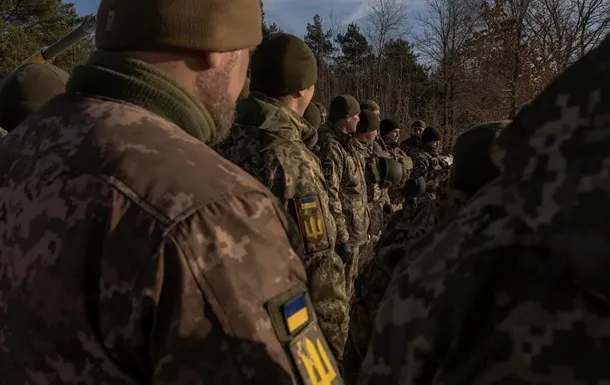
Military personnel and officials report growing concerns about the quality of the mobilization pool, resulting in unfit or partially fit individuals being assigned to units. The Ministry of Defense acknowledges the need for systemic changes in selection and medical screening, but no concrete action has been taken yet.
This is discussed in a report by hromadske:
“It has become the norm that, roughly speaking, out of ten people we’re given—three are of limited fitness, two have drug addictions, and two have gone to the Social Security Service… In short, it’s a disaster,” says Roman Kovalyov, commander of a separate rifle battalion.
Complaints about the quality of the mobilization pool have been heard for a long time in conversations with military personnel at various levels. I heard the “cry from the heart” of some of them over a year ago:
“It’s just terrible at the personnel intake station. Some people are having epileptic seizures. Some are so high on drugs that they scored five ‘strikes’ out of six on the test. Well, we turned those guys away, but someone had to accept them. Because once they’re in the TCC system, they’re already in the army—it’s impossible to send them home,” a source in one of the brigades said on condition of anonymity.
Now, against the backdrop of a deep mobilization crisis and failed communication, the situation has worsened.
“Right now, this is turning not into the defense of the country, but into systemic absurdity. Units are falling apart at the seams, and medics are turning into nannies for the seriously ill, whom they should never have mobilized in the first place. Simply because someone ‘up there’ decided that statistics are more important than common sense,” wrote Alina Mikhailova, commander of the “Ulf” medical unit of the 108th Separate Battalion “Da Vinci’s Wolves,” no longer mincing words.
Why is the story of mobilizing two thousand unfit men into a single unit not an isolated case, but a sad trend? How much is the state losing because of this? Will old approaches and formal medical boards become a thing of the past? And how does the Ministry of Defense plan to reform the system to make mobilization effective?
“70% are those with limited fitness who are shoved into a brigade”
Dmytro Kostyurov was tasked with forming a drone battalion “from scratch.” In mid-November, they provided the personnel. The battalion commander says: if he hadn’t started his own recruitment drive, the situation would have been dire.
“When I saw who they gave me at the start—people with various medical conditions: some had crooked fingers, hypertension, schizophrenia; one had a colostomy and a colostomy bag—I didn’t know what to do with them, because they had absolutely no connection to UAVs. Then I went up to the brigade commander and said, ‘We’ll form the battalion ourselves.’ I don’t need people like that,” says Kostyurov, commander of the unmanned systems battalion of the 29th Separate Heavy Mechanized Brigade.
The ones sent by the TCC are just a walking disaster. Zero quality. Zero motivation. That is, about 70% are “limitedly fit,” and they’re shoved into the brigade. And the brigade can’t do anything with them afterward. It has to “put up with” them, while they wander around hospitals and get paid.
Since the official status of “limitedly fit” has not existed for nearly two years—we’re talking about those whom the Medical Examination Commission (VLC), with various diagnoses, deems either fully fit or fit for service in military support units, the TCC, or military academies. All such individuals, says Dmytro, were sent to rear units, and some were sent for a second medical examination, after which they were eventually discharged from the army by hook or by crook. But this served as a lesson, and the battalion decided to recruit people on their own.
“We launched our own recruitment drive on TikTok. We’re recruiting from those who joined the Territorial Defense Forces. In two and a half months, 1,400 people filled out applications. From them, we selected about 200 people and were able to bring them into the battalion,” Kostyurov shares. He says it’s better this way than when they “push incompetent people on us.”
“Here’s a recent example. A ‘new recruit’ arrived on February 12. But he hasn’t even been to the training ground once. He’s been hospitalized for the third time: lung problems,” says Battalion Commander Roman Kovalyov.
Ineffective mobilization, he says, not only reduces defense capabilities but also places an enormous burden on the Defense Forces.
“It’s a black hole. I can’t give you numbers because it’s a military secret. But the problem is terribly serious: the inefficiency of the entire system in principle. Imagine how much money is spent just to bring a single conscript here. A salary of 20,000 plus 30,000 if he’s in a combat zone, plus 140 hryvnias a day for food, plus they usually go for medical treatment every day because of a host of chronic illnesses. And then they start getting active medical treatment at the state’s expense. The TCC is supposed to “clean all this up.” But they need to meet their quota. That’s why they’re dragging everyone in.”
True, Roman Kovalyov adds, the latest intake in the battalion was sane.
“In just a month and a half, they’ve given me as many people as I usually get in six months. And this is just an ‘average’ group: no young people, but at least no disabilities. Has this become the norm? I’m not ready to say yet.”
A high-profile case arose when the military ombudswoman reported that 2,000 men had been mobilized into one of the military units who, according to preliminary data, were unfit for service. In response to a request from hromadske, the Office of the Military Ombudsman clarified that among those mobilized were people with drug addiction, as well as those undergoing substitution maintenance therapy.
“They were drafted into the military based on military medical commission findings of fitness or ‘limited fitness.’ At the same time, according to Ministry of Defense Order No. 402, they should be deemed unfit for military service,” the response stated.
And this is not an isolated case. The situation is already critical, as a significant number of individuals who, based on medical criteria, should not be performing military service, are already serving in units.
When asked who is responsible in this situation and whether anyone has been punished, the Office of the Military Ombudsman states: an interagency investigation is currently underway. The Ministry of Defense’s Department of Health and the Army Command are involved in it. They promise to conduct a comprehensive investigation into the issue and prepare proposals for amendments to current legislation.
“We need to fully investigate how this happened, at what stage this mass violation occurred. Was it at the TCC or VLC stage, or was it already at the military unit level, or was a decision made somewhere higher up?” said Military Ombudswoman Olga Reshetilova.
“We don’t need quality. We need quantity.”
Our source at one of the regional TCCs, who works in the notification group, admits: “We’ve run out of volunteers.” They’re mobilizing whoever is available. And seven out of ten have health issues.
“Most of the people the police are bringing in now, labeled as draft dodgers, are marginalized individuals. All the healthy, fit ones—both mentally and physically—are actually gone. We don’t take drug addicts. And we don’t have a ‘15-minute express medical exam’ here. Usually it takes two to three hours to see nine doctors. Maybe somewhere they really do conduct medical examinations on the fly just to get the numbers. We provide a higher-quality product rather than a quantitative one. And we suffer for it,” says a TCC servicemember on condition of anonymity.
“Are you suffering because you’re not meeting the quota?” I ask.
“Because our superiors don’t set a quota for us, like we have to recruit five people a day no matter what. But they get scolded ‘from above.’ And up there—the victims of the ‘Soviet system’—usually just want numbers. They don’t give a damn about quality.
“Well, we need to draft 12 people per day for the district. That’s not much. But what if the villages are empty?.. The average is three or four people. And sometimes, not a single one. This isn’t the kind of plan where you watch videos and are blown away by what’s happening in Dnipro—where people are grabbed and shoved into a van, and only once inside do they check his papers. I don’t support that kind of lawlessness,”—a serviceman from the Territorial Recruitment Center
According to his statistics, the Medical Examination Commission currently deems the majority of those mobilized (65–70%) fit for rear units. These are men aged 35 to 50. Those who are younger are deemed fully fit.
“People had heart problems. One cadet has a metal plate in his arm. And they’re deemed fully fit,” says Vlad Tulisov, a senior instructor at the 190th Training Center of the Unmanned Systems Forces, referring to those whom the TCC sometimes brings to training centers.
Such people cannot be “turned away” at the BZVP stage: they are sent for a repeat medical examination only within the brigade. We send the people they give us to the brigades. We can’t just keep them for ourselves, right? Whoever the TCC brings us—we work with them for 50 days and then send them to combat brigades. They can’t refuse them there either. If an order comes from higher command to send such servicemen to a specific brigade.
“We have the right to refuse if a person is severely disabled. That doesn’t happen often. But there was a case where a person was brought in on crutches. We didn’t accept him,” says Vladislav Tulisov, senior instructor at the 190th Training Center of the Unmanned Systems Forces.
The instructor has questions regarding both the work of the TCC and the work of the VLC. He says that more than half of the mobilized people are, in fact, currently classified as having limited fitness for service.
The digital reform of military medical commissions began a year ago. However, there is no effective oversight of medical professionals’ actions. People with serious illnesses are being sent to combat units, and the Ministry of Health does not record how many of these individuals are deemed fit for service—these were the findings of a study by the Media Initiative for Human Rights. We sent a request to the Ministry of Health regarding the results of the Military Medical Commission reform, but had not received a response by the time of publication.
Meanwhile, the Ministry of Defense assures that the military medical examination procedure is gradually changing. They say that its digitization is underway and the rules for conducting medical examinations are being optimized.
“Active work is currently underway to analyze the errors and misunderstandings that occurred during medical examinations conducted by military medical commissions at the Territorial Recruitment Centers and Specialized Medical Institutions, and to develop a systematic solution that will allow us to correct past mistakes and prevent new ones in the future,” reads the Ministry of Defense’s response to hromadske’s inquiry.
The ministry noted that the Military Medical Commission (MMC) only determines fitness for service; therefore, in the absence of complaints and medical documentation regarding illnesses, the commission may limit itself to basic tests and a basic examination by doctors. If the Medical Examination Commission’s conclusion does not reflect the actual state of health, it can be appealed through pre-trial procedures (at the regional or Central Medical Examination Commission) or through the courts. At the same time, the Medical Forces of the Armed Forces of Ukraine do not keep statistics on how often it is possible to appeal the Medical Commission’s decisions. However, they assure us that inspections are conducted to improve the quality of medical examinations, and oversight groups have been established to monitor the Medical Commission’s activities.
“In 2025, 318 inspections of the Medical Examination Commission’s activities were conducted at the Territorial Medical Centers and Specialized Hospitals. Based on the results of this work, including the findings of these inspections, over 130 heads of Medical Examination Commissions were reassigned (replaced).”
Finally, the Ministry of Defense stated that it is preparing specific steps to improve the quality of the mobilization resource and reform the selection, medical screening, and training systems:
Specifically, to improve data exchange between the “Oberig” system and the databases of the National Police and the State Border Guard Service (to ensure instant verification of a person’s current status at checkpoints and border crossings). Ensure the full functionality of the electronic account in “Reserve+” (which will allow for updating contact information and place of residence without a personal visit to the Territorial Recruitment Center). Grant medical examiners access to patients’ digital medical records in civilian healthcare facilities (to objectively assess health status and avoid errors when determining fitness for service). Shift from mass conscription to the principle of professional suitability. The TCC and the Joint Staff should prioritize recruiting specialists in specific fields (drivers, communications specialists, medical personnel, IT specialists) in accordance with the current needs of the Defense Forces units. Through the integration of registries, ensure that information on the civilian profession, education, and actual health status of conscripts is reflected in the “Oberig” system for effective resource planning. Develop a clear mechanism for interaction between the TCC and the SP, the National Police, and military command bodies. “This is necessary to implement a targeted notification system for conscripts, which will increase the effectiveness of mobilization measures and reduce social tension,” the Ministry of Defense concluded.
We previously reported that a new criminal case has been opened against political strategist Petrov.
Propagandist Petrov faces his fifth criminal case and a new draft notice from the army.
Blogger Petrov stopped traveling around the city after his mobilization deferment was revoked.


