
Attacks on checkpoints are intended to send a message — the Joint Forces Command
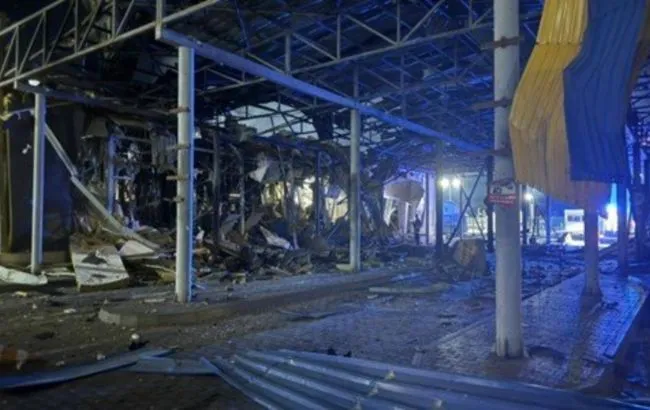
Russia is attempting to use attacks on Ukrainian border crossings with EU countries to create the desired narrative for its own audience. The Center for Countering Disinformation stated that Moscow is exaggerating the extent of the damage, and that most border crossing points are able to resume operations fairly quickly after the attacks.
Russia continues to attack Ukrainian border crossings with European countries. The Center for Countering Disinformation believes that such attacks serve not only military but also informational purposes. This was stated by Andriy Kovalenko, head of the Center.
According to him, Russia is attempting to portray to its audience the alleged existence of large-scale problems on the Ukrainian border and create the impression that Ukraine’s ties with the European Union are under threat. “By striking checkpoints on the EU border, the aggressor country is painting a picture for its ‘domestic audience.’ Of course, it is exaggerating the scale of the damage,” Kovalenko said.
He identified two main objectives of such attacks. The first is to create the narrative that suits Russia’s interests. The second is to spread the claim of an alleged “severed connection with the EU.” At the same time, the head of the CPD noted that the consequences of the strikes do not always mean a prolonged suspension of border crossing operations. According to him, in most cases, operations at border crossings are restored fairly quickly after Russian attacks.
“Everything else is just noise,” Kovalenko wrote, commenting on the Russian strikes. He urged Ukrainians not to accept Russian reports of an alleged large-scale border blockade at face value. Russian propaganda, he said, is trying to exploit the very fact of the attack to create a much greater impact in the information sphere.
Strike on the “Orlivka” Border Crossing
One of the most recent such incidents was the attack on the “Orlivka” international border crossing in the Odesa region. On the night of September 1, Russian troops attacked it with strike drones. “Orlivka” provides ferry service between Ukraine and Romania.
As a result of the attack, hits were recorded on the building and the territory of the border crossing. Fires broke out there after the strike. Rescue workers responded to the scene and subsequently contained the blazes.
The attack on “Orlivka” drew attention precisely because of the crossing’s location. An important transportation route between Ukraine and Romania runs through it, so strikes on such infrastructure can create problems for transportation and the work of border services. At the same time, the attack itself does not automatically mean the suspension of all connections between Ukraine and the European Union.
What Happened at the Border with Moldova
Another similar incident occurred in August at the Ukrainian-Moldovan border. On the night of August 25, Russian drones attacked the area around the “Vynogradivka–Vulcanesti” international border crossing. Following the attack, operations there were temporarily suspended.
Such decisions are made primarily for security reasons. Once the necessary inspections and repairs are completed, the checkpoint can resume operations. This is precisely what the Center for Public Diplomacy is highlighting. The Russian side may present temporary disruptions following the strikes as evidence of an alleged large-scale “closure” of the border or Ukraine’s loss of transport links with Europe.
In reality, the situation depends on the specific crossing point, the nature of the damage, and security conditions. If the infrastructure has been damaged, its operation may be temporarily restricted, but this does not mean that all traffic to the EU is halted.
Why Is Russia Waging Such a Information Campaign?
Russian strikes on border infrastructure have an obvious physical impact—they can damage buildings, cause fires, and temporarily disrupt operations at border crossings. However, according to the CPD’s assessment, Moscow is also attempting to exploit these consequences for propaganda purposes.
To a Russian audience, such attacks can be presented as supposedly successful strikes against Ukraine’s transportation system and its connections to Europe. At the same time, the actual extent of the damage may be exaggerated. Another goal is to create a sense among Ukrainians themselves that the situation on the western border is supposedly becoming critical. That is why Kovalenko urges people not to fall for the propaganda effect of such reports.
At the same time, this does not mean that strikes on border crossing points do not pose a real threat. Russian attacks can damage civilian and border infrastructure, endanger people, and temporarily disrupt traffic. Therefore, it is important to assess each situation based on actual consequences, rather than on reports from Russian propaganda outlets.
According to the head of the Center for Public Diplomacy, in many cases, border crossing operations are successfully restored following Russian attacks. Thus, strikes on individual facilities do not mean that Russia can completely cut off Ukraine’s connection with the European Union. Currently, Ukrainian authorities continue to address the aftermath of Russian attacks and restore damaged infrastructure. At the same time, information regarding the operation of specific border crossing points should be verified based on reports from Ukrainian border guards and other official agencies. This was reported by Andriy Kovalenko, head of the Center for Countering Disinformation, on Telegram.
Overnight, Russian troops attacked the “Orlivka” international ferry crossing on the Ukrainian-Romanian border with Shahed strike drones.


