
By December 4, 2026, Ukrainian businesses must adapt to new operating rules in the event of air threats. Companies that do not have shelters will have to find a way to protect their staff and visitors.
For large enterprises, this means additional investments in security and operations. Some companies have already gone a step further: they are funding air defense systems and maintaining their own drone defense teams.
At the same time, the new requirements could “strangle” small businesses, which are already teetering on the brink of profitability due to blackouts and sky-high generator costs. This primarily affects the service sector, including small coffee shops, restaurants, and stores.
UA.News explains how large and small businesses are preparing to comply with the government’s new security requirements; why investing in shelters is gradually becoming as essential as having a backup power supply; and what representatives of large and small businesses are saying about these additional security measures.
New Rules: What Will Change for Businesses
On December 4, 2026, the three-month transition period for companies and businesses to set up bomb shelters to protect employees and visitors will end. The requirements were introduced by Government Resolution No. 1092 and apply to all business entities regardless of ownership structure. This includes manufacturing facilities, shopping centers, individual stores, restaurants, offices, and sole proprietorships with hired employees.
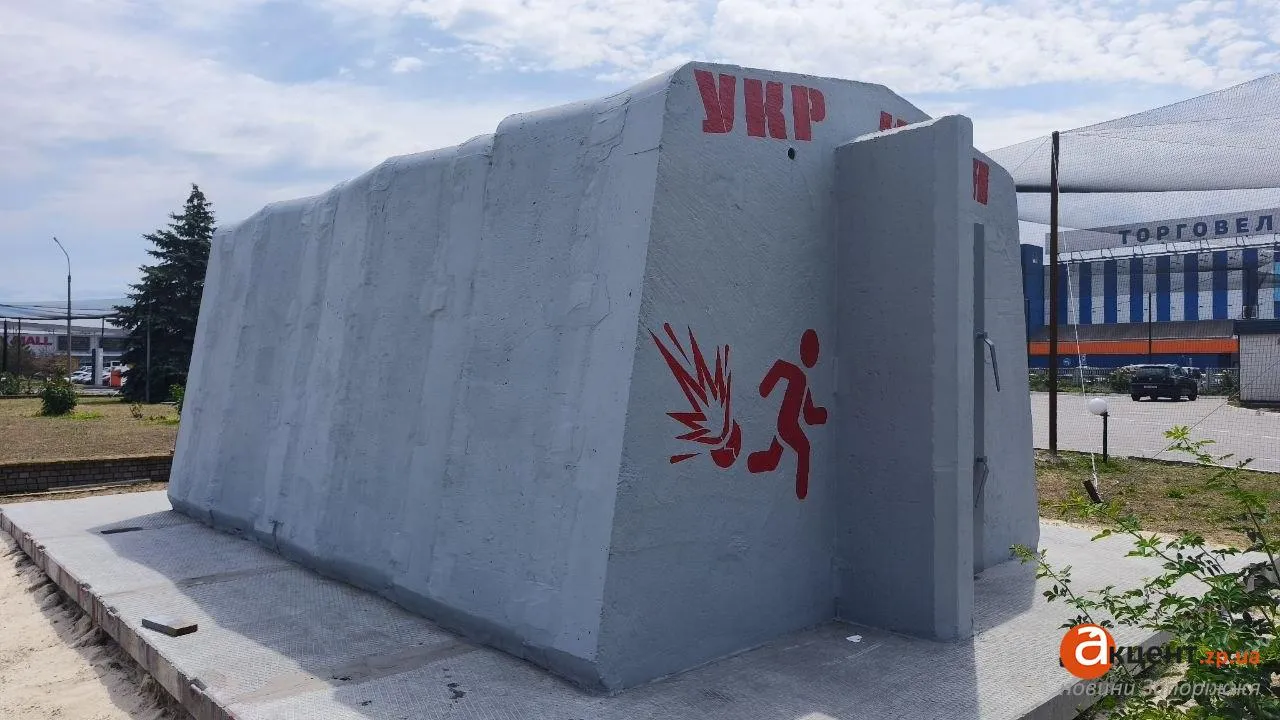
To continue operating as usual under a yellow threat level, businesses must set up protective structures, shelters, or special “safe spaces” inside their buildings capable of protecting against a blast wave.
Businesses that do not have a shelter have several options: adapt an existing room, set up a safe space, or ensure access to another protective structure in compliance with regulatory requirements. It is worth noting that a windowless room or a basement will not automatically be considered a fully functional shelter. A safe space must meet technical criteria for protection against the effects of an explosion. This requires appropriate engineering calculations.
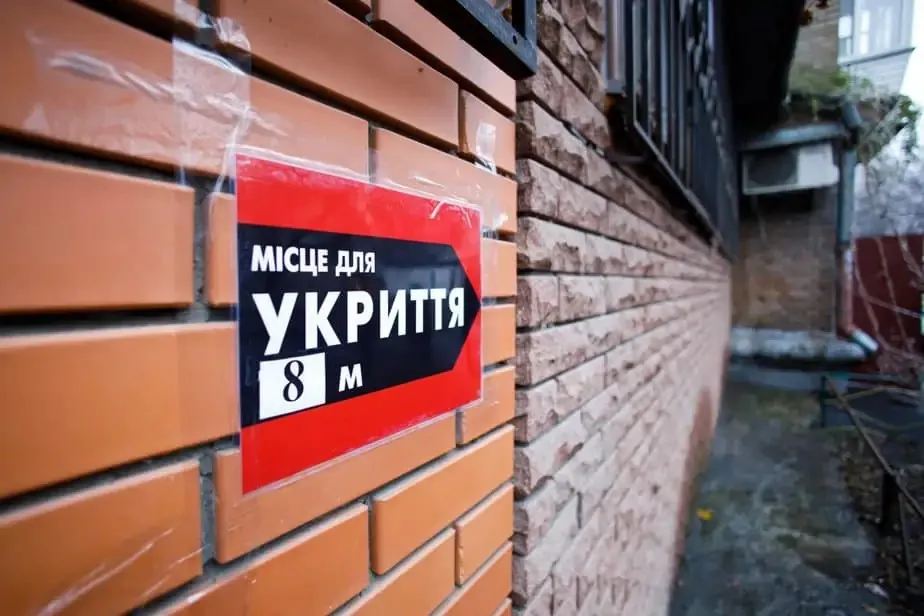
Employers are also required to post information signs at entrances or on building facades indicating the presence or absence of a shelter, establish clear procedures for action during an alert, and ensure that staff and visitors are notified of the threat.
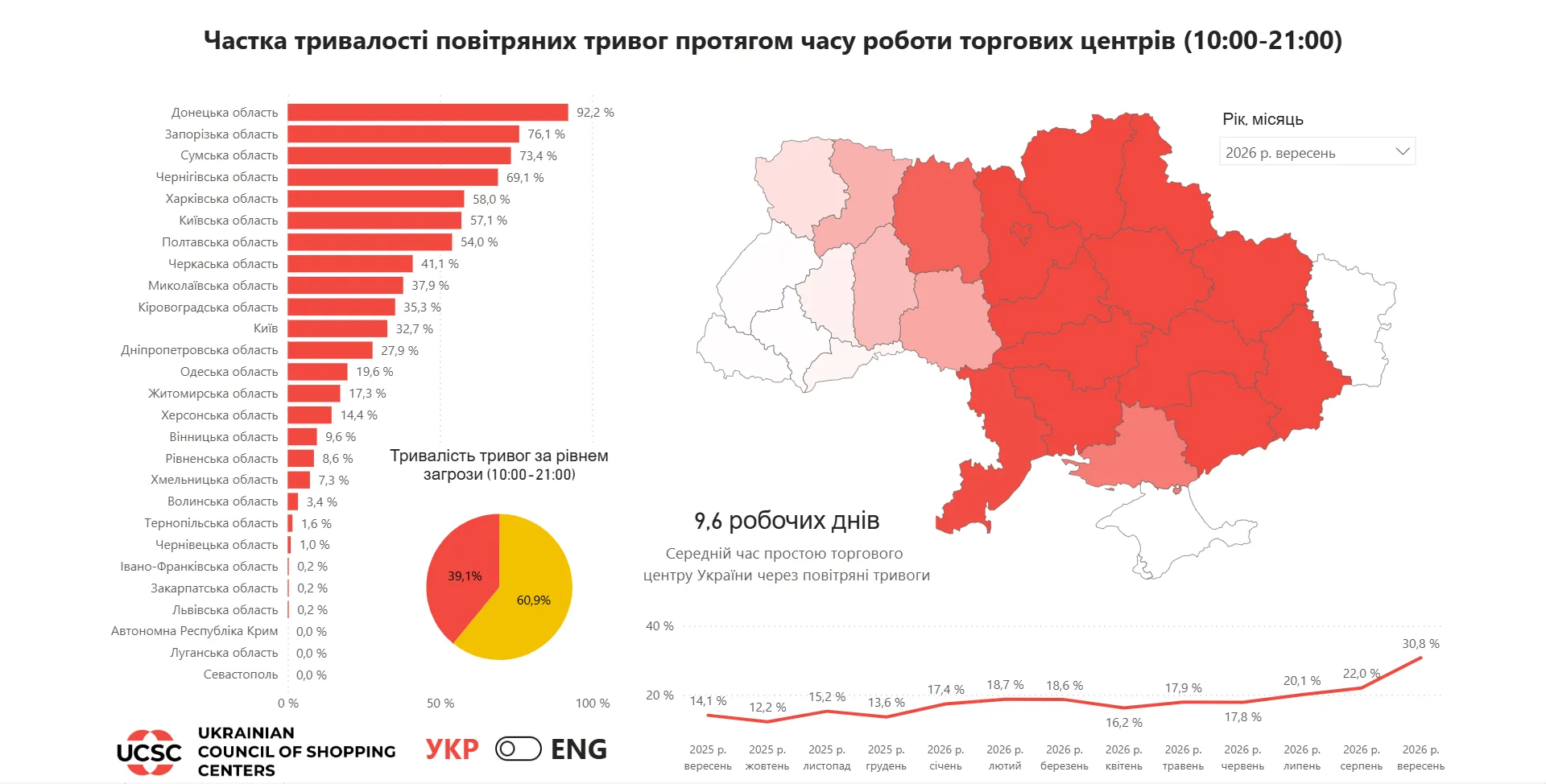
If a business fails to provide the necessary conditions for protecting people by December 4, 2026, operations will have to be suspended during a yellow-level air raid alert. Where possible, employees may be transitioned to remote work.
At the same time, operations must be suspended during a red alert, which indicates a missile or missile-drone attack.
Who Is Already Building Shelters: The Experience of Rozetka and Gas
Stations
Major Ukrainian companies began investing in protective structures long before the adoption of Resolution No. 1092. Logistics operators, industrial enterprises, gas station chains, supermarkets, and shopping malls are the most active in constructing them. This is especially true in regions within range of Russian ballistic missiles, where air raid alerts are almost constant.
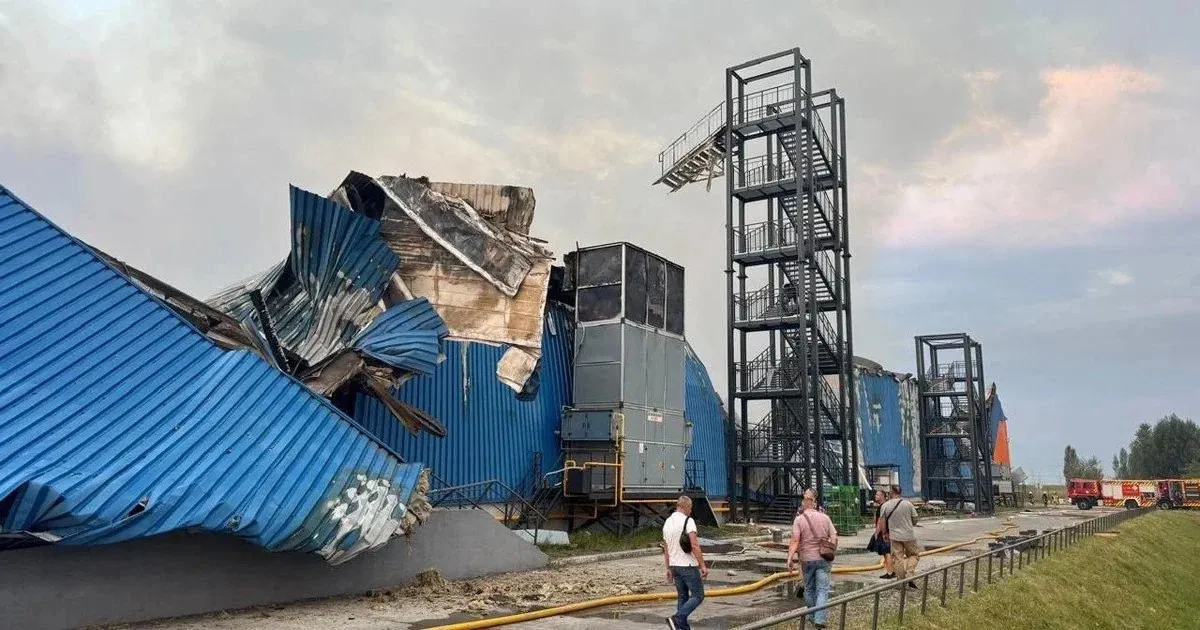
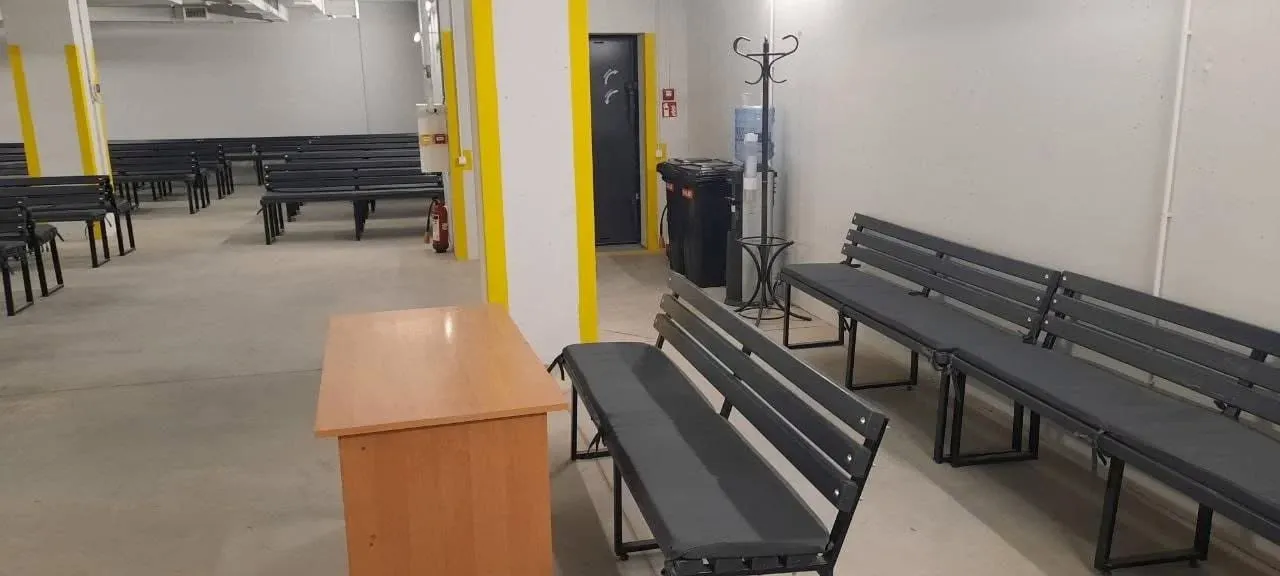
Protective shelters made of steel and concrete are being placed directly near workplaces to reduce evacuation time. One example is a shelter for 600 people installed at Rozetka’s distribution center in Brovary. In August 2026, this facility saved the lives of 92 company employees during a barrage of three ballistic missiles.
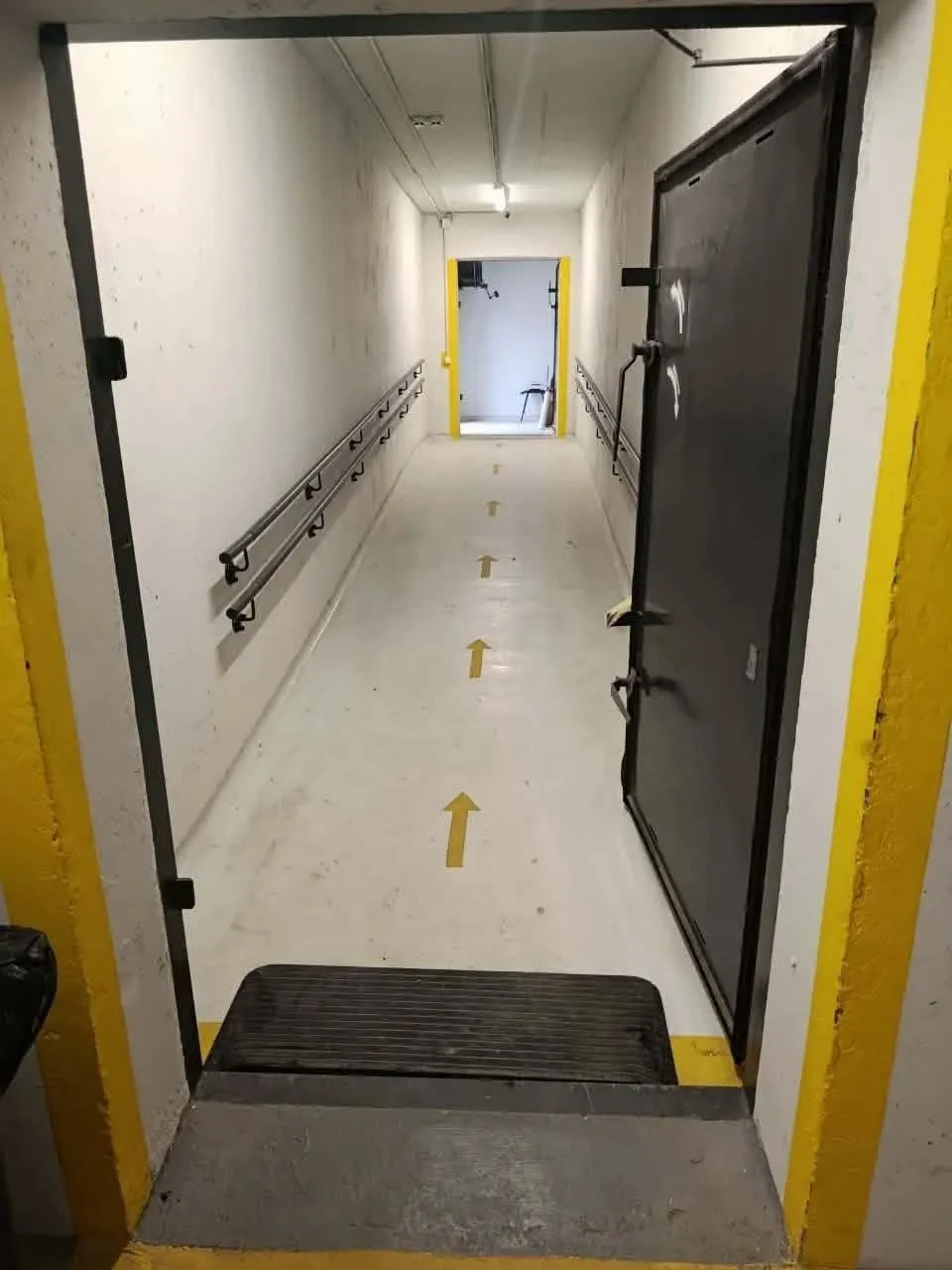
The company reported that the first such shelter in Brovary was built back in March 2022. At that time, the warehouse was only three kilometers from the front line. The shelter complies with all norms and standards, which have been updated since Soviet times. The facility itself consists of containers buried underground, covered with wood on top and a mound of earth.
Gas
stations have also begun installing protective structures on a large scale—gabions and mobile reinforced concrete shelters designed to accommodate approximately 100 people. Such shelters were first installed at gas stations in frontline regions. Following an increase in rocket drone attacks, such structures are now becoming common in the Kyiv region as well. They can provide shelter not only for gas station staff and customers but also for drivers and local residents.
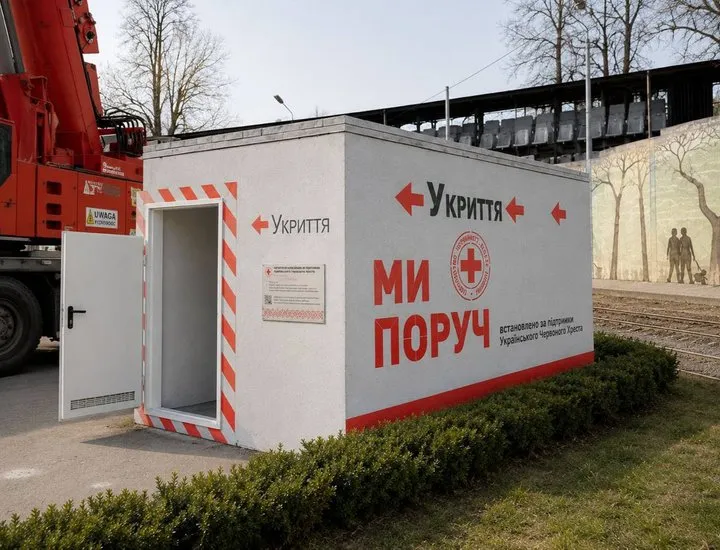
As for the cost of these safety measures, the construction or installation of a prefabricated modular concrete shelter costs businesses between 800,000 and 1.5 million hryvnias. Large, capital-intensive bomb shelters for manufacturing facilities or logistics hubs cost businesses about 60 million hryvnias.
Large businesses are shifting from shelters to their own air defense
systems
Large Ukrainian companies with extensive production operations and long supply chains are forced to invest not only in shelters but also in their own firefighting teams and equipment, and even in air defense. For large businesses, safety is becoming part of operational management, rather than just an additional expense.
Back in November 2025, the government approved a pilot project to strengthen air defense by enlisting companies—regardless of ownership structure—to form private mobile air defense units. Nearly 100 enterprises have already joined the project, and about 50 mobile units have been formed, operating under the command of the Ukrainian Air Force.
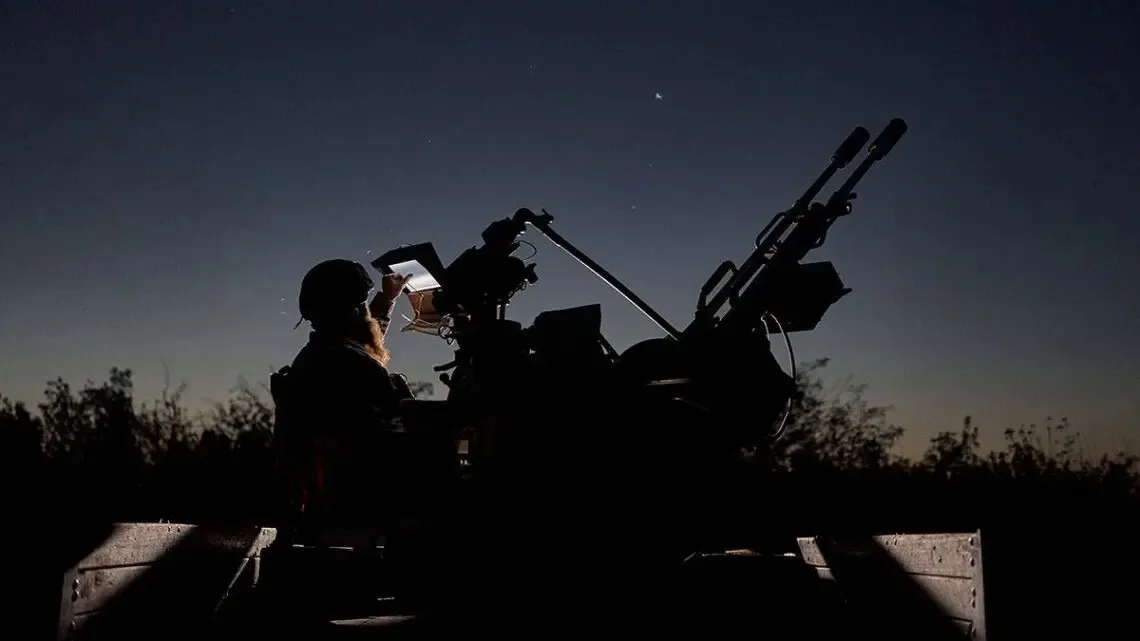
In March 2026, the government authorized military units, pursuant to relevant decisions, to temporarily transfer certain air defense equipment and ammunition to enterprises. Companies were also given the opportunity to purchase authorized types of weapons at their own expense. Critical infrastructure operators, as well as state-owned and private enterprises from various regions—including Kyiv, Kharkiv, Odesa, Poltava, and Zakarpattia Oblasts—have joined the effort to defend the skies.
Vyacheslav Klimov, co-owner of the Nova Group of Companies, which includes “Nova Poshta,” reported that the company has implemented a private air defense project that has already shot down Russian Shahed-type attack drones. Klimov did not specify the number of Russian drones shot down, but emphasized that the project must be further developed.
“We must continue our efforts related to private air defense. We are one of the few companies that have implemented this project. I don’t want to disclose the numbers to you, but we have shot down ‘Shaheds’… I firmly believe that private owners should enter sectors that, for some reason, were considered a state monopoly before the war,” Klimov said.
However, not all companies that have studied the private civil defense model and the possibility of participating in the project consider it effective. The pharmaceutical company “Darnitsa” believes that creating private civil defense systems is ineffective. Kateryna Zagoriy, Chair of the company’s Board of Directors, explained that the main problem is the rapid evolution of threats. Furthermore, the end consumer of the products will have to foot the bill for financing additional security measures.
“Creating a private supply chain security system. We delved deeply into this issue and were one step away from having a solution ready. We moved away from that approach, and now we understand the following: since the threat landscape changes every 3–4 months, we simply won’t have enough money—you can’t buy medicine that’s 10 times more expensive just because we’ll have to keep purchasing new air defense systems every time. “We’re constantly studying this issue, but we’re not spending money on it,” the director said.
Zagoriy noted that Darnitsa considers it more effective “to complete the construction of shelters than to invest in air defense systems.”
Small and Medium-Sized Businesses: The Government Is Shifting Its Responsibilities
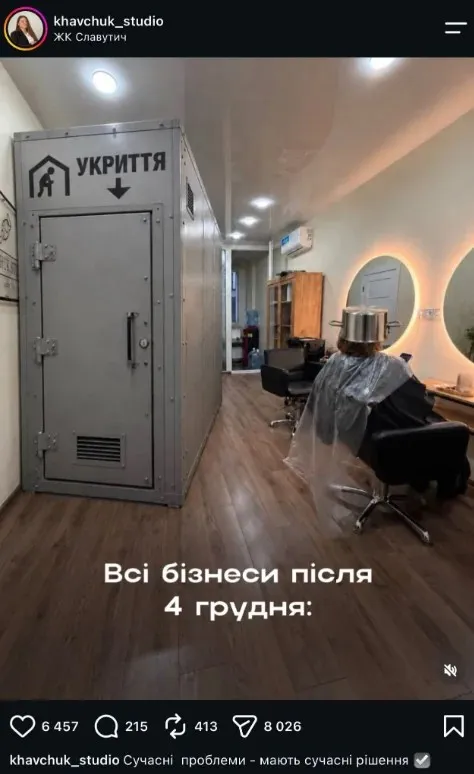
Representatives of small and medium-sized businesses, who physically lack the resources to set up shelters, have been hit hardest by the new rules. These are primarily coffee shops, restaurants, stores, hair salons, and other service establishments. In regions where air raid alerts are constant, businesses without their own shelters lose the ability to operate normally, retain their staff, and pay taxes.
It’s no surprise that the government’s new requirements have sparked outrage on social media. For the most part, users emphasized that the government wants businesses to build the shelters themselves.

For the restaurant industry, the situation with shelters is particularly difficult. Unlike offices, where some employees can be shifted to remote work, cafes and restaurants are physically tied to a specific location. An establishment cannot serve guests remotely in the dining area, and shutting down the kitchen during an alarm is an additional financial burden.
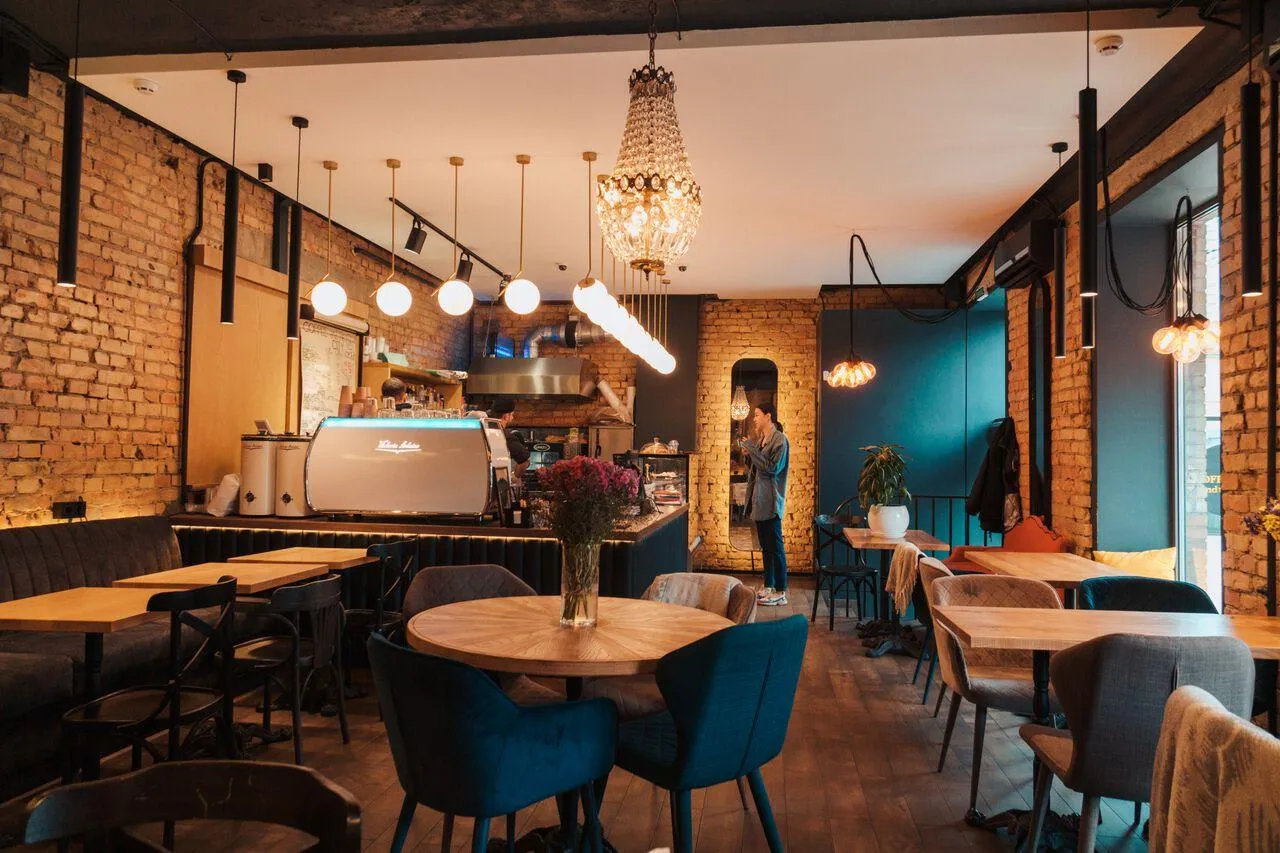
Small coffee shops in historic buildings, on the ground floors of residential buildings, or in rented spaces without basements are
particularly vulnerable. Another problem is that business owners do not always have the right to modify the building’s structure or carry out large-scale renovations on their own.
Manufacturers of mobile protective structures already have waiting lists of about half a year, and the cost of orders has risen significantly—nearly threefold. Thus, while the government has established mandatory requirements, not everyone will be able to meet them by the deadline, even if they have the funds.

Olga Nasonova: Business owners aren’t just outraged—they’re panicking and feeling desperate
Restaurants and cafes in Kyiv, as in other Ukrainian cities, are not ready to comply with the government’s decree on shelters. At least half of the establishments are definitely not ready. The problem lies in the establishments’ locations. Some are lucky, while others are not, says Olga Nasonova, director of the “Restaurants of Ukraine” analytical center and co-founder of the National Restaurant Association of Ukraine (NRAU).
“For example, in Kyiv, about 15% of restaurants, cafes, and bars are located in basements, which can be considered relatively safe. They are ready to comply with the government’s decree. At the same time, the situation varies depending on the city. For example, in Odesa, there are very few establishments in basements at all. In Kyiv, there are more such establishments. These are usually pubs or bars. Some of them have even already received official shelter status. In particular, I know of at least one such establishment—“Vydma-Bar Lysa Hora”—which is located in a deep basement.
There is also another category of establishments that are fortunate in terms of their location. They may be near metro stations, business centers with official shelters, or other protective structures. Such establishments can feel relatively secure. If a private shelter is located nearby—for example, in a business center—it is theoretically possible to enter into an agreement regarding its use. If there is a subway station nearby, it can be designated as the closest available shelter.
But at least half of the restaurant market is not so fortunate. These establishments are located in areas where there are no accessible shelters nearby at all.Sometimes shelters technically exist, but they’re located on school grounds—where access is restricted to outsiders—or in private residential buildings. In reality, restaurant patrons cannot use them. These establishments also lack their own shelters.
“According to my rough estimates, at least half of all restaurants are now forced to find solutions to comply with the decree. That is, not the entire market, but a significant portion of it,” says Olga Nasonova.
It’s important to understand that the restaurant industry’s problems began to escalate even before the new regulation was issued. A wave of restaurant sales and announcements of temporary closures began earlier, the restaurant industry expert emphasizes:
“Back in August, I started tracking the number of restaurants and cafes listed for sale. In Kyiv alone, I counted about 500 such establishments. That’s a very large number. It means they’re operating at a loss. In the Ukrainian context, profitable establishments aren’t sold.
Moreover, the losses can vary—from relatively small to critical. Some of these establishments have already closed. Only a small number have found new owners and continued to operate. Some are still looking for buyers, hoping to recoup at least part of the money they invested in the business.
Among the reasons were rising fuel prices and increased costs for running generators. If a restaurant is forced to run on a generator for more than five or six hours a day, in many cases it simply doesn’t make sense to stay open at all. The costs of fuel and independent power supply can exceed the profit the establishment could earn in a day.
For example, a restaurant with a large kitchen might spend about 10,000 hryvnias a day on fuel for a powerful generator. At the same time, its daily profit might amount to roughly the same amount.
That is precisely why, even before the decree on sheltering was issued, restaurant owners began discussing the possibility of temporarily suspending operations for the winter. Power outages had already begun in September. Therefore, for many, a temporary closure until spring is a way to survive. Restaurant chains, including quite successful ones, are giving this particular thought. They’ve calculated that staff can be temporarily reassigned to other locations, while food and inventory can be redistributed among the chain’s restaurants. And this particular location will be mothballed, maintaining only the minimum operating costs necessary to keep it running. This way, the business can be preserved until spring.
At first, I heard about these plans repeatedly from restaurant owners in private conversations. Later, I began to notice posts on social media: “See you in April,” “See you in the spring.” When there were five, ten, or more such posts, I realized this was already a trend. And it’s entirely reasonable.
After I published a post about the new requirements, I received many comments from business owners in various industries. And I realized that for some of them, the situation is practically hopeless. Imagine a restaurant located near a highway. The nearest shelter might be 20 kilometers away. There isn’t a single protective structure nearby. Or a gas station with a café, where the situation is similar. What are the owners of such facilities supposed to do?
Even setting up the simplest standalone shelter can cost approximately $100,000–$140,000. In addition, it needs to be installed, earthwork must be done, and time must be spent on setting it up. This is a fairly lengthy process, especially during the fall and winter. For small businesses, such expenses can be simply prohibitive.
In fact, a huge number of business owners have faced this problem—from restaurants and cafes to hair salons, medical facilities, and other small businesses. The main question is: what should you do if there is physically no shelter nearby? How can you ensure the safety of employees and visitors, where should you direct people during an air raid alert, and how can you continue to operate? In other words, there are more questions than answers.”




