
The Military Ombudswoman Identified Those Responsible for Conflicts Between the TCC and Civilians
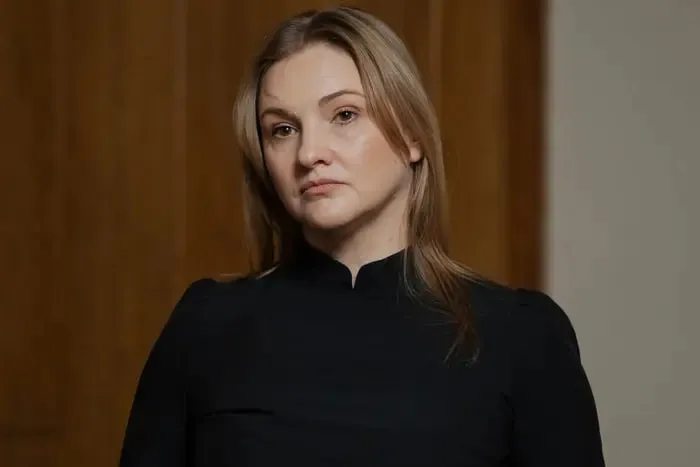
Military Ombudswoman Olga Reshetilova stated that responsibility for the tense situations between TCC employees and civilians lies with the state agencies and officials who shape mobilization policy.
According to her, the government, military and political leadership, and local authorities are all involved. She also criticized politicians and officials who, in her opinion, are using the issue of mobilization for their own publicity.
“On the question of who is responsible: it is unequivocally the government, the military and political leadership, and local governments, which for so many years have been unable to strike a balance between the needs of the economy and the needs of the military. A complete overhaul of the principles of military service exemptions is needed, and that is where mobilization reform must begin. But to implement this, we need not only political will and a team of capable bureaucrats, but also public support—and that is lacking,” the statement reads.
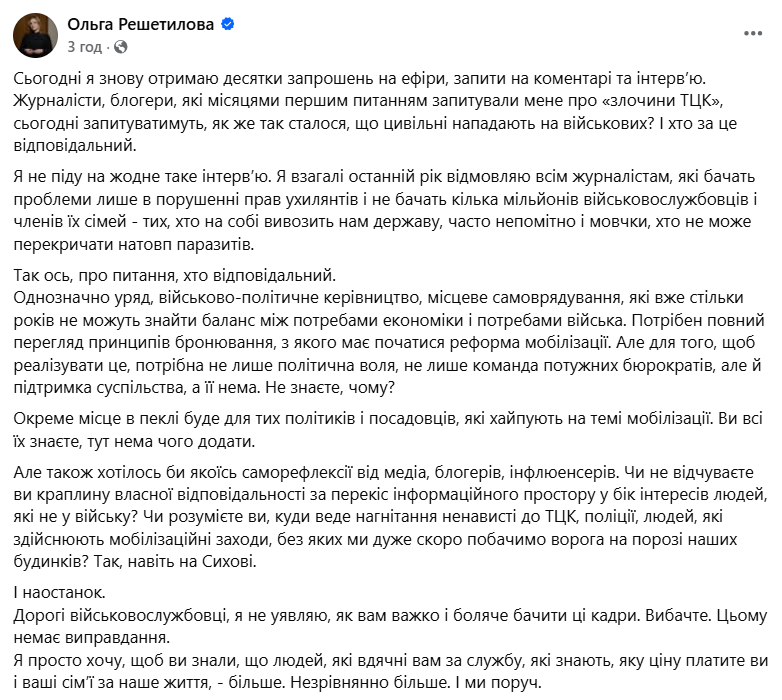
In particular, Reshetilova emphasized that “there will be a special place in hell for those politicians and officials who are capitalizing on the mobilization issue.”
This was stated by Military Ombudswoman Olga Reshetilova.
Video: Protests erupted in Lviv over a conflict with the TCC.
The Ministry of Defense announced a new large-scale procurement of 155-mm artillery shells for the Armed Forces of Ukraine.
The Reserve+ app experienced a glitch: users temporarily lost access to their documents.
The Ministry of Defense clarified the procedure for automatically extending deferments in “Reserve+.”


