
Attacks by Ukrainian drones disrupted maritime shipments of goods from China to Russia
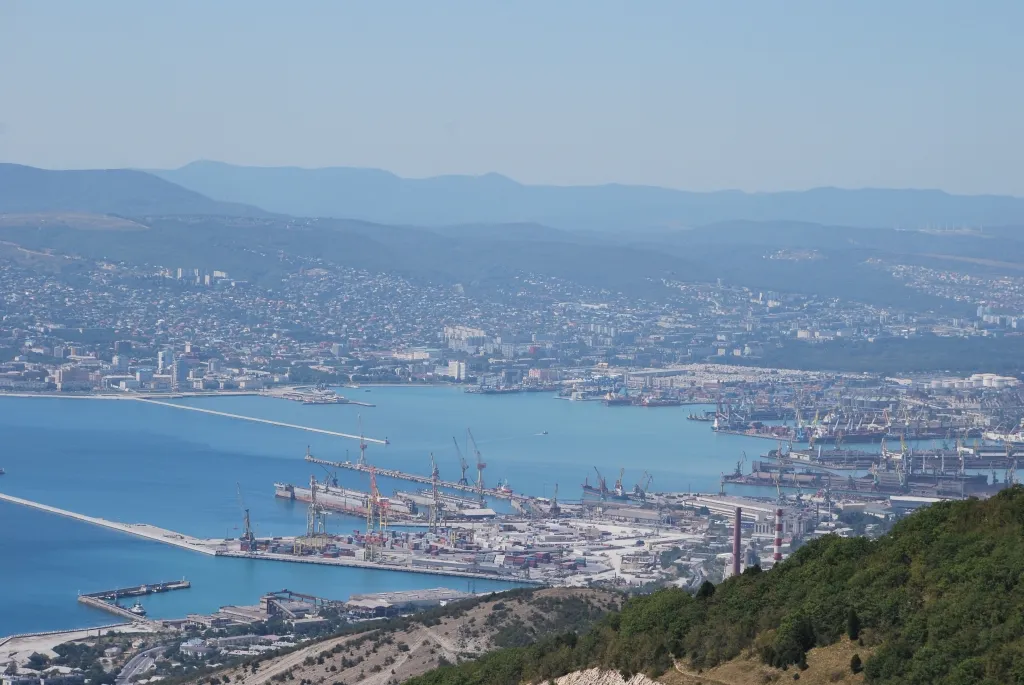
Ukrainian strikes using drones and unmanned boats have complicated the transport of Chinese goods to Russia via the Black Sea. Logistics and foreign trade companies are reporting significant delays on the China–Novorossiysk route.
“Things are really complicated on the China–Novorossiysk route right now; the delays are enormous,” one importer told The Moscow Times. According to three of his fellow freight forwarders, it is best to avoid this route at the moment: due to attacks by drones and unmanned boats, the situation there has become unpredictable.
The tense situation in the region has persisted since March but has now escalated to a critical point, the publication’s sources said. Previously, attacks were directed mainly at dry cargo ships carrying grain and tankers carrying petroleum products; in late July, a container ship carrying imported cargo was struck. As a reminder, on the night of August 1, the Fesco-owned container ship “Yanina” sank in the Black Sea, 130 miles from Novorossiysk, as a result of an attack by maritime drones—the entire crew was rescued, but the cargo was lost.
Novorossiysk is primarily an export port, and as recently as this spring, it was vying for the status of Russia’s main export gateway; however, it also handles a significant share of imports. Far Eastern ports are overloaded, which is why goods from China are transported via this long route: up to 30% of Russia’s imported container cargo passed through Novorossiysk, according to an executive at a major logistics company.
Monitoring the vessel schedule shows that the number of voyages by large vessels from Novorossiysk in July fell by 38% compared to June; specifically, tanker voyages dropped by 50% and grain bulkers by 46%. Callings by other cargo ships at the port fell by 23%.
“But now the situation will worsen, because container ships have also become targets,” fears a top manager at a major logistics company. The owner of a freight forwarding company adds that there will clearly be fewer companies willing to take such a risk, even though there were no significant delays at the port prior to June and logistics remained stable—unlike in the overburdened Far East.
The scale of the risk is evidenced by the problems with shipping cargo out of Novorossiysk this year. According to estimates by the Union of Grain Exporters and Producers, due to attacks in the Azov-Black Sea region, Russia may fall short of exporting 30–35 million metric tons of wheat this season—while analysts had forecast total exports at 44–45 million metric tons. Total grain exports from Russia for the previous season (July 2025–June 2026) exceeded 61 million metric tons.
“The systematic attacks that began in July could soon lead to a complete blockade of the Black Sea basin’s export corridors,” the union said in a statement.
In 2025, Novorossiysk handled 168 million metric tons of cargo—29% more than its closest competitor, the port of Ust-Luga in the Leningrad Region (130 million metric tons), and twice as much as the Pacific port of Vostochny, noted Diana Shevtsova, director of the Novorossiysk branch of TransGID. One in every five metric tons of Russian maritime exports passed through Novorossiysk—including Urals crude oil and the Kazakhstani CPC Blend, wheat for Egyptian grain elevators, and containers of fertilizers and metals bound for markets in Asia and Africa.
Currently, a terminal worth 120.7 billion rubles is under construction at the port, the Caspian Pipeline Consortium plans to handle a record 72 million metric tons of oil through the local berthing complex, and container throughput has exceeded 1.1 million TEU for the first time. According to Shevtsova, three factors are behind these figures: the reorientation of Russian exports from the Baltic Sea to southern routes, a shift toward Asian markets, and large-scale investments in infrastructure.
Source: The Moscow Times
You may also be interested in:
Trump threatened Iran with total surrender over its nuclear program.
As a reminder, on August 2, U.S. President Donald Trump stated that the U.S. military would not launch new strikes against Iran if Washington and Tehran reach an agreement in the near future.
Tehran has threatened to strike the energy infrastructure of other countries if the U.S. carries out new attacks. Officials in Tehran stated that the response would be directed not only against U.S. interests but also against countries that support potential military action.
The United States and Israel are holding consultations on possibly increasing pressure on Iran, in particular by blocking its land borders. This scenario is being considered as part of broader measures to limit Tehran’s capabilities.


