
Russia is deploying three armies at once to Dobropillya: OSINT reveals the situation on the front lines
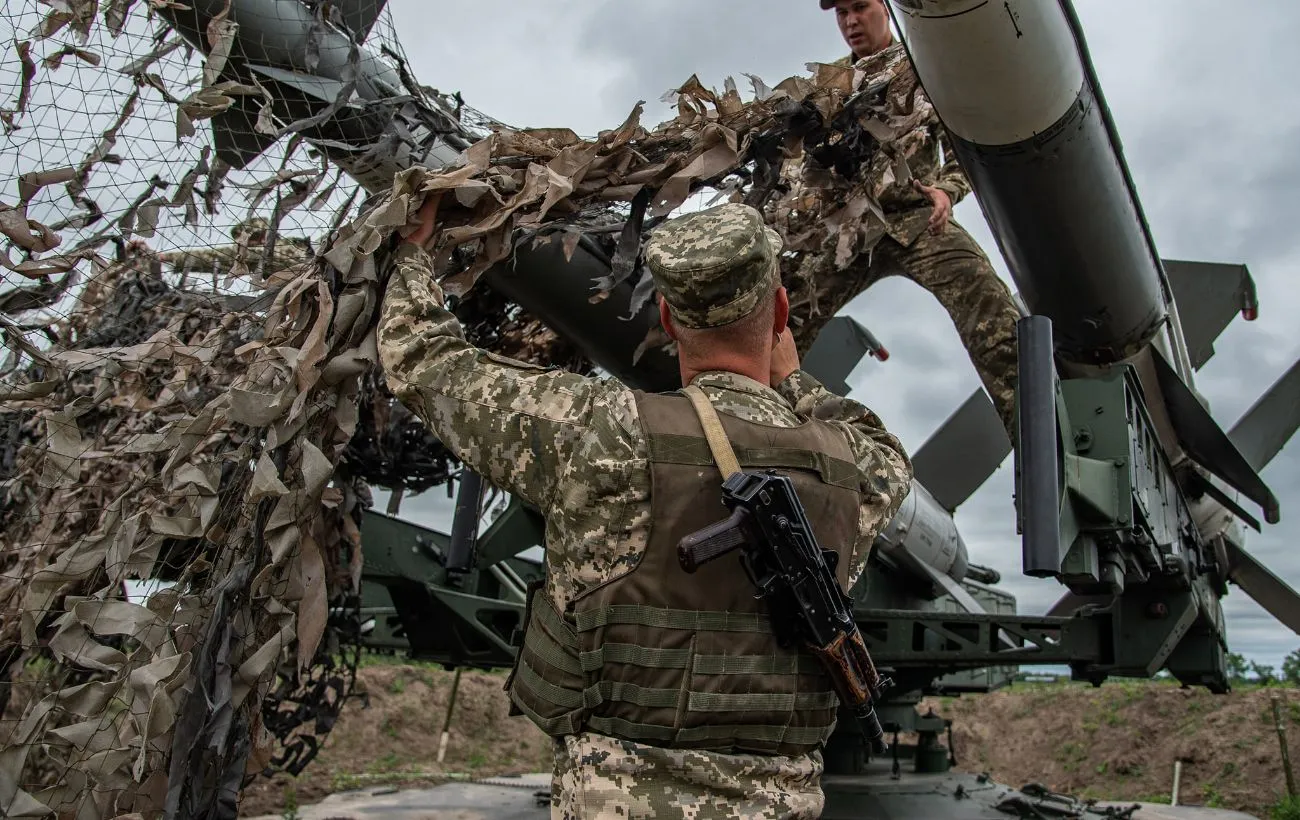
OSINT researcher Clément Molen analyzed the current deployment of Russian and Ukrainian troops along the front lines. According to his assessment, both sides have been actively regrouping their forces since the end of summer.
The main concentration of Russian troops—which failed to accomplish their objectives on most fronts—is currently observed along a roughly 30-kilometer stretch near Dobropillia. Three Russian armies—the 8th, 41st, and 51st—are operating there. They are supported on the western flank by the 76th Airborne Division, the 2nd Combined Arms Army, and the 90th Tank Division.
In the Sumy region, units of the Russian 44th Corps were able to cross the border at several new locations; however, overall, according to Molen’s assessment, the Russians have failed to establish the planned “buffer zone.” In the Kharkiv region, fighting continues for Kupiansk, while Ukrainian forces are holding their positions east of Oskol. The Russian Federation’s 6th Combined Arms Army has slightly expanded its control near the border but has simultaneously withdrawn in the Dvorichna area.
In the Lyman sector, the Russian force consists of three armies. According to the researcher, the 20th and 25th Armies did not achieve their objectives, while the 3rd Army managed to advance toward Sloviansk. Near Kostiantynivka, the 70th and 6th Divisions of the Russian Federation are conducting offensive operations.
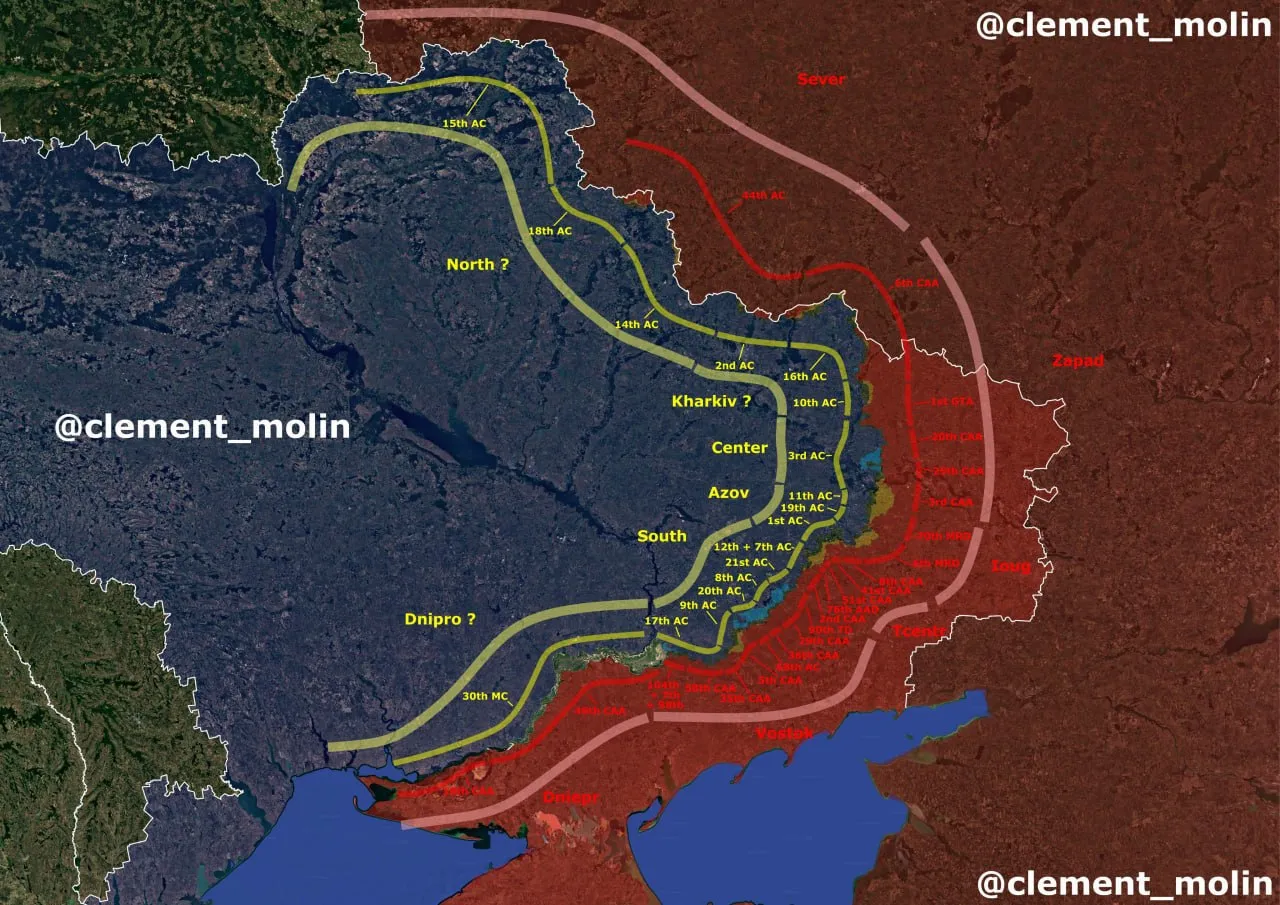
In the Zaporizhzhia sector, near Orikhiv, the 36th, 5th, 35th, and 58th Armies, as well as the 68th Corps, are concentrated. They are pressing on the city from various directions. Closer to Dnipro are the 104th, 7th, and 98th Airborne Divisions, which, according to Molen’s assessment, are exerting pressure in the direction of Zaporizhzhia. At the same time, the “Dnipro” group, consisting of the 49th and 18th Armies, is not advancing across the Dnipro.
Ukrainian forces are also undergoing a regrouping process. The front is being divided among the corps’ areas of responsibility; however, the reform is not yet complete, so in some cases, corps-level subordination remains largely formal.
According to the researcher’s assessment, the Chernihiv and Sumy regions are covered by the 15th, 18th, and 14th Corps; Kharkiv by the 2nd Corps of the National Guard of Ukraine; Vovchansk by the 16th Corps; and Kupiansk by the 10th Corps. The area of responsibility for the “Center” group extends from Borova to Sloviansk, followed by the area of the “Azov” group, which includes the “Azov” Corps, the 11th Corps, and the 19th Corps.
According to his information, the area of responsibility for a group comprising the 12th, 7th, 21st, 8th, 20th, 9th, and 17th Corps is supposed to run from Pokrovsk to Zaporizhzhia. The section of the front along the Dnieper River is to be held by the 30th Marine Corps of the Ukrainian Navy.
Source: Clément Molen.
As a reminder, Ukrainian President Volodymyr Zelenskyy stated: Russia, as an aggressor state, will face a response if it launches strikes against Ukraine’s energy infrastructure this winter.
President Volodymyr Zelenskyy reported on the results of Ukrainian long-range strikes aimed at weakening Russia’s capacity to wage war against Ukraine. In particular, Ukrainian strikes hit targets in Dagestan and Udmurtia.


