
Russia is increasingly withholding information about Ukrainian prisoners of war
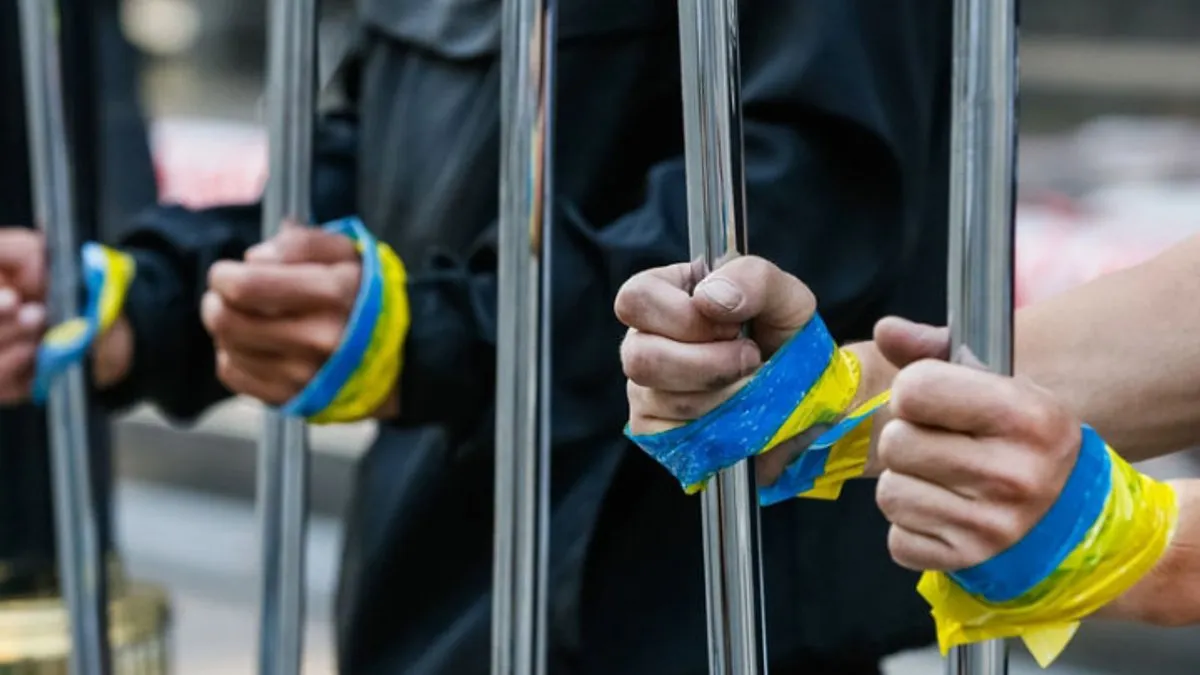
It is becoming increasingly difficult for the families of Ukrainian prisoners of war to find out where their loved ones are. Human rights activists say that the Russian system has become even more secretive: official responses often contradict one another, and access to information and lawyers is constantly being restricted.
Families of Ukrainian prisoners of war are increasingly finding that they cannot obtain even basic information about their loved ones. This is reported by the independent Russian publication “Mediazona,” which spoke with lawyers and human rights activists working to locate Ukrainians held captive in Russia. According to them, the Russian system has become significantly more secretive in recent years. While it used to be difficult to find even confirmation of a prisoner’s whereabouts, it has now become even harder.
One of the main problems has been changes in Russian legislation. Now, electronic requests to government agencies can only be submitted through the “Gosuslugi” portal. As a result, Ukrainian families have effectively lost the ability to independently submit requests to the Federal Penitentiary Service (FSIN). Human rights activists note that these changes have affected at least several hundred Ukrainian families.
Even if a request is successfully submitted, responses from Russian agencies often contradict one another. In some cases, the FSIN claims that the prisoner of war allegedly did not authorize the disclosure of information about himself. In others, it claims that it does not maintain a centralized registry of prisoners or advises applicants to contact the Ministry of Internal Affairs. Some agencies justify their refusal by citing the severed diplomatic relations between Russia and Ukraine.
At the same time, former FSIN employee Anna Karetnikova told journalists that a centralized registry of prisoners does in fact exist within the agency. Due to the ineffectiveness of official mechanisms, human rights defenders are increasingly turning to other methods of searching. They send legal inquiries to regional offices of the Federal Penitentiary Service, analyze court cases, contact other government agencies, attempt to transfer funds to the prisoners’ personal accounts, and even monitor Russian propaganda outlets, where information about Ukrainian servicemen sometimes appears by chance.
Another problem has arisen: Russian courts have begun to withhold information about Ukrainian prisoners of war. According to “Mediazona,” some military courts no longer publish in public registries the names of Ukrainians being tried under charges of alleged “terrorism.” Some cases are also being heard by courts in temporarily occupied territories, where court registries either function inadequately or do not contain the necessary information at all.
Human rights activists also point to problems with correspondence and lawyers’ access to prisoners. According to them, the administrations of Russian pretrial detention centers and penal colonies may delay or block letters. Lawyers are sometimes denied visits on the grounds that the prisoner of war allegedly does not want legal assistance. At the same time, there have been cases where relatives received letters from prisoners asking them to find a lawyer for them.
The greatest challenge, according to human rights activists, is locating individuals who are being held in complete isolation. These are primarily prisoners of war who have not yet been charged with any crimes, as well as Ukrainian civilians whom Russia has detained on charges of so-called “countering the special military operation.” According to data cited in the report, in 2024 Ukraine had information on 186 locations where Russia was holding prisoners of war and civilian hostages. In 29 of these locations, according to available information, torture was systematically used.
Human rights activists emphasize that due to the increasing secrecy of the Russian system, the search for Ukrainian captives is becoming significantly more difficult, and for many families, even obtaining the most basic information about the fate of a loved one turns into a lengthy and exhausting process. This is reported by the Russian publication “Mediazona.”
Earlier, officials from the State Bureau of Investigations announced that they had charged two servicemen from the medical company of the “Skelya” regiment with beating and unlawfully detaining two fellow soldiers in the Kirovohrad region. This was reported on July 28 by the SBI’s press service.
The command of the 425th Separate Assault Regiment “Skelya” stated that it is cooperating with the State Bureau of Investigations and supports the investigation into possible violations. The unit noted that it does not deny the existence of certain problems and is committed to addressing these issues.




