
Russia is trying to bypass Malaya Tokmachka
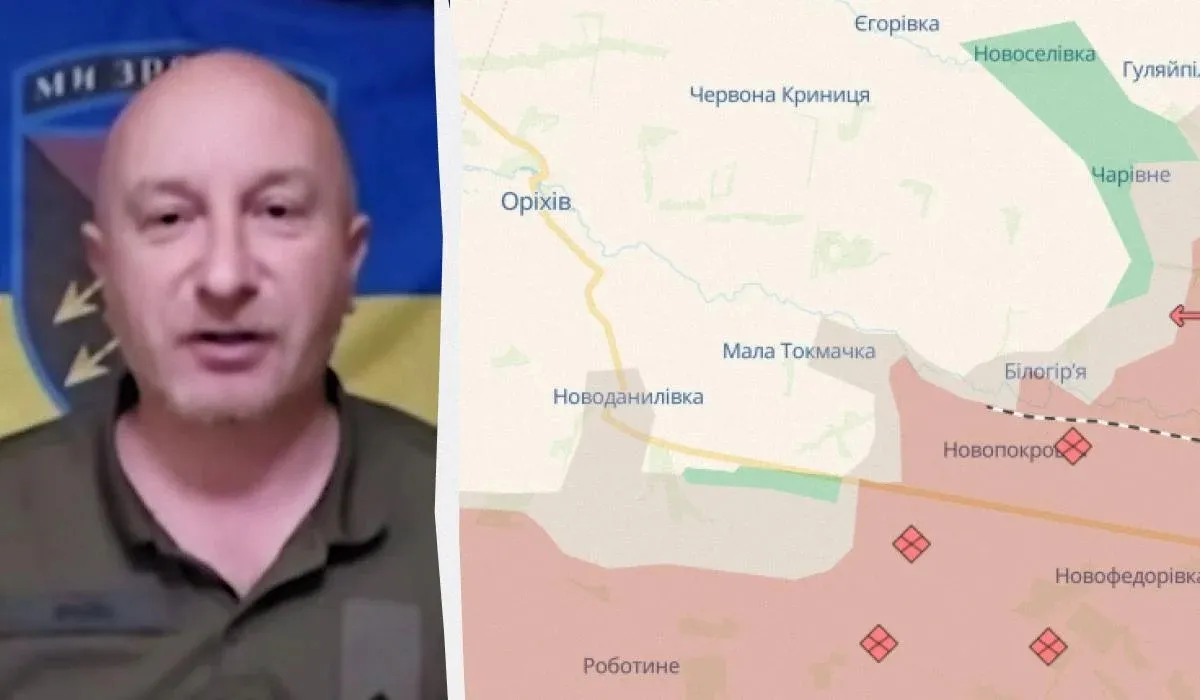
Russian troops continue to attempt to capture Mala Tokmachka in the Orikhiv sector. After unsuccessful attempts to storm the town, the occupiers are trying to outflank it and are advancing in small groups. According to a military official, the Russians have so far failed to achieve their objective.
Russian troops have not ceased their attacks on Mala Tokmachka in the Zaporizhzhia region. The occupiers are trying to advance in several ways simultaneously—advancing in small groups and attempting to bypass the town from the flanks. Dmytro Pelykh, head of the communications department of the 118th Separate Mechanized Brigade, shared this information in a comment to “Espreso.” According to him, Russian forces are now increasingly using infiltration tactics.
The Russians are advancing in small groups
According to Pelykh, pairs of Russian assault troops may enter the outskirts of Malaya Tokmachka. Their mission is to try to penetrate closer to the settlement and display their flag there. “As for ground attacks, the enemy is using infiltration tactics here. More and more often, two assault troops are entering the outskirts of the town just to wave their flag,” the military official said.
He noted that sometimes the Russians do manage to briefly enter the outskirts. However, according to the brigade representative, this does not mean they are establishing a foothold there. Pelikh asserts that such soldiers usually do not remain in their positions for long. According to him, Ukrainian defenders either eliminate them or drive them out of the area around the settlement.
Russia is trying to bypass the settlement
After unsuccessful attempts to directly capture Mala Tokmachka, Russian troops, according to Pelikh, changed their approach. Now they are trying to advance from wider flanks and create the threat of encirclement. The military official described this tactic as an attempt to trap the town in a “pincer movement.” This involves moving through adjacent sections of the front to force Ukrainian units into a sort of “pocket.” “It’s clear that the enemy won’t be able to take this town. So now they’re trying to bypass it with a wider ‘pincer’ to drive us into a ‘pocket’ through adjacent sectors. But even there, very capable soldiers are holding the line, and the enemy isn’t getting anywhere,” Pelikh stated.
In other words, Russian troops are currently attempting to create conditions to outflank Ukrainian positions, rather than simply launching a head-on attack on Mala Tokmachka. At the same time, the statement regarding the lack of success is an assessment by a representative of the 118th Brigade. The operational situation on the front lines can change, so individual statements from the parties need to be verified by other sources.
Mala Tokmachka is being struck by KAB bombs
Russian airstrikes remain a separate issue. According to Pelykh, the occupiers are actively using guided aerial bombs to destroy populated areas and create conditions for a further offensive. He said that up to 18–20 guided aerial bombs can strike Mala Tokmachka in a single day. “Sometimes, 18–20 guided aerial bombs can fall on a single village within a day—this applies directly to Malaya Tokmachka,” the military officer said.
Such strikes significantly complicate defensive operations. Russian troops are attempting to destroy positions and buildings that Ukrainian forces might use, after which they look for opportunities to advance in small groups. Back in early September, Pelykh reported that in the Orikhiv sector, Russian troops had intensified their assault operations and were increasingly using small groups to infiltrate between Ukrainian positions. According to him, Orikhiv and Mala Tokmachka remain among the Russians’ targets.
Why Mala Tokmachka Is Important to the Russians
Mala Tokmachka is located in the Zaporizhzhia sector and remains one of the areas where Russian troops regularly attempt to advance. The occupiers use various methods for their attacks: artillery, aircraft, drones, and assault groups. At the same time, the activity of small groups allows them to test Ukrainian defenses and search for weak spots.
In September, Pelikh explained that as autumn approaches, it is important for Russian troops to take advantage of the period when vegetation can still help conceal their movements. Once the vegetation thins out, the movements of small groups will be easier to detect.
Russia may lose the ability to actively use armored vehicles
Another factor Pelikh mentions is the weather. According to him, the period of favorable conditions for the active use of armored vehicles in this sector of the front is coming to an end. As the weather worsens, it will become more difficult to move heavy equipment across open terrain. “The window of favorable weather conditions for deploying armored vehicles in the Taurian steppes is closing—and soon such attacks will simply become impossible,” said a representative of the 118th Mechanized Brigade.
Thus, according to Ukrainian military officials, Russia continues to put pressure on Mala Tokmachka but is changing its tactics. Instead of simply attempting to capture the settlement, the occupiers are trying to infiltrate it in small groups and bypass it from the flanks. At the same time, the Ukrainian side states that these attempts have not yet allowed the Russians to establish control over the settlement. Dmytro Pelykh, head of the communications department of the 118th Separate Mechanized Brigade, spoke about this in a comment to “Espreso.”
In the Strilkove area, in the temporarily occupied part of the Kherson region, reports indicate that four facilities housing Russian security forces were struck simultaneously. According to monitoring channels, 15 officers of the Russian Federal Security Service (FSB) were killed in the strike, and about 30 others were wounded.
As of September 22, 2026, the Ukrainian military had eliminated 1,230 Russian occupiers over the past 24 hours. The General Staff of the Armed Forces of Ukraine has updated the data on Russian troop losses.


