
Russian air defenses proved to be less effective against drones
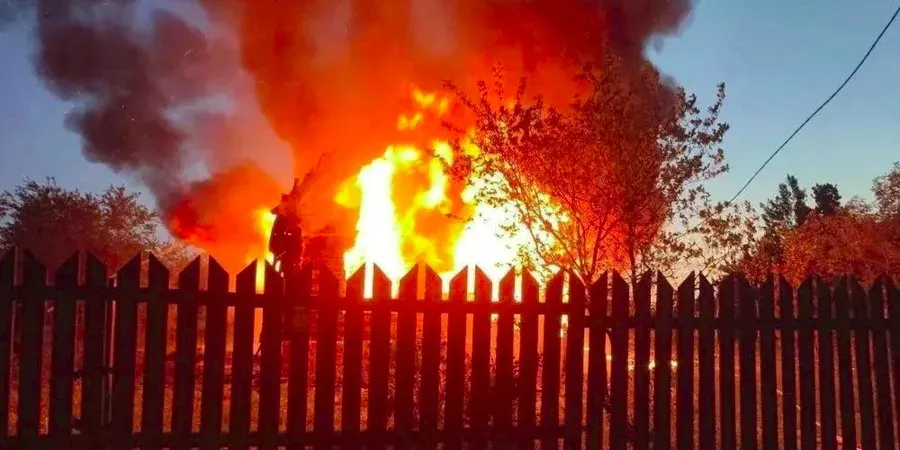
The Russian air defense systems protecting Moscow are designed more for intercepting missiles and aircraft than small drones, which is why massive drone attacks pose serious challenges for them. This is emphasized by Air Force Reserve Officer Anatoliy Khrapchynskyi, who explains that system overload and their technical specifications reduce the effectiveness of the defense of the Russian capital.
The air defense systems that Russia has deployed around Moscow have proven to be significantly less effective against small and stealthy drones than against conventional aerial targets, such as missiles or aircraft, which creates serious difficulties for them during massive attacks.
Anatoliy Khrapchynskyi, a reserve Air Force officer and director of development at a defense enterprise, discussed this on Radio NV, explaining that it is precisely the massive use of drones that can overload the Russian defense system and force it to operate at the limits of its capabilities. “If we’re talking, for example, about 600 UAVs—assuming there were 600 UAVs over six to eight hours—that works out to an average of 75–100 UAVs per hour. One or two targets in a single sector every minute. This is a significant burden on air defense,” Khrapchynskyi explained, emphasizing that the problem lies not only in the quantity but also in the way targets enter airspace simultaneously.
According to him, the most effective tactic is not a steady stream but group attacks, where dozens of drones simultaneously enter a single sector, forcing air defense systems to operate under conditions of overload and complex target allocation.
Separately, he noted that analysis of open-source data and satellite intelligence helped reveal the structure of Russian defenses around the capital, where several echelons of systems such as the “Pantsir,” “Tor,” S-300, and S-350 systems, which form several rings of defense but do not guarantee complete interception of small targets. “All of this allows us to understand the resolution required to detect air targets and track them,” the officer noted, commenting on the operating principle of surveillance and guidance systems.
Khrapchynskyi also emphasized that modern low-observable drones, particularly the “Luty” or FPV types, can only be detected at very short ranges, which significantly reduces the reaction time needed to destroy them and makes the air defense system vulnerable to mass attacks. “Because it so happened that the air defense systems currently in Moscow were better equipped to intercept cruise missiles and aircraft, but not low-observable small drones,” he said, adding that this forces operators to change the systems’ operating modes.
In his view, even the concentration of a large number of air defense assets around Moscow after the parade does not guarantee complete protection, since Russia did not significantly redeploy its systems in anticipation of possible strikes, yet was still unable to fully repel them.
“Even after this parade, the Russians did not redeploy most of their air defense systems, realizing that an air attack would happen anyway. But even with most of the air defense systems concentrated in the Moscow region, Russia was unable to repel this attack,” Khrapchynsky concluded, commenting on the effectiveness of the Russian capital’s defenses.
Meanwhile, a drone struck a building on Mosfilmovskaya Street in Moscow. Mayor Sergei Sobyanin confirmed the attack and reported that there were no casualties. At the same time, drones were also spotted over Samara.
As a reminder, in Tuapse, residents were urged to evacuate following a drone attack (video).


