
Video: A Russian GRU special forces operative surrendered after a failed assault
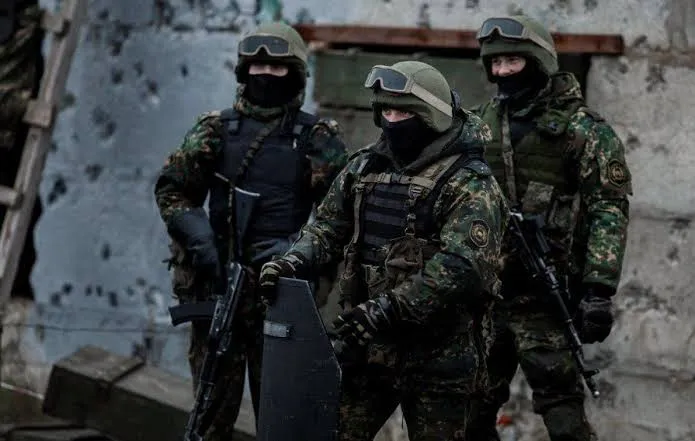
A servicemember from one of the special operations units of the Main Directorate of the General Staff of the Russian Armed Forces (formerly the GRU) surrendered through the Ukrainian project “I Want to Live.” He took this step after his group suffered significant losses during an assault on one of the Ukrainian settlements.
According to the soldier, about 70% of his unit’s fighters were killed during the assault. Seeing the consequences of the operation, he decided he no longer wanted to participate in the war.
“When I saw the settlement for which so many people had died, I realized that it was pointless and utterly senseless. It was more like some kind of covert genocide of the male population,” the prisoner said.
After a significant portion of his unit was wiped out, the soldier said he had few options left—desert his unit, die, or surrender. If he had fled or refused to participate in combat, the Russian command could have sent him on another assault or killed him.
The soldier stumbled upon the option to surrender on TikTok. While scrolling through his feed, he saw a link to the “I Want to Live” project’s chatbot and reached out through it.
The project’s authors noted that hundreds of Russian servicemen of various ranks have already gone through the program, though representatives of Russian special services—particularly intelligence officers—surrender significantly less often.
“I Want to Live” emphasized that in the Russian army, soldiers can be killed during assaults regardless of rank, position, or branch of service. At the same time, according to them, Ukraine offers the opportunity to save the lives of those who decide to surrender.
Earlier, reports emerged about a Russian prisoner of war, Ilya Shangareyev, who spoke about the occupiers’ significant losses during assaults and the conditions of service in the Russian Armed Forces. According to him, Russian soldiers were sent to their positions along routes where they saw numerous bodies of fallen Russian soldiers.
Shangareyev himself, along with another occupier, spent nine days without food or water, after which they reached the positions of Ukrainian defenders and were taken prisoner. He described the Russian command’s attitude toward its own soldiers with the words: “Well, we’ve got cannon fodder here.”
Source: I Want to Live.
On the morning of September 5, a Russian drone struck a warehouse belonging to a private company in the Poltava community. The explosion damaged nearby homes.
On the night of September 5, Russian troops attacked infrastructure in the Odesa region with strike drones. The strikes set a warehouse building on fire where food supplies were stored.
Over the past 24 hours, Russian troops attacked 25 settlements in the Kharkiv region, including the city of Kharkiv. The shelling damaged residential buildings, vehicles, warehouses, and civilian infrastructure.




