
The war has destroyed around 130,000 railway facilities
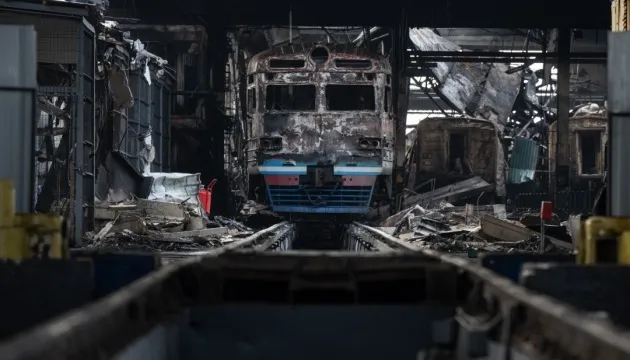
Since the beginning of the full-scale war in Ukraine, around 130,000 railway infrastructure objects have been damaged or destroyed. This includes tracks, stations, depots, and other critically important facilities, which are regularly targeted in attacks. This was reported in an interview by Oleksiy Balesta, Deputy Minister for the Development of Communities and Territories of Ukraine.
According to him, last year alone, railways suffered more than 1,195 enemy strikes—more than in 2023 and 2024 combined.
“Since the start of the full-scale invasion, approximately 130,000 railway infrastructure objects—tracks, stations, depots, etc.—have been damaged or destroyed. Some of these can be quickly repaired, others require long-term restoration, and unfortunately, some cannot be restored at all and must be rebuilt from scratch,” Balesta said.
He also highlighted the scale of damage to railway stations. About 40 stations across various regions of the country have been damaged during the full-scale war. Total direct losses from attacks are estimated in the hundreds of billions of hryvnias and continue to grow.
Despite constant shelling, stations are gradually being restored wherever possible. For example, stations in Synelnykove, Pavlohrad, and partially in Lozova are already operational. In many regions, stations now serve more than just a transport function—they have become “resilience hubs” where people can warm up, charge phones, and wait out long power outages. Balesta emphasized that it is crucial to provide heat, electricity, and basic amenities for passengers in these locations.
Some facilities have suffered critical damage. One example is Fastiv Station in the Kyiv region, which was directly hit by a missile. Plans are underway to install modular structures to meet passenger needs and maintain railway operations. According to the deputy minister, the guiding principle is to restore infrastructure as quickly as necessary to keep trains running.
Tracks, overhead lines, and other critical elements are repaired first. In many cases, work begins just hours after an attack to prevent disruptions in train movement.
Balesta noted that attacks on railways affect both freight and passenger transportation. Delays are becoming more frequent due to intensified attacks and harsh weather, but railway workers are doing everything possible to minimize the impact. He also mentioned losses among railway employees: “In 2025, 78 railway workers were injured due to enemy attacks, and seven, unfortunately, died. This is a great sorrow both personally for me and for the entire railway family,” he said.
Despite ongoing risks and attacks, Ukrainian railways continue to operate and remain one of the country’s key arteries—for both people and the economy.


