
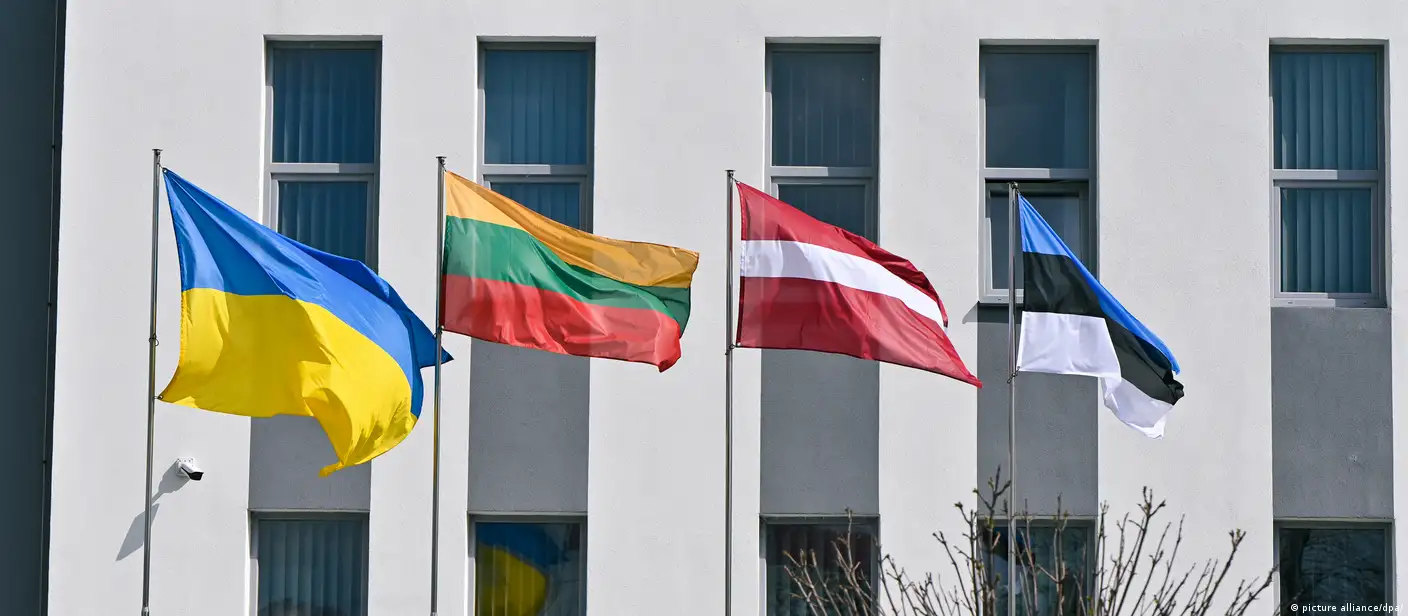
The spring of 2026 turned out to be an extremely heated one for the Baltic states—and not in a meteorological sense. Over the past few weeks, Lithuania, Latvia, and Estonia have found themselves at the center of events that have reignited talk of a very real threat of war. Air raid alerts were even issued in Vilnius, Riga, and some Estonian border towns. Airports were closed across the region, and NATO fighter jets were scrambled. And just the day before, Russia’s Foreign Intelligence Service officially claimed that Ukraine was allegedly preparing strikes on Russian regions from Latvian territory—and that Riga had allegedly given its consent.
Kyiv and Riga immediately refuted these accusations, calling them part of the Kremlin’s propaganda campaign. But the residue, as they say, remains, because all these incidents—drones, alerts, intelligence statements—together paint an alarming picture that is easy to imagine as a prelude to something far more serious. So the question being asked today in Tallinn, Brussels, and Kyiv is strikingly straightforward: could Putin attack the Baltic states in the near future? It is difficult to give a definitive answer here, as there are both arguments “for” and “against,” and all of them are quite convincing.
UA.News political analyst Mykyta Trachuk, together with experts, examined the issue.
Why a Russian attack on the Baltics is possible: arguments “for”
The first thing that immediately comes to mind is the window of opportunity for Putin under the current U.S. administration. Trump’s second presidency has created an unprecedented level of uncertainty within NATO. The White House’s decision to halt military aid to Ukraine came as a shock to the Baltic capitals. If the United States can so easily abandon a country that has been holding back full-scale Russian aggression for five years, what security guarantees do Lithuania, Latvia, and Estonia have? Moreover, Trump quite openly considers the EU to be freeloaders and parasites, and NATO to be an ineffective relic of the past.
The Kremlin is closely monitoring these developments. While Trump berates European NATO members for insufficient support of his operation in Iran and threatens consequences, the Alliance’s unity is cracking at the seams. It is precisely at such moments that Putin may attempt to pull off something akin to a genuine “special military operation”: not a full-scale invasion, but a precision strike designed to paralyze the collective defense mechanism.
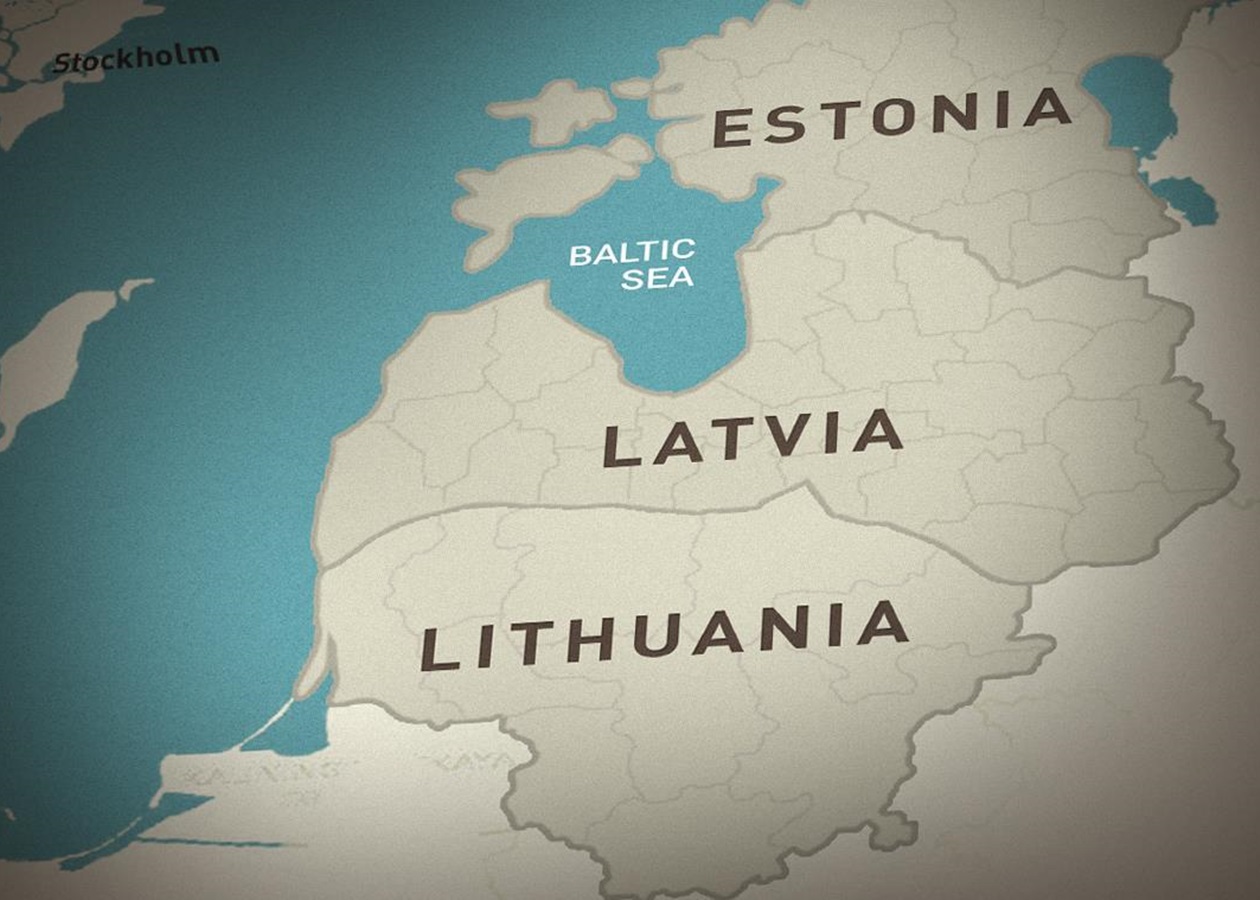
Second, the Baltics are a highly vulnerable target. The countries in the region are objectively one of NATO’s weakest links. Small armies, modest territories, and near-total geographical isolation from the rest of Europe—all of this makes them an attractive target for the Kremlin. The key location is the Suwalki Corridor—a 65-kilometer strip of land on the Lithuanian-Polish border, sandwiched between Belarusian territory and the Russian Federation’s Kaliningrad exclave. Capturing this corridor would cut off Lithuania, Latvia, and Estonia from land connections with the rest of Europe, leaving only sea routes for supplies. And this, by the way, is not some theoretical fear. It was precisely this scenario that Russian and Belarusian troops practiced during the “West-2025” exercises.
Third, Putin needs a distraction from domestic problems today. The war in Ukraine has not brought the Kremlin a quick victory. Instead, the sides are mired in an exhausting conflict with no end in sight. Economic and social problems are mounting within Russia, regular long-range strikes on Russian territory are becoming increasingly painful, and public discontent—though carefully suppressed—is not going away. In such a situation, external aggression is traditionally used by the Kremlin as a tool to distract the population. And statements about “strikes from Latvian territory” or something similar provide the perfect news hook for this.
Fourth, Putin may well want to test NATO’s resolve. The Kremlin’s goal is not so much to seize territory as it is to test the well-known Article 5 of the North Atlantic Treaty. The principle is simple: an attack on one NATO member is considered an attack on all. But exactly how this would work in practice—especially under current international conditions—no one knows for sure.
Why Russian aggression against the Baltics is unlikely: arguments “against”
Just as there are well-reasoned arguments “for,” there are equally important factors “against.” And the first of these is the factor of Trump’s absolute unpredictability. Paradoxically, the very same Donald Trump who creates a window of opportunity for the Kremlin is also a deterrent. His reaction to potential new Russian aggression is completely, utterly unpredictable.
On the one hand, he may well decide that a war in the Baltics is “not America’s business” and leave the Europeans to sort it out on their own. But on the other hand, Trump values his own image as a “strong leader” surprisingly highly and may well respond to Putin’s aggression with a severity no one expects from him, going as far as bombing Russia, just as he did in Iran. The risk for the Kremlin here is enormous: absolutely no one can predict the behavior of the current occupant of the White House, least of all Kremlin analysts.
Second, Russia currently lacks the resources for a second major war. This is arguably the most compelling argument against it. Over the years of full-scale war in Ukraine, Moscow has suffered colossal losses: both human and financial. Opening a second front against NATO—an alliance that collectively holds an advantage over Russia in all types of weaponry—would require a strain on resources that the Russian military machine is, in all likelihood, simply incapable of withstanding today.
Third, betting on Europe’s weakness is, in general, a very risky game. The Kremlin’s calculation relies heavily on the assumption that Europe, without the U.S., will not dare to take decisive action. But this assumption could prove to be a fatal mistake. More importantly, the mood in European capitals has shifted. The shock of Trump’s actions has forced European leaders to realize that they can no longer rely on the American umbrella. And although the process of creating an autonomous European defense is only just beginning, the very fact that Berlin, Paris, Brussels, Warsaw, and others have begun to take the threat seriously makes the Kremlin’s bet on European passivity extremely risky.
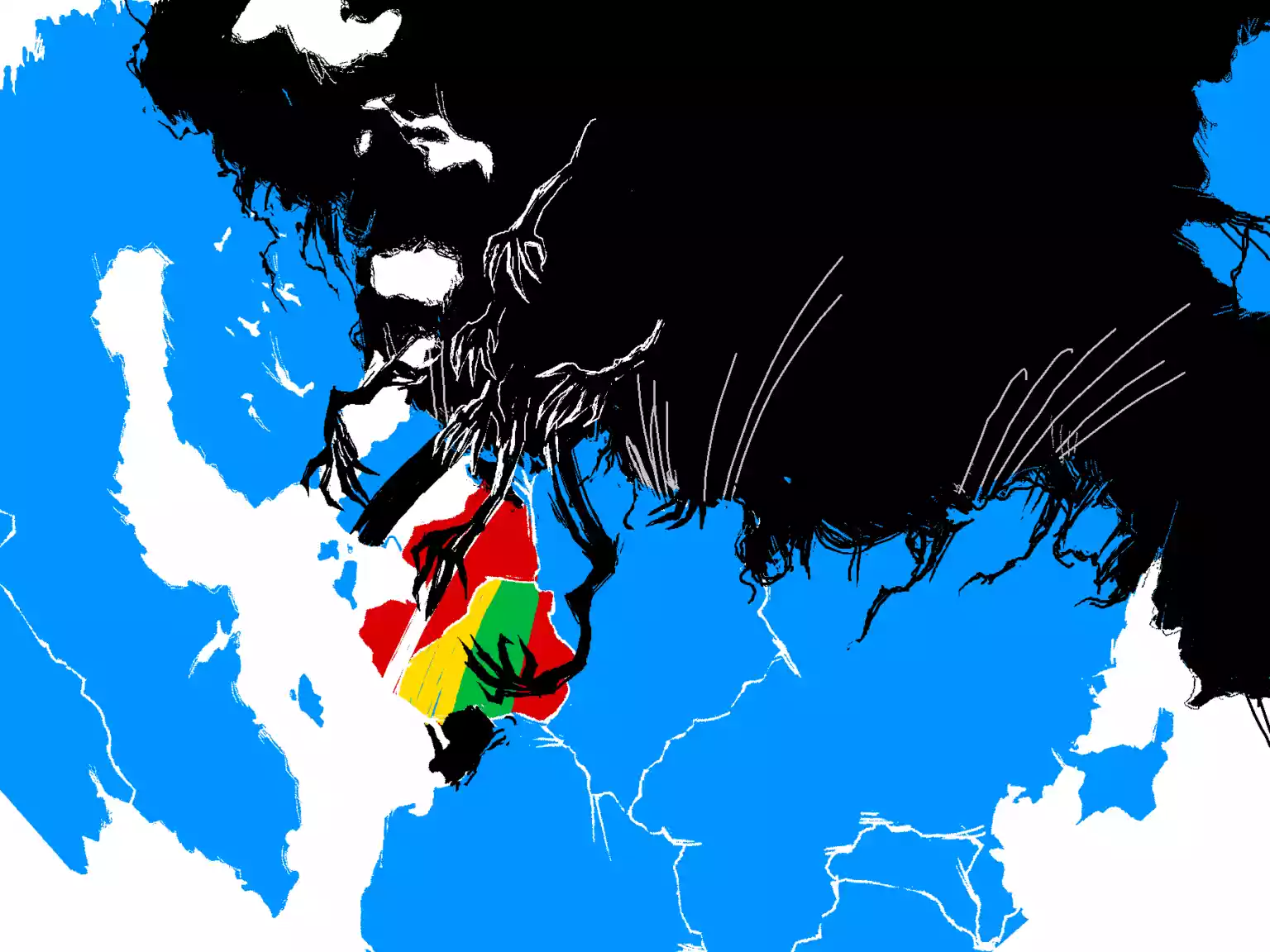
There is another factor that is often underestimated: Putin’s personal fears. The Russian dictator values his own power and personal safety above all else. A man in his eighties who, during the COVID-19 pandemic, received official visitors after several weeks (!) of quarantine at a 10-meter-long table is not the sort to risk his “precious” life and health just like that. The war against Ukraine, despite all its horrors, remains relatively “safe” for him—it does not directly threaten his physical existence or the survival of the regime.
But a direct conflict with NATO is a completely different matter. In the event of an open armed clash with the North Atlantic Alliance, Putin risks not just military defeat, but literally everything—power, freedom, even his life. History shows that at critical moments, Putin always acts cautiously. He provokes, tests, and looks for weaknesses, but avoids direct confrontation with a stronger opponent. It is precisely this instinct for self-preservation that may prove to be the most reliable deterrent.
The economic dimension cannot be ignored either. The Russian economy is already operating under harsh sanctions, and although it has proven far more resilient than expected, its resources are still not unlimited. A war against NATO would mean the immediate imposition of a new package of sanctions, which could include a complete embargo on Russian energy resources, disconnection from the remnants of the international financial system, and total isolation even from China. For Russia, this would amount to economic suicide. The sanctions-evasion schemes that Moscow has built up in recent years simply would not withstand such a burden.
Ultimately, despite all the alarming rhetoric and isolated satellite images, there is currently no evidence of a large-scale concentration of Russian troops near the Baltic borders, similar to the one that preceded the invasion of Ukraine in February 2022. At that time, Western intelligence agencies documented the deployment of a large force, field hospitals, communication systems, and logistical support—in other words, everything necessary for a large-scale offensive operation. Today, nothing of the sort is being observed.
Expert Opinions
Military expert and Israel Defense Forces officer Igal Levin notes: it is clear that there is a threat to the Baltic states. As long as Russia exists, the threat will remain.
“There is the Kremlin’s rhetoric, there is a threat to the Baltics. If we’re talking specifically about this year, 2026, then there is a threat this year as well, under certain circumstances. In any case, Putin will need to assemble a military force before an attack. That is, this is not the kind of threat where we wake up tomorrow and something suddenly happens—no. We are not yet observing a military buildup that could threaten the states of the Baltic region. But if such a buildup were to take place—it would be very noticeable. It would be all over the media, because it doesn’t happen that there are certain incidents involving drones, there are accusations, and then Russian troops appear out of nowhere. That’s not how it works. I remind you that before the full-scale invasion of Ukraine, there was a buildup of Russian forces. Everyone saw it, everyone talked about it, there was satellite confirmation, and so on. With the Baltic states, if anything, it will be the same. So the threat exists, even this year, but as of now, we do not yet see any concrete preparations,” stated Igal Levin.
Military expert Oleg Zhdanov agrees with Igal Levin: the threat to the Baltic states from Russia exists and is very real. According to Zhdanov, the Russians could carry out something akin to an armed provocation, launching a precision strike on the territory of Estonia, Latvia, or Lithuania.
“They are currently looking for something like a casus belli to gauge NATO’s reaction to the threat they could pose to the Baltic states. This is being done deliberately using spoofing technology—which involves manipulating signals for UAVs. Why is our electronic warfare system in Ukraine called ‘Lima’? It uses spoofing, and the navigator shows that you’re in Lima, the capital of Peru. And if the spoofing shows that the drone is over Latvian or Lithuanian territory, it will fly there to get its bearings. In other words, this could be an operation under a false flag. And Russia needs proof that the drone is flying from the Baltic states, again as a casus belli. So I think the threat is quite real. As for a ground invasion—I don’t believe in that. Unless it’s sabotage, and even then only as a covert operation. A ground operation carries enormous risks for the Kremlin. We also don’t see any preparations by a military group for this at the moment. But a drone in the air—that’s already an air attack. So, some sort of casus belli involving the downing of a drone, followed by a global outcry that NATO is attacking Russia—that’s exactly what I fully expect,” noted Oleg Zhdanov.
To sum up, what do we have left? The risk of escalation in the Baltic region is very real, and it is higher than ever. This is a tempting historical moment for the Kremlin: it coincides with a period of maximum uncertainty in Washington, Europe’s lack of readiness for defense, and the availability of convenient pretexts in the form of drone incidents.
However, there is a chasm between a “tempting moment” and actual war. The arguments against large-scale aggression—the exhaustion of the Russian army, economic vulnerability, fear of an unpredictable U.S. reaction, and Putin’s personal instinct for self-preservation—appear more convincing today than the arguments in favor of such a scenario.
So air raid alerts in Vilnius, Riga, and Tallinn will most likely continue to be issued—this, unfortunately, is the new “norm” for the region. But the distance between an air raid alert and actual war is the same as that between a bluff and reality. Putin, it seems, understands this as well. And that is what is saving the situation for now.


