
MOSE barriers in Venice close increasingly often due to sea-level rise
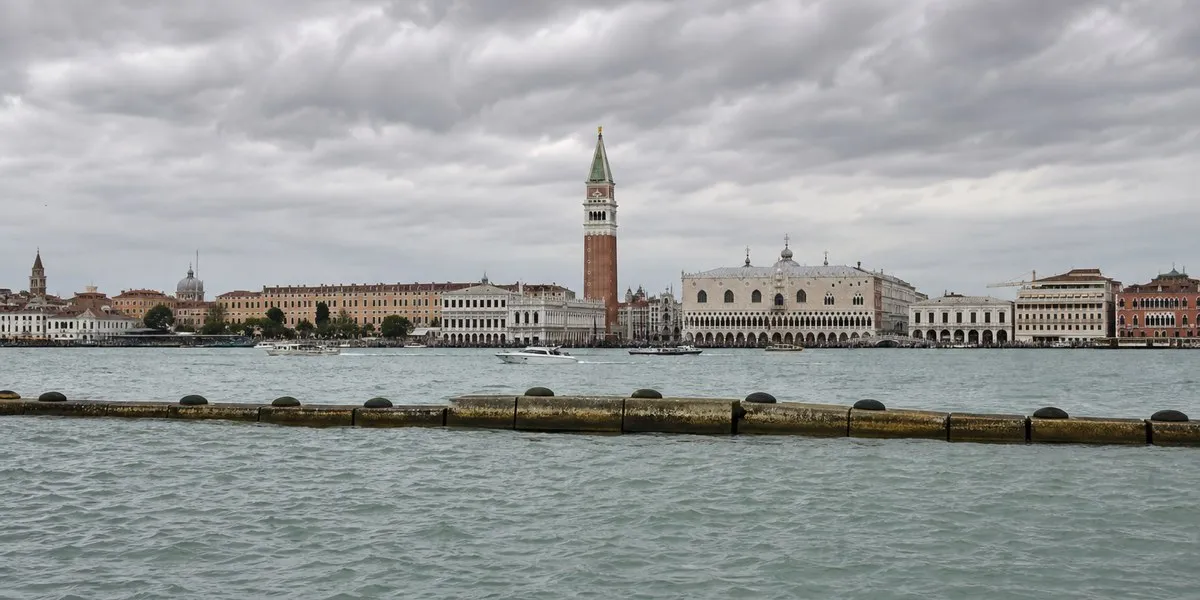
In Venice, Italy, the MOSE flood barriers are being closed two to three times more often than initial calculations envisaged, amid rising sea levels. IPCC climatologist Piero Lionello believes that under the worst-case scenario, the system may be able to operate for about another 30 years. ABC News Australia reports.
Barriers are closing increasingly often
MOSE was launched in 2020. The complex of 78 movable barriers blocks the three entrances to the Venice Lagoon, temporarily separating it from the Adriatic Sea during forecast high tides. The project is estimated to have cost at least $8 billion. Its implementation stretched over decades, including because of a 2014 corruption scandal.
MOSE CEO Giovanni Zarotti said the system is now closed approximately 20–30 times a year. Over six years, the barriers were used 156 times, which, he said, made it possible to avoid potential flooding in Venice.
Over the past 130 years, the average water level in Venice has risen by 32 centimeters. At the same time, 18 of the most extreme acqua alta tides were recorded during the past 23 years. During flooding in November 2019, when MOSE was still in its testing phase, water flooded 85% of the city, according to some estimates.
More current news is available on the UA.News Telegram channel Telegram.
Risks for the port and ecosystem
Lionello said the MOSE project significantly underestimated future sea-level rise. Even conservative IPCC projections indicate a half-meter rise in sea level by 2100. According to the scientist’s assessment, by the end of the century the barriers could close the lagoon for up to six months each year.
This could complicate operations at the Porto Marghera port near Venice and cause unknown environmental changes by limiting the regular inflow of seawater. Environmentalist Jane da Mosto also pointed to the lagoon’s loss of bottom sediments and its gradual acquisition of the characteristics of a sea bay.
Options for protecting the city
Among possible solutions, scientists are considering pumping seawater into aquifers beneath the lagoon. This could potentially raise the city by up to 30 centimeters. Other options include building a permanent ring wall around Venice’s historic center or completely closing the three entrances to the lagoon.
Lionello warned that such permanent structures could radically alter the city’s historic connection with the lagoon. The most radical scenario involves selectively relocating buildings to higher areas on the mainland, but then, according to the scientist’s assessment, only individual landmarks would be preserved, rather than Venice itself as a city and cultural environment.


