The Bulgarian Ministry of Foreign Affairs explained the country’s decision to leave the Coalition of the Willing. Officials there stated that, in their view, diplomatic efforts to end Russia’s war against Ukraine have not yet been sufficiently utilized.
At the same time, Sofia emphasized that it will continue to support Ukraine, particularly in the areas of energy security and assistance in other important areas.
“I think we all strive to achieve a lasting and just peace. To do this, we need to work on several political fronts. These include continued support for Ukraine, effective economic measures against Russia, and a diplomatic track that should bring the parties to the negotiating table. We believe that the third track has not been utilized sufficiently,” Petrova-Chamova emphasized.
The minister added that her country will support all diplomatic efforts, as well as the EU’s sanctions policy.
According to her, Bulgaria is ready to continue contributing to Ukraine’s energy security ahead of the coming winter.
“Bulgariais located at the intersection of several critically important routes that allow us to support Ukraine by supplying gas and other energy sources. This is one of the areas we are currently actively working on,” Petrova-Chamova explained.
She welcomed the European-level cooperation in the field of drone production announced on July 15.
“This is an area in which we have a great deal of interest and which we would also like to develop bilaterally. But if the relevant European framework already exists, we can move forward within its parameters,” the minister added.
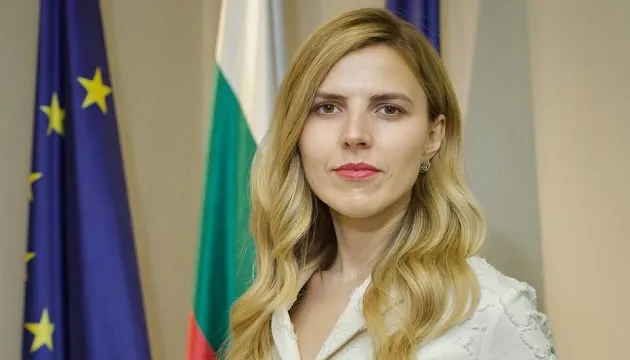
Bulgarian Foreign Minister Velislava Petrova-Chamova made these remarks in Kyiv while answering a question about the reasons for her country’s withdrawal from the Coalition of the Willing, according to a Ukrinform correspondent.
Bulgaria explained why, together with Italy, it opposed sanctions against Patriarch Kirill.
The European Union has expanded its sanctions list against Russia, adding thecompany VK and its subsidiary “Communication Platform,” which created the Russian messaging app “Max.” The European Union noted that the messenger app was developed under the supervision of the Russian Federal Security Service, which set mandatory requirements for its creation.
The European Commission is proposing new measures to reduce imports from illegal Israeli settlements in the West Bank. Possible solutions include import licensing, additional tariffs, or a complete ban on the import of such goods.