
No evidence of Viking funerals with flaming arrows — Live Science
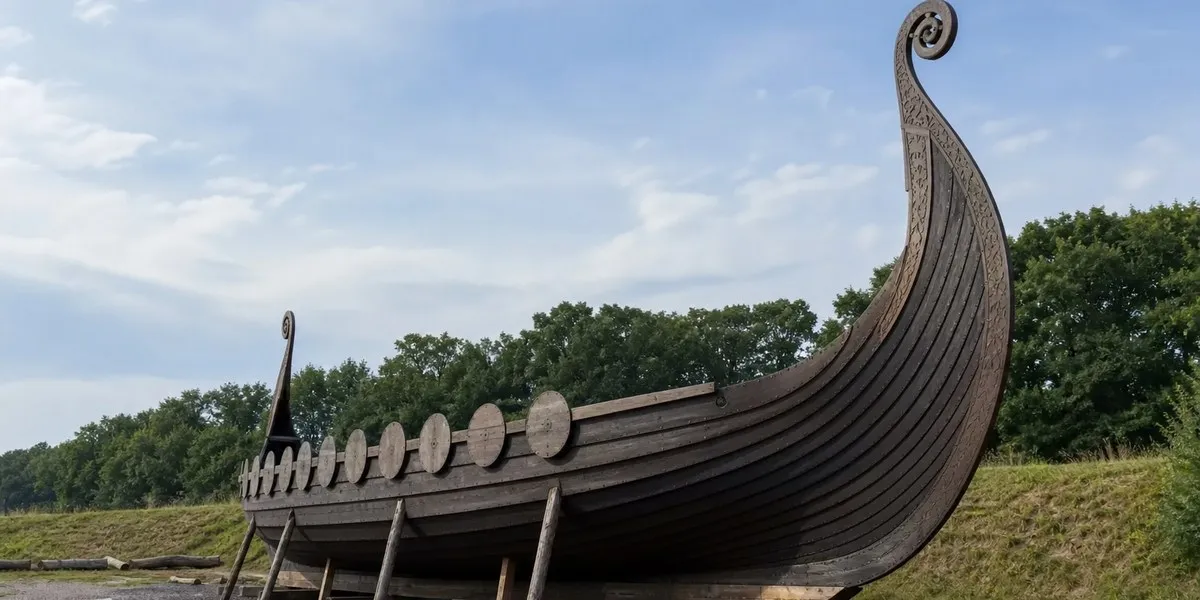
Archaeologists have no evidence that Vikings sent funeral boats out to sea and set them ablaze with flaming arrows fired from shore. According to experts interviewed, the scene common in films and television series is more a product of popular culture than a confirmed Viking Age funerary custom.
As Live Science reports, Howard Williams, a professor of archaeology at the University of Chester, noted that such practices would leave almost no archaeological traces and are not supported by archaeological sources. Erin McGuire, an anthropologist at the University of Victoria, added that there is no archaeological evidence for this widespread motif, and it would be difficult to distinguish a fire caused by a flaming arrow from an ordinary fire. Shipwrecks containing human remains are generally very rare, and she is not aware of Viking Age sites of this type.
Burning ships on land
At the same time, there is evidence that Vikings cremated the dead and burned ships or parts of them during funerary rites on land, after which they were buried. Such finds include the ninth-century Myklebust ship, discovered in a burial mound in Norway. The vessel was built for a wealthy person, possibly a king.
The closest historical account to the popular cinematic image is the story of the 10th-century Arab traveler Ahmad ibn Fadlan. He described the burial of a Viking chieftain on a boat that was set on fire. However, the boat and the body were on land, and the fire was lit by a person described as the chief mourner, not an archer.
More current news is available on the UA.News Telegram channel Telegram.
Legends and practical difficulties
Medieval literature contains rare references to ships associated with burials on water. In the epic “Beowulf,” the body of the Danish king Scyld Scefing is placed on a ship that sails out to sea. In the 13th-century work “Heimskringla” by the Icelander Snorri Sturluson, there is an account of the sea king Haki, who was sent out to sea and burned together with his fallen companions, as well as of the god Baldr, whose ship was set on fire by Thor.
Matthias Toplak, head of the archaeological department at the Viking Museum Haithabu in Germany, called cremation at sea using flaming arrows unlikely. According to him, experiments show that it is not easy to set something on fire with such arrows, while effective cremation requires intense burning for several hours. On the water, a ship could sink before the cremation was completed, and a burning vessel would pose a danger to other ships and port facilities.
Williams suggested that the specific image of a funeral involving an arrow may have spread thanks to the ending of the 1958 film “The Vikings.” In his view, this plot reflects modern ideas about honor, fate and death more than actual Viking funerary practices.




