
Experts point to risks for elections in South Sudan
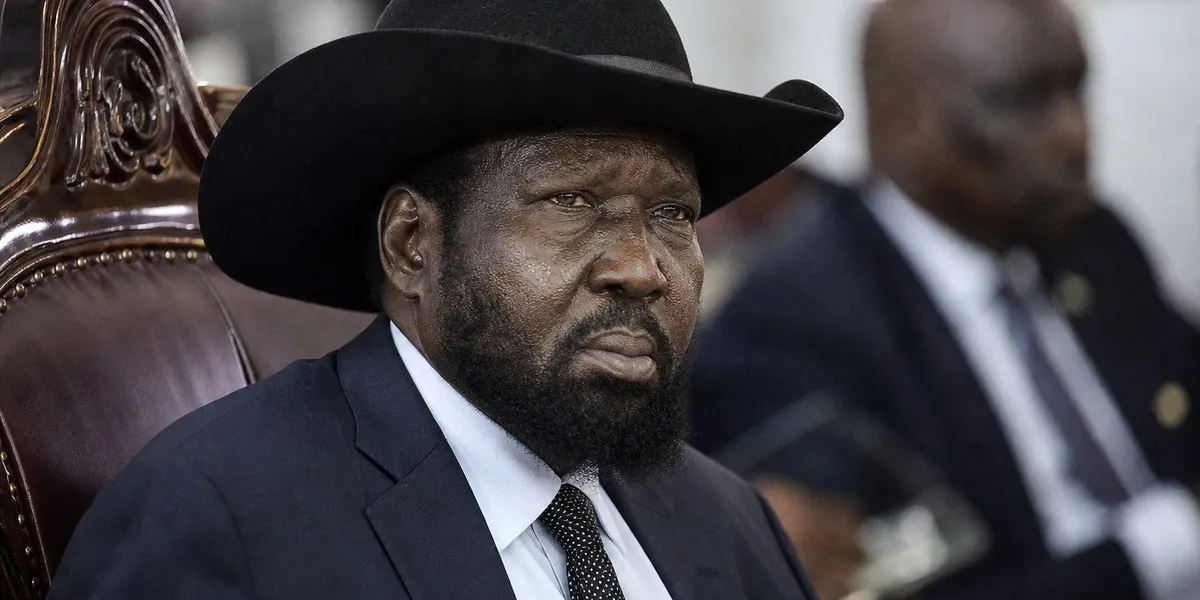
In South Sudan, the government is preparing for general elections scheduled for December 2026 despite unresolved political and technical problems. Last week, the cabinet approved legislative changes to prepare for the vote. Earlier, on September 10, the UN Commission on Human Rights in South Sudan said that the country lacks many of the guarantees and conditions needed for peaceful and credible elections. The government rejected this assessment.
As Premium Times Nigeria reports, the authors of an analysis by the Institute for Security Studies in Nairobi believe that holding free, fair and credible elections in December is no longer possible. Since gaining independence in 2011, South Sudan has not held nationwide elections because of armed conflicts and political delays. The vote, first scheduled for 2015, has been postponed five times.
Dispute over the peace agreement
The country's transitional government is based on the 2018 Revitalized Agreement on the Resolution of the Conflict in the Republic of South Sudan. The article's authors argue that President Salva Kiir has weakened its power-sharing mechanism through unilateral personnel decisions, the replacement of opposition lawmakers and delays in security sector reform.
In March 2025, First Vice President Riek Machar was placed under house arrest after an attack on a military base carried out by the White Army militia. The government accused Machar of organizing the attack; he and several of his associates were charged with treason. The Sudan People's Liberation Movement/Army in Opposition (SPLM/A-IO) wing associated with Machar says the electoral process must take place in accordance with the peace agreement and with the participation of all its parties.
More current news is available on the UA.News Telegram channel Telegram.
After Machar's arrest, Kiir's administration carried out personnel reshuffles in the transitional government, replacing representatives of his SPLM/A-IO wing with members of another faction allied with the president. In July, amendments were also introduced that abolished prerequisites for elections, including a nationwide population census and a new constitution.
Lack of resources and security challenges
Among the practical obstacles to voting, the authors cite insufficient funding for the National Electoral Commission, the absence of a voter register and widespread insecurity, which complicates the work of electoral bodies and citizens' movement. More than 2.5 million people in the country are internally displaced, while more than 10 million need assistance.
In the authors' view, international partners should seek an agreed extension of the transitional period with a clear election timetable, as well as support implementation of the 2018 peace agreement and calls for Machar's release.




