
UN Secretary-General calls for Security Council reform over veto paralysis — Dawn
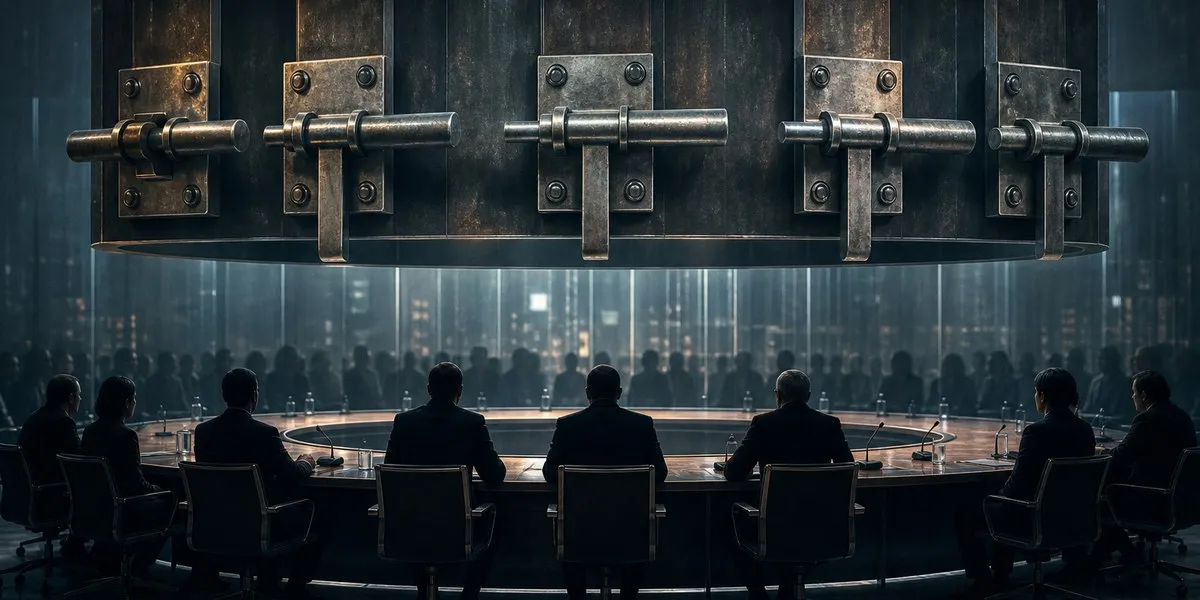
The UN Secretary-General has called for reform of the Security Council due to paralysis in decision-making caused by the veto power of its five permanent members. As Dawn reports, a new UN report warns that this right is one of the reasons for the inability of multilateral mechanisms to prevent or end a growing number of interstate conflicts.
This includes expanding the Security Council to ensure fairer representation for Africa, Latin America and the Caribbean, as well as the Asia-Pacific region. The report notes that these regions are underrepresented, although they bear a significant share of the burden of peacekeeping in an increasingly multipolar world.
Increasing geopolitical fragmentation
The World Social Report 2026 states that geopolitical fragmentation has significantly increased global risks, with several centers of power competing for economic, military and political dominance. The number of countries that exert significant influence on other states has risen from six in the 1970s to 34 today.
The indicator of relations between neighboring countries has also deteriorated significantly since 2008. In 2024–2025, 59 states had poor relations with their neighbors, while improvements were recorded in only 19 countries.
More current news is available on the UA.News Telegram channel Telegram.
The authors of the document note that a multipolar system could theoretically strengthen multilateral cooperation. At the same time, the current fragmentation and pursuit of strategic dominance may weaken collective mechanisms and encourage the emergence of minilateralism, meaning coalitions of states prepared to act jointly.
Three priorities for cooperation
The report, prepared by the UN Department of Economic and Social Affairs, proposes focusing on three areas: expanding opportunities for social investment through international tax cooperation and support for developing countries; broader access to technology, innovation and digital infrastructure; and reforming global governance to make it more representative, inclusive and accountable for development outcomes.
According to the UN, the rise in conflicts and geopolitical tensions weakens international cooperation, disrupts trade and supply chains, and diverts resources from development goals. More than half of countries increased defense spending as a share of GDP in 2020–2024, while all nine nuclear-armed states have expanded their arsenals since 2022.




