
Heffernan urges against excessive reliance on AI and data — YLE News
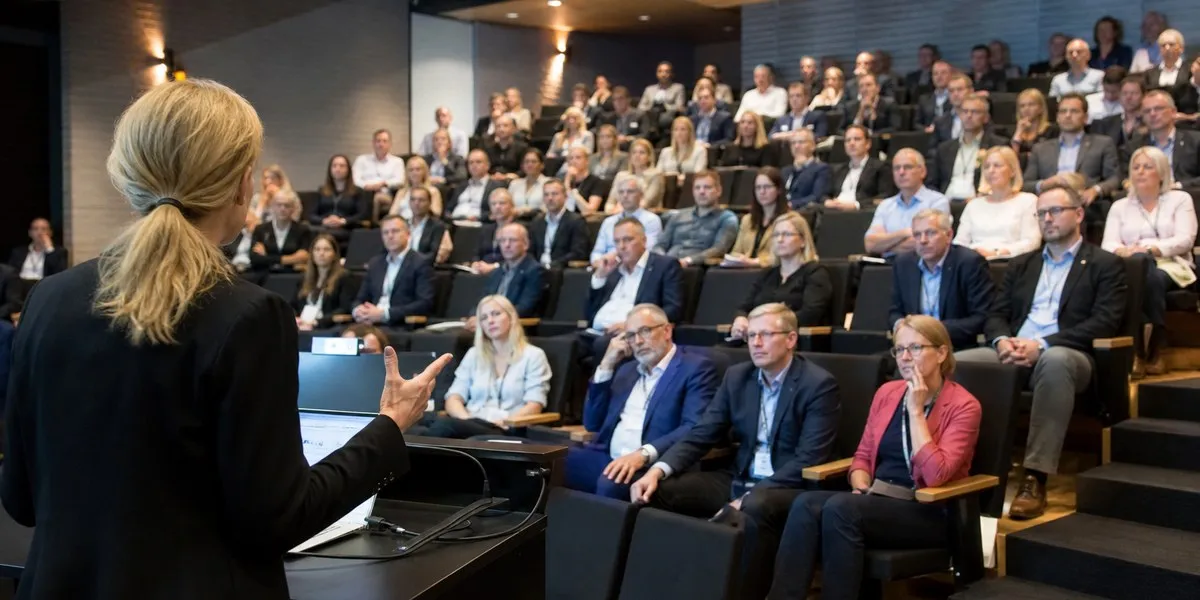
In Espoo, Finland, writer, longtime company executive and lecturer Margaret Heffernan urged businesses not to rely too heavily on artificial intelligence and data when making decisions in an unpredictable world. She was the keynote speaker at Aalto University’s September seminar dedicated to the role of creativity in management. This was reported by YLE News.
According to Heffernan, there is no data about the future, and forecasting always relies on historical data, which can become a trap. She believes that as forecasting becomes increasingly difficult, companies need a creative approach to developing strategy.
Creativity amid uncertainty
The seminar was aimed primarily at company executives. Ia Adlercreutz, Professor of Practice in Working Life at Aalto University, noted that after the pandemic, chaos in global politics and the artificial intelligence boom, businesses increasingly want to understand where the business environment and the world as a whole are heading.
The university is implementing the Artpreneurship research project, designed to bring new approaches based on creative and artistic thinking to the work of management teams. Participants in the research include, among others, Danske Bank’s unit working with private customers and acoustic system manufacturer Genelec.
More current news is available on the UA.News Telegram channel Telegram.
Adlercreutz stressed that diversity in companies is often reduced to employees’ age or gender, while diversity of ways of thinking receives insufficient attention. In her view, uncertainty and surprises can be a source for thinking, rather than merely a reason for fear.
Criticism of excessive specialization
Heffernan believes that Finland and other Western countries are experiencing a “creativity crisis” linked to excessively narrow specialization and the pursuit of maximum efficiency. She urged companies to learn from artists: to begin working and experimenting even without guarantees of a result.
According to the lecturer, alongside narrowly specialized professionals, employers need people who can adapt to change, offer new solutions, see different possibilities and ask different questions. She also criticized an overly formalized approach to recruitment, in which artificial intelligence selects candidates based on narrow parameters and makes it impossible to see the full range of a person’s skills.
As an example of recovery after a crisis, Heffernan cited Nokia. According to her, the fact that the company’s board members knew one another well contributed to cohesion and readiness to overcome difficulties.


