
Guinea-Bissau bans fishmeal production after assessment finds sardine stock decline
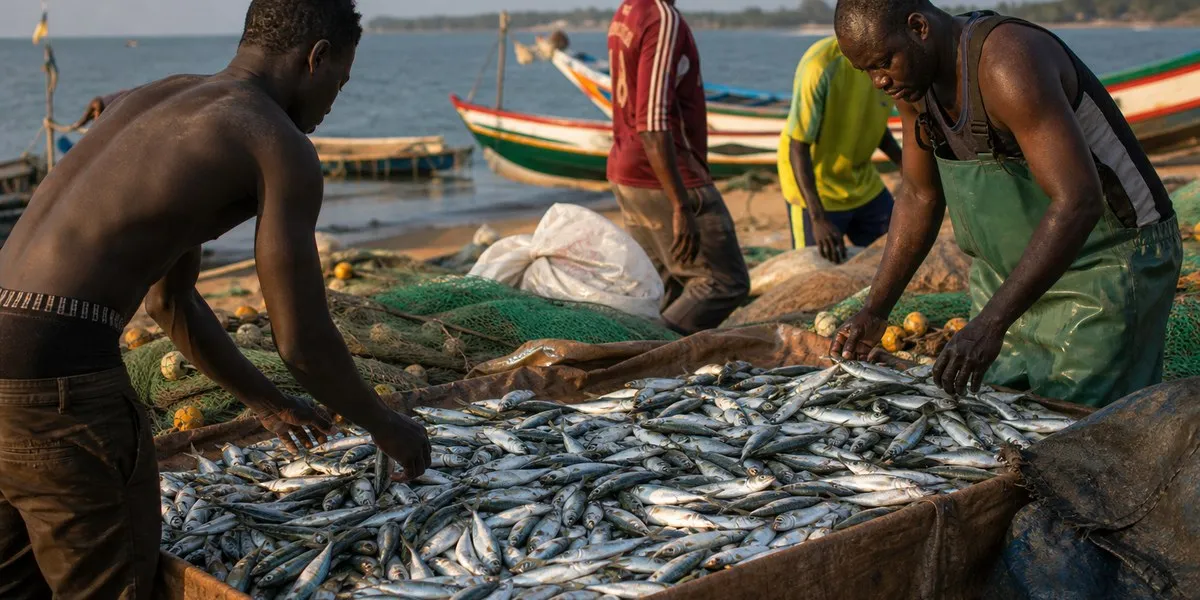
In Guinea-Bissau, the government has banned fishmeal production following an assessment that found a sharp decline in sardinella stocks off the country’s coast. This fish is an important source of protein for the population of Guinea-Bissau and other West African countries.
Industrial fishing
As Mongabay reports, the investigative organization OCCRP links the decline in sardinella populations to the industrial catch of two of its species for fishmeal production. Madeiran sardinella, Sardinella maderensis, and round sardinella, Sardinella aurita, are among the main ingredients of this product, which is added to livestock feed.
The decline in stocks coincided with the appearance of two Chinese fishmeal factories and a fleet of Turkish fishing vessels off the coast of Guinea-Bissau. OCCRP report co-author Josef Skřdlík noted that sardinella migration patterns are still not fully understood, so there may be other explanations for the decline in their numbers.
More current news is available on the UA.News Telegram channel Telegram.
Export data and the ban
At the same time, according to Skřdlík, the stock assessment combined with processed export data points to Chinese floating factories as one of the main factors behind the population decline. According to OCCRP estimates, fishmeal exports by a company linked to these factories corresponded to the processing of at least 350,000 tonnes of raw fish. By comparison, in 2013 the combined stocks of the two sardinella species were estimated at 270,109 tonnes.
Amadu Djaló, director of industrial fisheries at Guinea-Bissau’s Ministry of Fisheries and Maritime Economy, told OCCRP that the fishmeal production sector is responsible for the stock decline. According to him, the ban is intended to protect fish meant for human consumption, including for low-income segments of the population.
Local fisherman Tejan Djuf said that he used to return with a full catch after one or two days at sea, but now fishermen have to spend four or five days there. Skřdlík also noted that fishmeal production directly on vessels is more difficult to monitor and regulate.




