
How the Arab world influenced Paris for centuries — The National
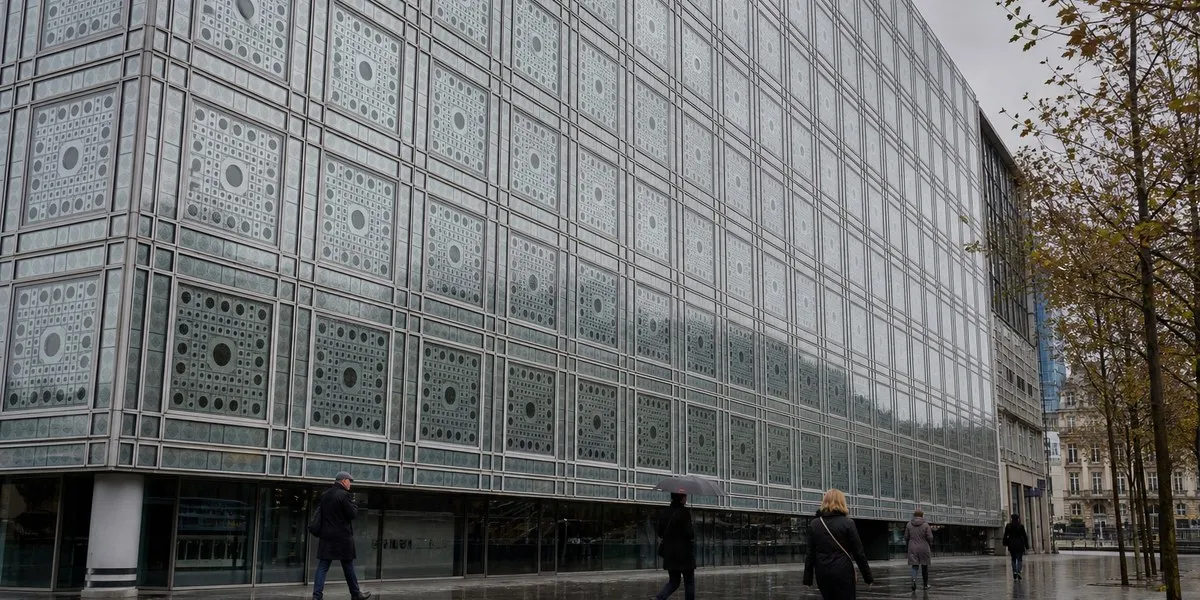
In Paris, France, the Arab World Institute is running tours about the centuries-old cultural and intellectual ties between France and the Arab world. The route, reported by The National, includes the Latin Quarter, the Collège de France, the Church of Saint-Julien-le-Pauvre and the Grand Mosque of Paris.
Art historian and Arab World Institute guide Marie-Georges Nida explained to participants that relations between France and the Arab world in different eras were shaped by fear and fascination, and often by both feelings at once. According to her, these contacts began centuries before French colonial expansion in the late 19th century.
An Egyptian view of France
One of the central figures of the tour was the Egyptian thinker Rifa'a al-Tahtawi. After five years in the French capital, where he served as imam for the first Egyptian educational mission to France, he wrote the book “An Imam in Paris” in 1834. In it, al-Tahtawi described the French as curious people fascinated by museums, while also drawing attention to their pursuit of money.
He compared Cairo, which in his assessment was insufficiently developed under Ottoman rule, with Paris, with its paved streets and street lighting. Al-Tahtawi highly valued the French desire for knowledge and their numerous museums, but criticised, among other things, insufficient care for people in need of assistance.
More current news is available on the UA.News Telegram channel Telegram.
Language, religion and architecture
The tour also covers the Collège de France. According to Nida, in 1526 King Francis I established a school in Paris where Arabic was studied, followed later by Turkish and Persian. He sought to find translators to communicate with his ally, the Ottoman ruler Suleiman the Magnificent, and to train diplomats who spoke local languages.
The Church of Saint-Julien-le-Pauvre became Melkite Greek Catholic in the 19th century. A community of Syrian and Lebanese Christians, some of whom moved to Paris to escape persecution in the Ottoman Empire, offered to take the church under its care. An iconostasis was installed there, among other additions.
The Arab World Institute opened in 1987. Its façade has 240 metal panels inspired by traditional mashrabiyas; they respond to sunlight and help maintain a stable level of lighting inside the building.
The final stop on the route is the Grand Mosque of Paris, built after the First World War as a symbolic tribute to the memory of nearly 100,000 Muslims from French colonies in North and West Africa who died fighting for France. The building, inspired by the architecture of the Al-Qarawiyyin Mosque in Fez, remains a symbol of the difficult Franco-Algerian relationship.


