
Jordan and Iraq call for implementation of Basra–Aqaba oil pipeline — Asharq Al-Awsat
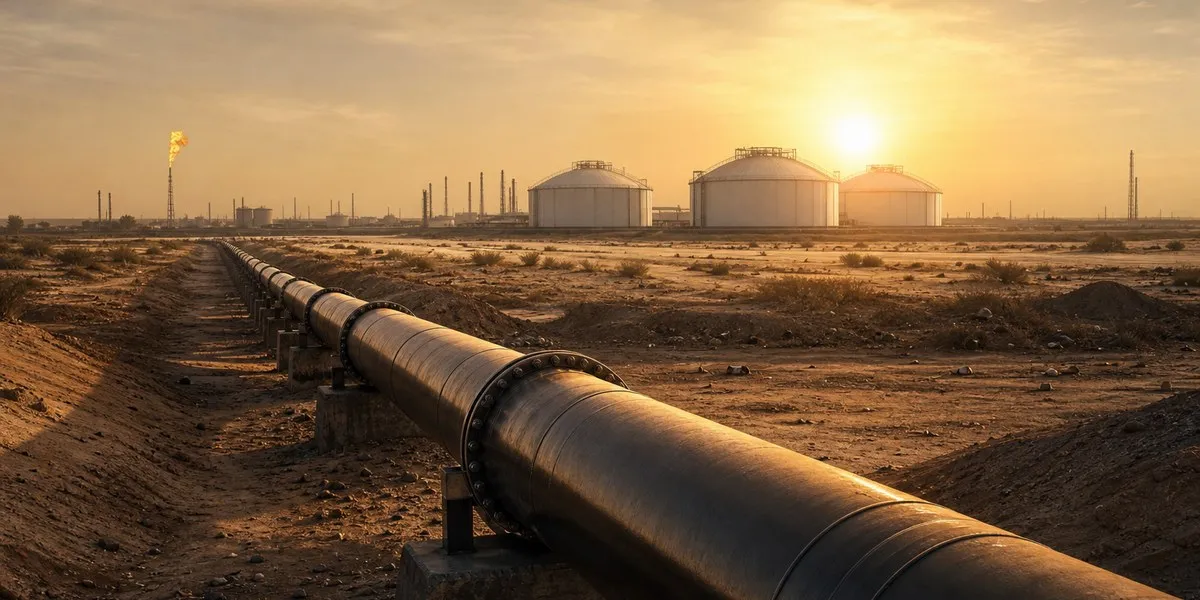
Jordan’s King Abdullah II and Iraqi President Nizar Amidi stressed during a telephone conversation the need to implement the Basra–Aqaba oil pipeline project. The leaders also discussed bilateral relations and opportunities to strengthen cooperation in various sectors, Asharq Al-Awsat reports.
Route to the Jordanian port
The project envisages transporting oil from Basra on the Arabian Gulf coast to the port of Aqaba in southern Jordan. This route is intended to bypass the export route through the Strait of Hormuz.
Iraq and Jordan signed a framework agreement on the pipeline’s construction in April 2012. Its planned length is 1,700 kilometers, and its capacity is up to 1 million barrels of oil per day. The project is estimated to cost about $18 billion, but it has still not been implemented.
More current news is available on the UA.News Telegram channel Telegram.
Planned supply volumes
Jordan is expected to receive about 150,000 barrels of crude oil per day through the pipeline. The project also includes the construction of storage facilities with a total capacity of 7 million barrels and an oil export terminal.
During a visit to Amman on June 7, Iraqi Parliament Speaker Haybat al-Halbousi called the pipeline a strategic option for Iraq amid restrictions on oil exports through the Strait of Hormuz. According to Iraqi Foreign Minister Fuad Hussein, as stated last week, the country has lost about $60 billion because of the war in the Middle East.
Before the conflict, Iraq produced approximately 4 million barrels of oil per day and exported about 3.5 million barrels, mainly from southern regions through the strait. The country’s foreign exchange reserves, according to the outlet, have decreased by $20 billion, while consumer prices have risen significantly.




