
Israel and Lebanon held talks in the U.S. for the first time in 30 years — The Times of Israel
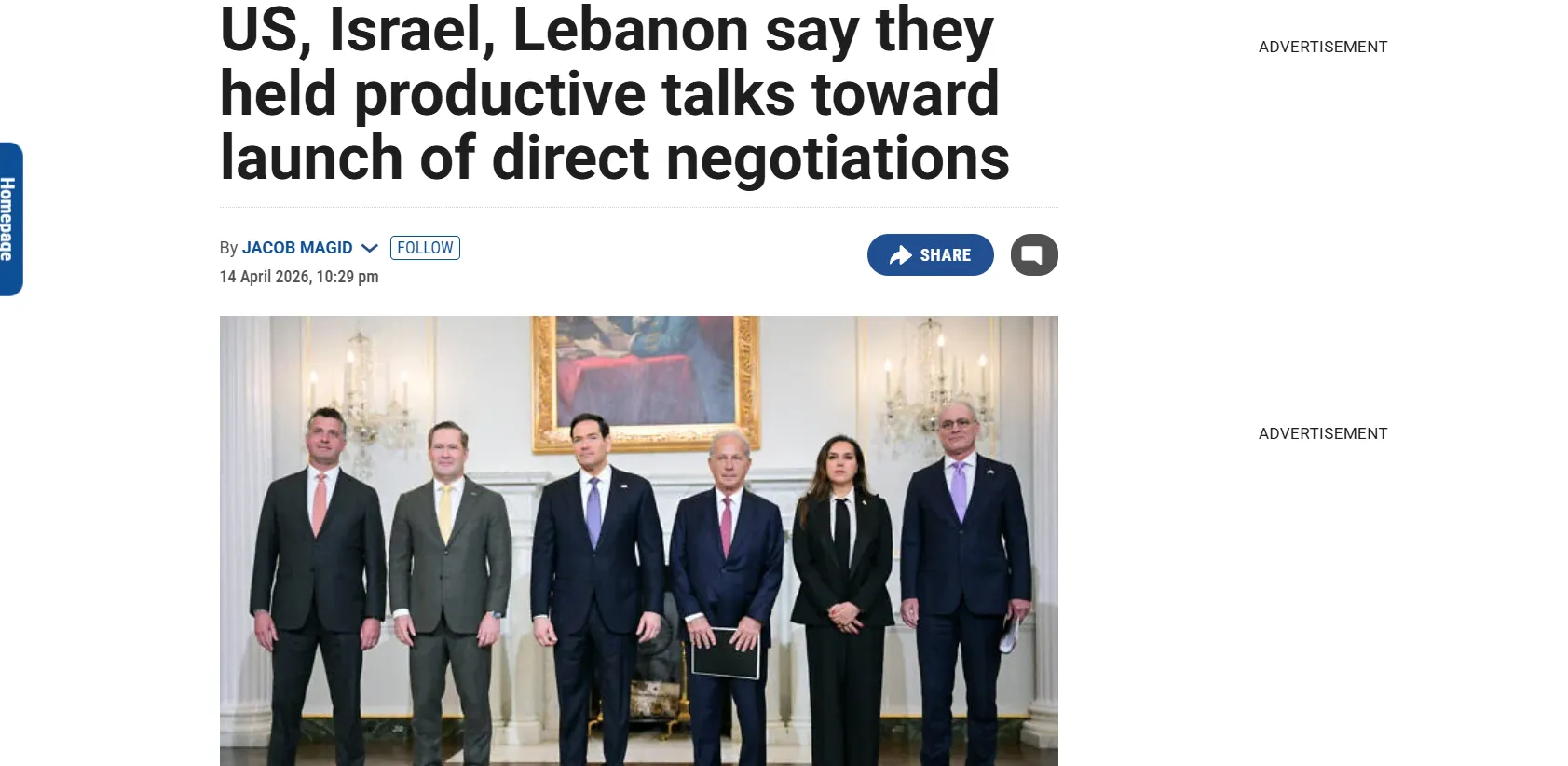
A landmark meeting between official representatives of Israel and Lebanon took place at the U.S. State Department, marking the start of the first direct talks between the two countries in three decades.
This was reported by The Times of Israel.
The parties gathered in a separate room at the U.S. State Department to lay the groundwork for a future peace agreement and to stabilize the situation in the region.
This diplomatic event was organized by a team of high-ranking officials, including Secretary of State Marco Rubio, State Department Advisor Michael Nidgem, and Ambassadors Michel Issa and Mike Woltz.
Despite the high-level nature of the meeting, participants emphasized that this was merely a preparatory stage, not the beginning of a full-fledged peace process.
“The United States congratulated the two countries on this historic milestone and expressed its support for further negotiations, as well as the Lebanese government’s plans to restore the monopoly on the use of force and put an end to Iran’s excessive influence,” reads the joint statement following the talks.
Washington has high hopes that this dialogue will go beyond the 2024 temporary ceasefire.
The administration, represented by the U.S. president, seeks to achieve a comprehensive security agreement that would definitively resolve the issue of the presence of illegal armed groups in southern Lebanon.
Special attention during the discussions was given to the role of the terrorist group “Hezbollah,” which has yet to comply with demands for disarmament and the withdrawal of forces.
The U.S. once again reaffirmed Israel’s right to self-defense against militant attacks and emphasized that any agreements must be reached exclusively between Jerusalem and Beirut.
“Israel also expressed its readiness to participate in direct negotiations to resolve all outstanding issues and achieve a lasting peace that will strengthen security, stability, and prosperity in the region,” the official document states.
The Lebanese side emphasized the need for an immediate ceasefire and a resolution to the acute humanitarian crisis.
Beirut insists on the principles of full state sovereignty, which entails the elimination of foreign influence and the strengthening of official government structures.
The Israeli delegation, for its part, demands the complete elimination of terrorist infrastructure on Lebanese territory.
Jerusalem has demonstrated a willingness to seek a diplomatic resolution to the conflict, which is a significant step forward after a long period of avoiding direct contact.
Israel Approves Record Settlements in the West Bank
The leader of the Houthis in Yemen, Abdul Malik al-Houthi, called the ceasefire between the U.S. and Iran a “great victory” for Tehran. He stated that Iran had gained the upper hand and was able to pressure the U.S. and its allies by closing the Strait of Hormuz.
Russia continues to evacuate its personnel from the Iranian nuclear plant, despite the declared ceasefire. Most of the staff have already been evacuated, but some remain on site. Officials in Moscow say the situation remains unpredictable.
Oil prices have surged again, approaching $100 per barrel. The reason is disruptions to shipping through the Strait of Hormuz, despite the ceasefire with Iran. The market remains volatile following a sharp drop the previous day.
Gulf countries reported that on April 9, they did not record any new airstrikes from Iran. This is the first day without strikes since the war began in late February. The situation may indicate a temporary easing of tensions in the region.
Since the announcement of the ceasefire between the U.S. and Iran, only a few ships have passed through the Strait of Hormuz. Traffic remains limited and unstable. Against this backdrop, hundreds of oil tankers are waiting for permission to pass.


