
German Chancellor Merz plans CDU leadership meeting after state elections
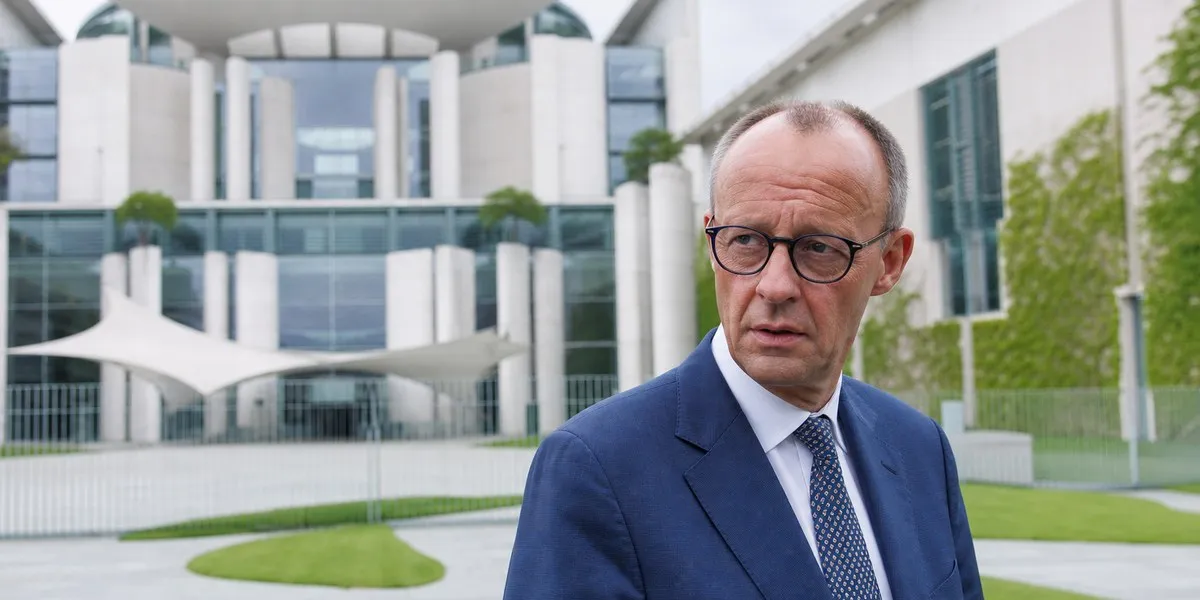
German Chancellor Friedrich Merz plans to hold a meeting of the executive committee of the Christian Democratic Union (CDU) on Sunday after elections in Berlin and the state of Mecklenburg-Western Pomerania. As The Local Germany reports, he aims to secure further support from the party at the meeting.
Elections in two states
According to a CDU spokeswoman, the executive committee will convene immediately after voting in Berlin and Mecklenburg-Western Pomerania. Polls indicate that in Berlin, the CDU is neck and neck with the left-wing party Die Linke, while in Mecklenburg-Western Pomerania, the party may win only about 7% of the vote.
At the same time, the far-right Alternative for Germany (AfD) is forecast to strengthen its position in both states. According to a Forsa institute poll this week, 10% of respondents were satisfied with Merz's work as chancellor.
At the national level, the AfD is ahead of the CDU in polls. In elections on September 6 in the eastern state of Saxony-Anhalt, the AfD received nearly 44% of the vote, while the CDU received 17%.
More current news is available on the UA.News Telegram channel Telegram.
Internal party criticism
Merz, who is also CDU chairman, became chancellor in May last year. He promised to revive the economy, strengthen Germany's defense in the face of a hostile Russia, curb irregular migration, and carry out reforms intended to restrain the AfD's growing popularity.
The chancellor's low personal ratings and criticism within the party have intensified speculation about a possible challenge to his position in the CDU/CSU. North Rhine-Westphalia Minister-President Hendrik Wüst and Bavarian Minister-President and CSU chairman Markus Söder have been named among possible contenders for the top position in the party camp.
Oliver Lembcke, a political scientist at Ruhr University Bochum, told AFP that Merz probably considers an early end to his chancellorship a real possibility himself. In the expert's view, the chancellor's position could become significantly more difficult if influential state leaders do not publicly express support for him after the elections.




