
China’s Jingdezhen preserves porcelain traditions — Asharq Al-Awsat
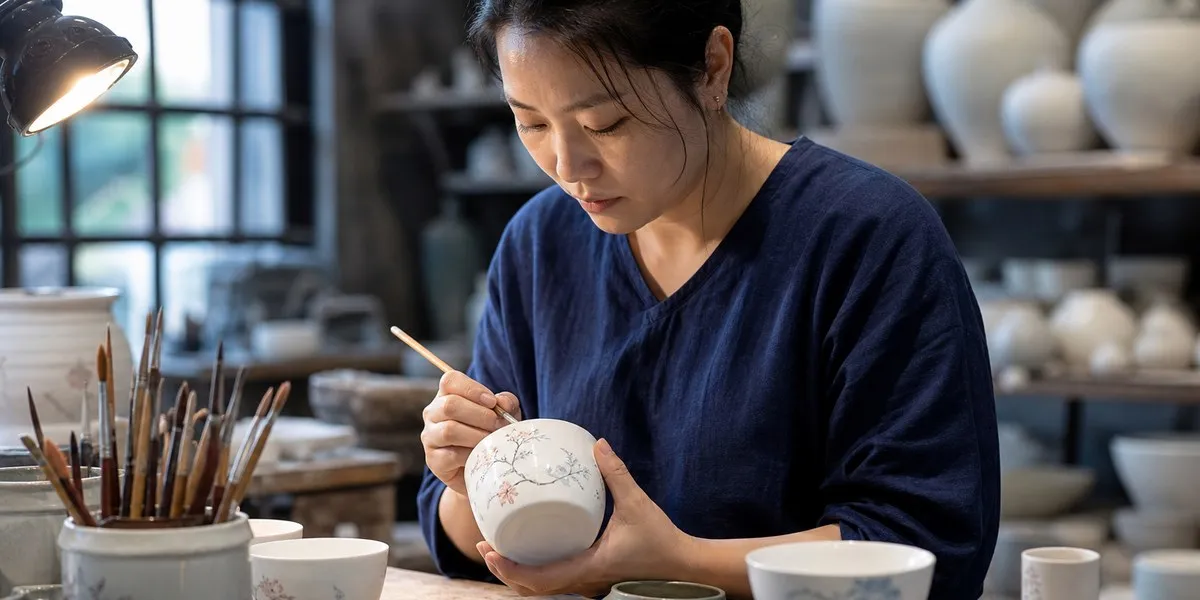
In Jingdezhen, a Chinese city in Jiangxi Province, artisans and scholars preserve porcelain-making traditions that are more than 2,000 years old. The city’s porcelain-related sites were added to the UNESCO World Heritage List in 2026, Asharq Al-Awsat reports.
Artist Chen Qing said her family has practiced the craft in Jingdezhen since around 1860. Her grandfather once wrote the formula for the family’s distinctive red pigment on paper, asked the artist’s mother to memorize it, and then burned the note. Since then, the formula has been passed down orally, and Chen herself learned it when she was over 30.
A craft requiring years of study
Jingdezhen artisans preserve techniques once used to make porcelain for the imperial court. Chen’s ancestors adopted some of these traditions after the fall of the Qing dynasty in 1912. According to the artist, a family may spend nearly a century developing a single technique.
Painting one porcelain cup takes several days. The artist works without touching the surface of the item with her fingers: dust or a drop of sweat can ruin the work. She describes landscapes, where gradual color transitions must be conveyed, as the most difficult. Chen believes mastering the craft takes a lifetime.
More current news is available on the UA.News Telegram channel Telegram.
Research into fragments and traditions
The Jingdezhen Imperial Kiln Institute studies and restores ceramics found at a neighboring complex of ancient kilns, where items for emperors were once made. The institution uses artificial intelligence to match and restore fragments of ancient porcelain and is also creating a ceramics database.
Institute President Wen Yanjun noted that the research helps reproduce ancient technologies with the help of modern science. The porcelain decorations studied by the institute show influences of Islam, Buddhism, Taoism, and European Catholicism.
Artists from China and other countries also come to Jingdezhen. Italian artist Paola Masi is taking part in a residency program, while Chinese artist Huang Qi returned to the city after studying at Jingdezhen Ceramic University and working elsewhere.


