
An AfD victory in Germany could play into the Kremlin’s hands: what consequences would this have?
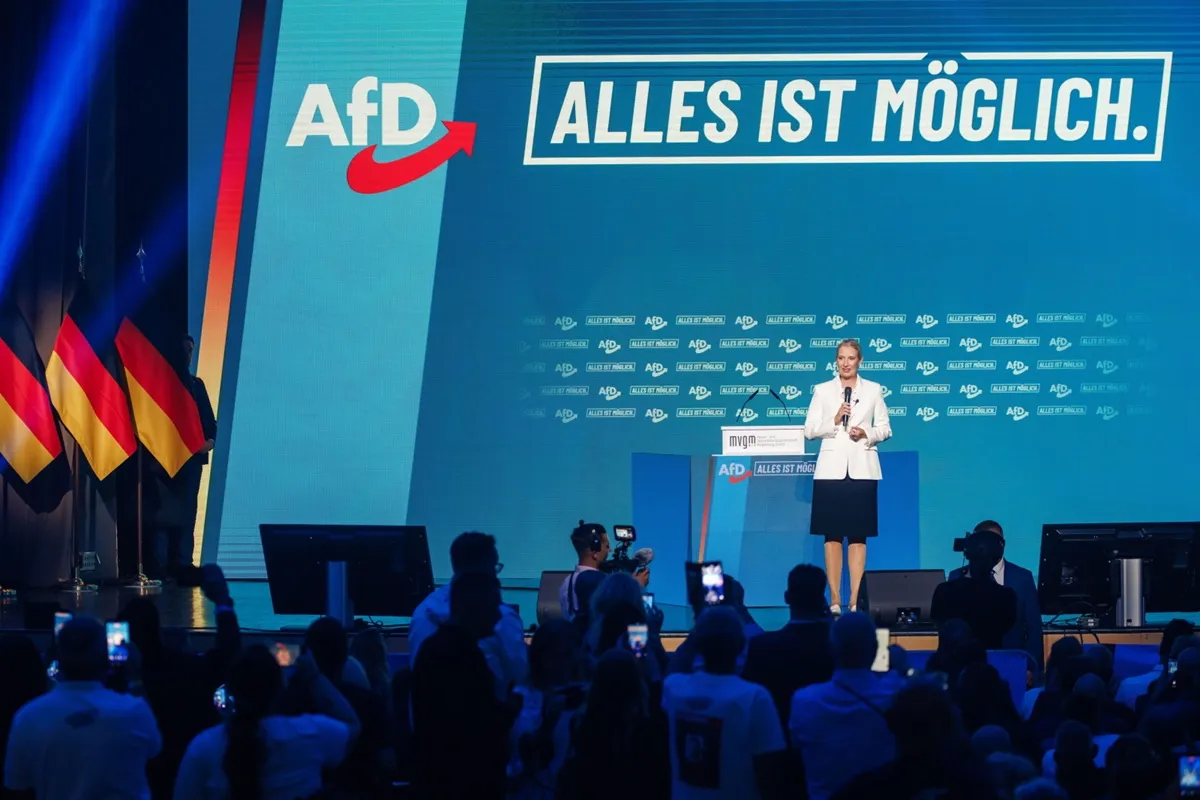
The right-wing populist, pro-Russian party “Alternative for Germany” (AfD) scored a historic victory in the state elections in Saxony-Anhalt. The party’s result increases pressure on Chancellor Friedrich Merz and, at the same time, creates new opportunities for the Kremlin to advance its interests in Germany.
Election Results
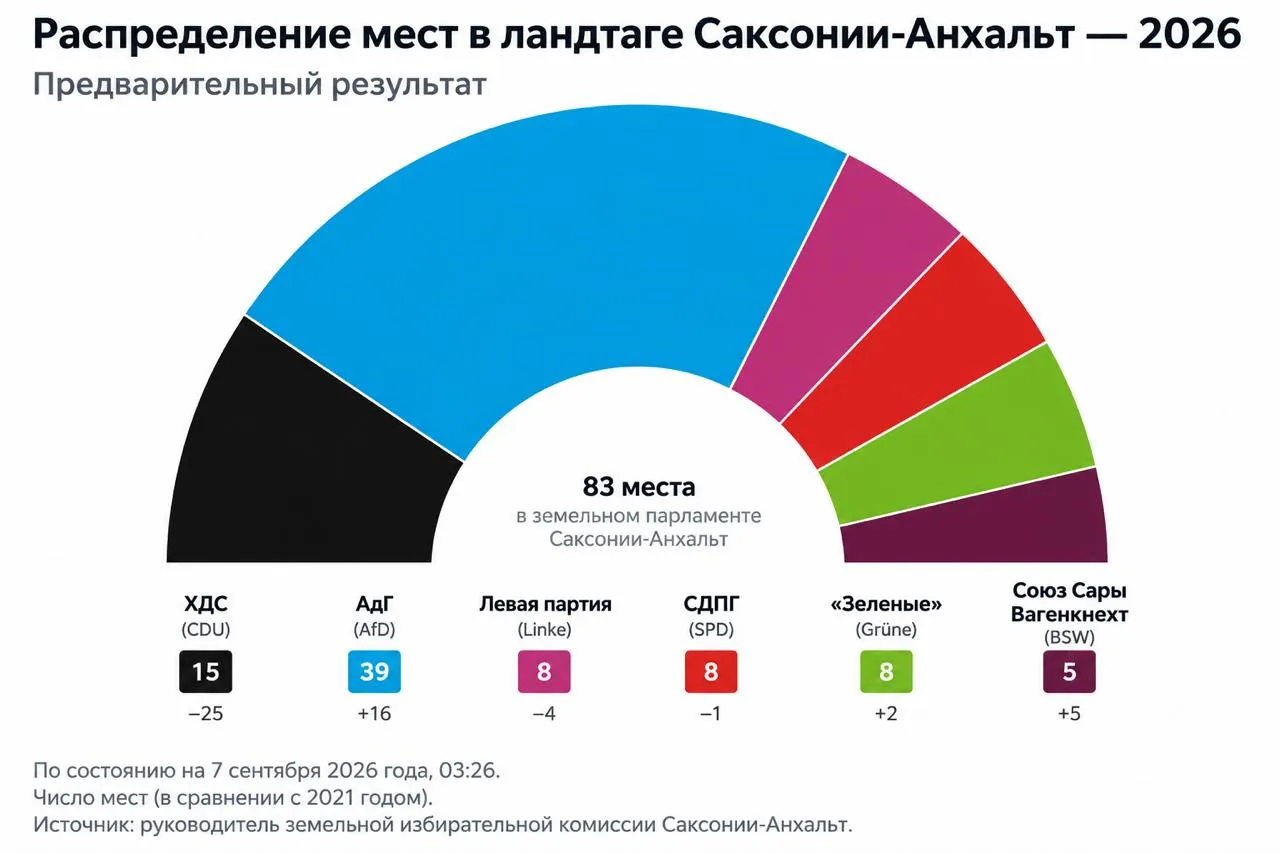
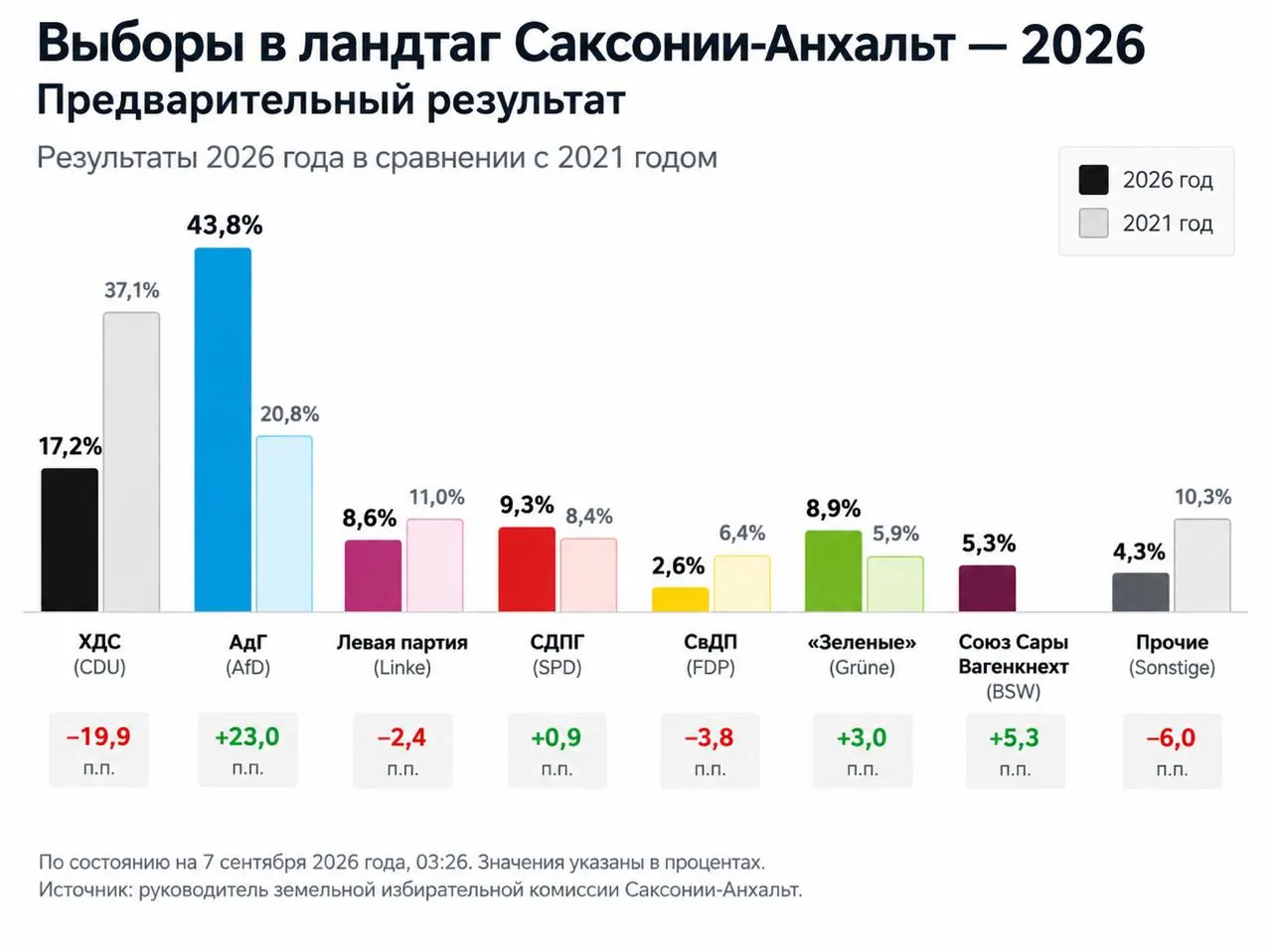
The AfD received 43.8% of the vote and 39 of the 83 seats in the Saxony-Anhalt state parliament. Thus, the party more than doubled its result compared to the 2021 elections and achieved its best-ever result in a state election.
The Christian Democratic Union (CDU) came in second, receiving 17.2% of the vote and 15 seats. Also entering the state parliament were the Social Democratic Party (SPD) with 9.3%, the Greens with 8.9%, the Left Party with 8.6% (eight seats each), as well as the “Sarra Wagenknecht Alliance” (BSW) with 5.3% and five seats.
The AfD will not be able to form a government on its own, as a majority requires 42 seats. The party will have to secure the support of other political forces.
At the same time, Germany’s major centrist and established parties adhere to the so-called “firewall” policy toward the AfD—a principle that entails refusing any political cooperation with this party.
However, the BSW could potentially form a coalition with the AfD.
How the AfD’s Victory Affects Merz
The election results pose serious challenges for German Chancellor Friedrich Merz and his political party.
Ben Hall, editor of the Financial Times’ European desk, noted that the AfD’s victory puts Merz in a difficult position. The chancellor’s record-low approval ratings are weakening the CDU’s position and could call his future into question if the party suffers defeats in other regional elections this month.
Marcel Fratzscher, president of the German Institute for Economic Research, told Reuters that the election results are, above all, “a vote of no confidence in the federal government.”
The AfD’s victory also intensifies pressure on the “firewall” policy. Ulrich Sigmund, the party’s leader in Saxony-Anhalt, has already announced his intention to poach lawmakers from other political parties.
At the same time, the AfD’s popularity is growing not only at the level of individual federal states. According to Reuters, the party has become the most popular political force in Germany, garnering 28% in a recent INSA poll. The conservatives received 20%.
Support for the AfD continues to grow ahead of the next federal elections, scheduled for 2029.
What Does the AfD’s Victory Mean for Russia?
For the Kremlin, the AfD’s success could have a number of positive consequences. The party advocates for restoring relations with Russia and reducing support for Ukraine.
The state government that the AfD could potentially form in Saxony-Anhalt would also have the opportunity to participate in the decision-making process regarding certain federal laws through the Bundesrat.
The Polish Center for Eastern Studies (OSW) noted that the AfD may begin to pursue its own active policy toward Russia, including direct contacts with Moscow. Party representatives have already visited Russia on multiple occasions.
German experts are particularly concerned about the possibility of the AfD gaining control over state counterintelligence agencies.
Thuringia’s Interior Minister Georg Mayer had previously expressed concerns about potential leaks of confidential information—particularly data on Russian espionage activities—if an AfD representative were to head the Ministry of the Interior of Saxony-Anhalt.
In 2025, Mayer accused the AfD of “abusing” its right to submit parliamentary inquiries. According to him, due to the high level of detail in these inquiries, “it practically gave the impression that the party was acting on orders from the Kremlin.”
Stern magazine called the election results “a pleasant evening for Putin.”
Russia Tried to Influence the Election
On the eve of the election, the Russian bot farm “Matryoshka” launched an influence campaign on social media.
The troll network spread videos containing accusations against local politicians—ranging from embezzlement to sexual harassment.
According to a representative of the “Bot Blocker” project, this campaign was not directly aimed at the AfD or the BSW. At the same time, a Reuters source at the German Ministry of the Interior stated that the campaign did not achieve significant reach.
Thus, the AfD’s victory in Saxony-Anhalt was not only a serious signal for German domestic politics but also a potentially significant development for Russia. The rise of a party that advocates closer ties with Moscow and reduced support for Ukraine creates additional political opportunities for the Kremlin in Germany.
The Kremlin has stated that any negotiations to end the war in Ukraine are unacceptable unless they meet all of Moscow’s demands. Even in the event of possible territorial concessions, Moscow will not stop and will continue to insist on the fulfillment of its conditions.
Lavrov noted that Russia would only be satisfied with control over the entire Donbas and a change of government in Ukraine.


