
Glacial risk zones identified in Nepal after flood — Live Science
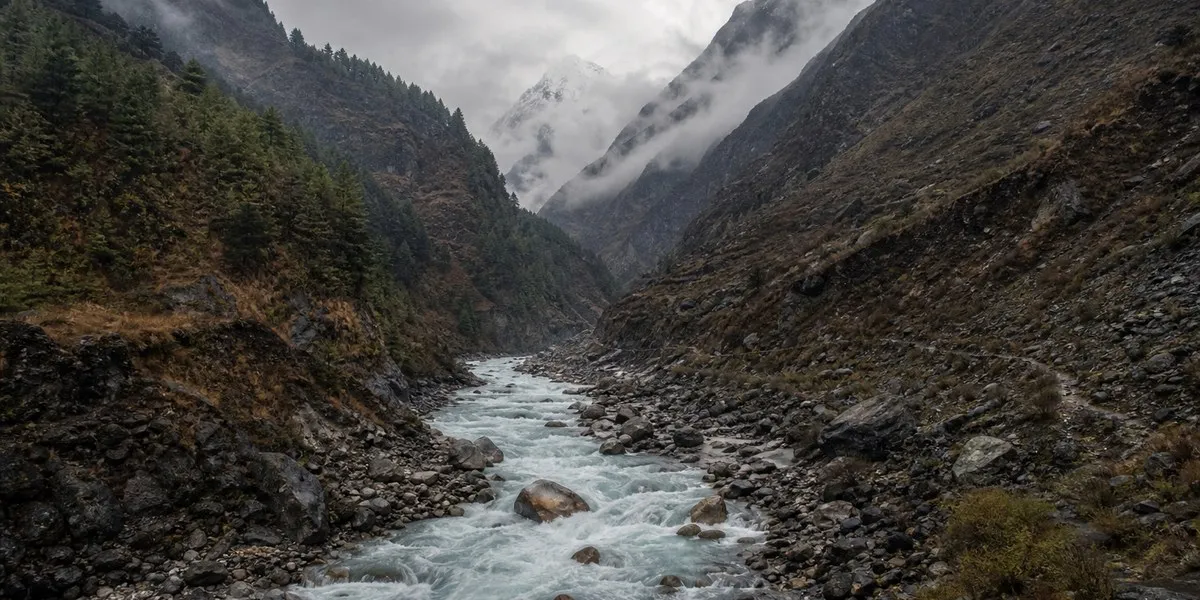
A flood on the border between Nepal and Tibet, caused by a collapse of ice and rock in August, demonstrated the danger of glacier-related disasters. According to Live Science, as of September 16, at least 1,400 people had died as a result of the event, while more than 6,000 were considered missing.
Collapse and flash flood
According to the Stimson Center analytical center, a large mass of rock and glacial ice broke away from a mountain slope, traveled about 2,000 meters downhill and fell into the Lhende River in Tibet. The speed of the mass of ice and stones reached 150 meters per second. The flow of water, ice and debris moved downstream, destroying banks and collecting water and debris along its path.
Flood damage was recorded more than 100 kilometers from the site of the collapse. Mark Carey, a professor of environmental studies and geography at the University of Oregon, noted that the scale of the disaster was intensified by the volume of the landslide, the amount of water, the speed of the flow, as well as settlements and infrastructure in its path. According to him, there was little warning.
The Himalayas and Andes among risk zones
Experts classify the Himalayas and the wider High Mountain Asia region among the main hotspots of future glacial disasters. This region includes parts of China, Afghanistan, Nepal, India, Pakistan, Bhutan, Kazakhstan, Uzbekistan, Kyrgyzstan and Tajikistan. A study published in the journal Nature in 2023 estimated that more than 9 million people in the region are threatened by glacial lake outburst floods.
More current news is available on the UA.News Telegram channel Telegram.
The risks are intensified by steep slopes, narrow valleys, seismic activity and rapid warming. The Himalayas are warming twice as fast as the global average. Glaciers and permafrost help stabilize mountain slopes, so the reduction of glacial cover may increase their susceptibility to collapses. Meltwater can also make it easier for a glacier to slide.
Danger for Peru
Another region with a high level of risk is Peru, which contains 68% of the planet's tropical glaciers. In the Peruvian part of the Andes, glacial lakes are rapidly expanding because of melting ice. One such lake is located above the city of Huaraz, where about 130,000 people live.
Peru has identified 528 glacial lakes at risk of overflowing, including 58 with a very high level of risk because of their proximity to settlements. According to the Nature study, over two decades the number of glacial lakes in the Andes increased by 93%, while in High Mountain Asia it grew by 37%.
Scientists believe the risks can be reduced through monitoring glaciers and lakes, evacuating the population and diverting water from overflowing lakes. In Peru, authorities drained 34 glacial lakes over 70 years. At the same time, the creation of large-scale monitoring systems in the Himalayas is complicated by vast areas and the limited resources of local authorities.




