
South Korea has taken the lead in the skies above the world
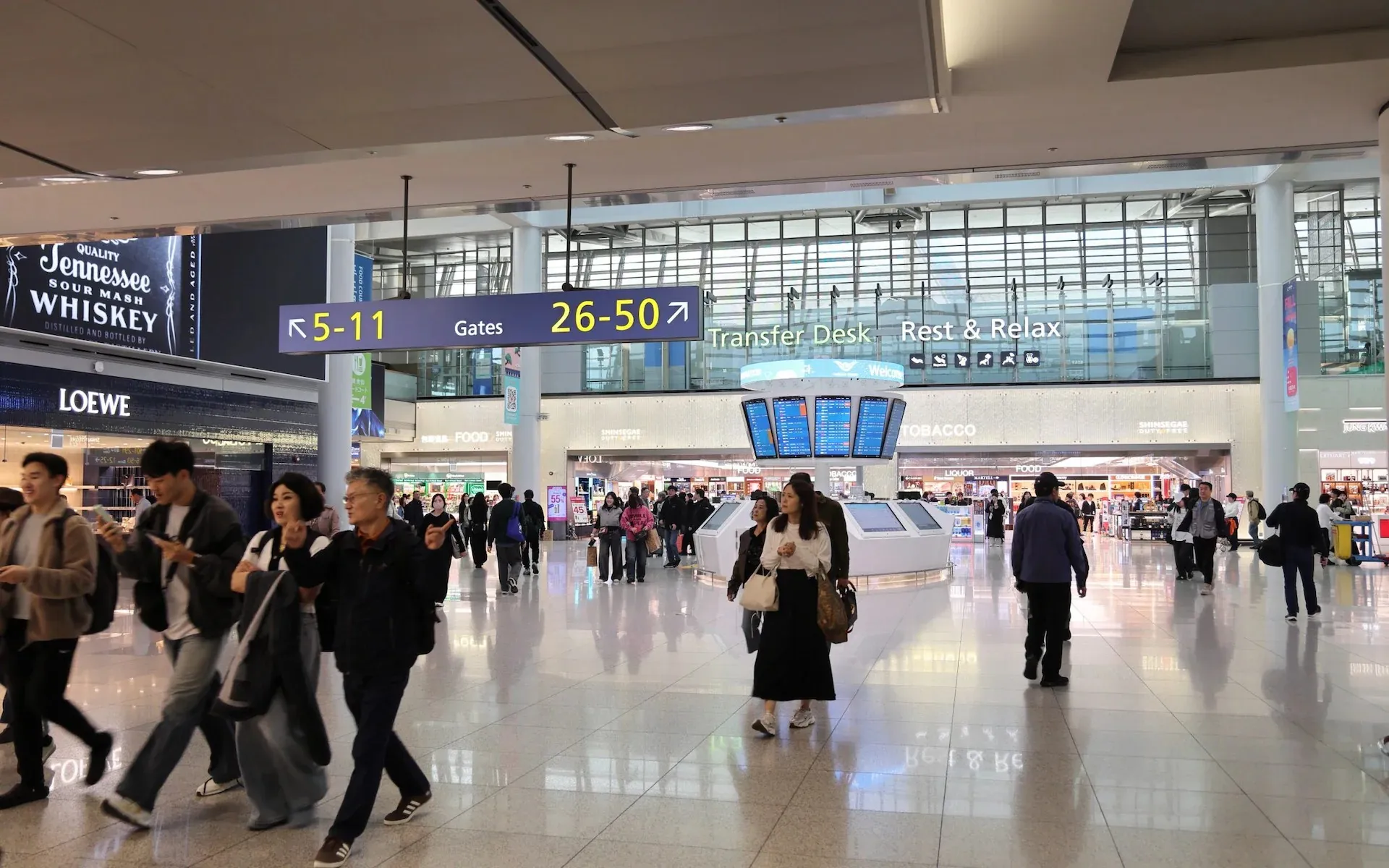
South Korea's Incheon Airport has taken the top spot in the world for the first time in terms of international passenger traffic. In the first half of 2026, it handled 38.4 million international passengers, surpassing London Heathrow and Singapore Changi. Preliminary data from Airports Council International shows that Incheon is rapidly increasing its transit traffic and gradually climbing the global rankings. However, these results are still preliminary, and the final annual rankings will be determined based on complete data.
Incheon Airport, which serves Seoul, topped the ranking of the world’s busiest international airports for the first time. The Telegraph reported this on August 13, citing preliminary data from Airports Council International. In the first six months of 2026, 38.4 million international passengers passed through Incheon. London’s Heathrow was just slightly behind, with 37.8 million passengers. Singapore’s Changi Airport took third place with 34.5 million passengers.
Thus, the difference between first and second place was about 600,000 passengers. This is a notable achievement for the global aviation market, especially considering that Incheon did not top this ranking until recently. At the same time, it is important not to confuse this figure with the airport’s total passenger traffic. ACI compiles separate rankings for total passenger numbers and for international passengers. In the overall global ranking for 2025, Atlanta Airport remained in first place, while Incheon ranked 12th.
Just a few years ago, Incheon was far from first place
The rise of the South Korean airport is particularly striking when viewed against its previous performance. In 2002, Incheon ranked tenth in international passenger traffic. By 2018, it had climbed to fifth place, and by 2025, it was already third. In other words, over the course of a few decades, the airport has transformed from a major regional hub into one of the world’s leading international aviation hubs. This is aided by South Korea’s location, which has become a major hub for business, tourism, and transit travel in East Asia.
The growth in transit traffic also plays a significant role. According to data cited in The Telegraph, Incheon served 18% more transit passengers in January–June 2026 than during the same period last year. This means that more and more people are using Seoul not only as their final destination. For some passengers, Incheon is becoming a convenient layover point during flights between Asian countries and other parts of the world.
Heathrow Had Almost No Room to Grow
London’s Heathrow lost its top spot this year, but its performance remains very strong. In the first half of 2026, the airport handled 37.8 million international passengers. One of Heathrow’s challenges is that it is already operating near the limits of its capacity. Due to the airport’s high utilization, it is difficult to sharply increase the number of flights and passengers.
Therefore, the growth of other international hubs is gradually changing the familiar landscape of global aviation. Whereas large European and Middle Eastern airports used to frequently occupy the top spots, Asian hubs are now increasingly joining their ranks. ACI also notes that the Asia-Pacific region remains one of the most dynamic markets in global aviation. The growth of international routes and the recovery of demand following the pandemic are helping local airports strengthen their positions.
Dubai Is Losing Ground Due to the War in the Middle East
The situation with Dubai Airport is even more interesting. For many years in a row, it topped the ranking of the world’s busiest international airports. However, in the first half of 2026, the situation changed due to hostilities in the Middle East. Airlines were forced to cancel some flights or reroute others, while passengers sought alternative flights and connections.
The decline was particularly sharp in March. At that time, Dubai Airport served approximately 2.5 million international passengers. By comparison, in February, that figure stood at 7.4 million. By June, passenger traffic had partially recovered—to approximately 4.7 million international travelers—but this was not enough to return to previous levels.
Thus, Incheon’s standing was influenced not only by its own popularity. External circumstances also played a significant role, particularly issues with air service in the Middle East. This clearly illustrates just how much geopolitical events can reshape the global air travel landscape.
How the Global Air Travel Market Has Changed
Incheon’s rise is taking place against the backdrop of overall growth in international air travel. According to ACI, global international passenger traffic reached approximately 4 billion passengers in 2025. This is 6.1% more than the previous year and 8% more than in 2019, before the pandemic. In total, global airports served about 9.8 billion passengers in 2025. This is 3.7% more than in 2024 and 6.5% higher than the 2019 level. According to ACI’s forecast, global passenger traffic could rise to 10.2 billion people in 2026.
This indicates that the aviation industry continues to recover and grow rapidly. At the same time, the main passenger traffic routes are shifting. Asian cities are increasingly competing with traditional European and Middle Eastern aviation hubs.
What This Means for Incheon
Ranking first after six months is a significant achievement for Incheon, but it’s too early to call it the definitive world champion. These are preliminary figures for the first half of the year, while ACI’s full annual ranking will be finalized after the end of 2026 and verification of the statistics. However, even this interim result shows a significant shift in rankings. As recently as 2025, Incheon ranked third among international airports, trailing Dubai and Heathrow. By the end of the first half of 2026, it had already surpassed both of these hubs in terms of international passenger traffic.
For South Korea, this is also an important sign of its growing role in global aviation. Incheon is becoming an increasingly important transit hub for passengers traveling within Asia and between Asia and other regions of the world. It will become clear whether Incheon will retain its top spot once the full data for all of 2026 is available. If the trend from the first half of the year continues, South Korea.




