
More than 73,000 migrants have left Ceuta and returned to Morocco — EFE
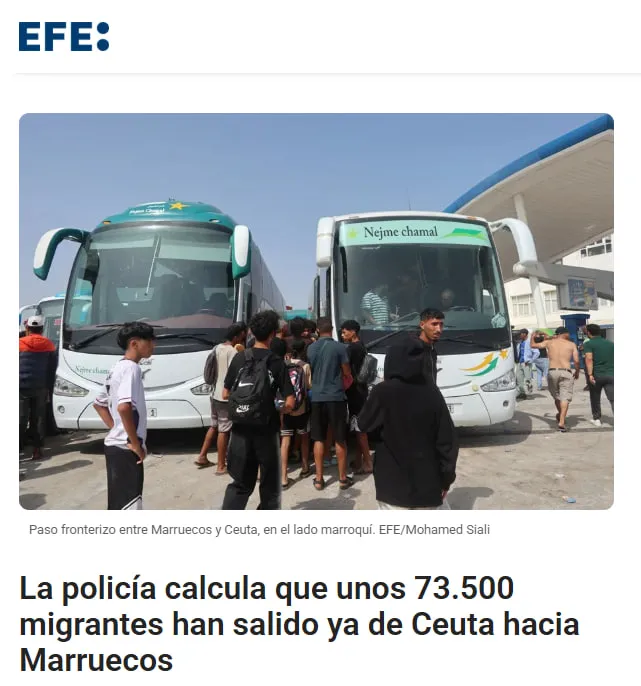
Since the start of the migration crisis in the Spanish enclave of Ceuta, more than 73,500 migrants have left the city and headed toward Morocco. This was reported by EFE, citing estimates from Spain’s National Security Forces.
According to law enforcement officials, this figure may include both migrants who arrived in Ceuta before the mass influx began and those who may have crossed the border multiple times.
Meanwhile, as of August 2, 71 people are known to have died as a result of the migration crisis in the enclave.
As the agency notes, following the mass influx of migrants into Ceuta, which began on July 30, tens of thousands of people have begun returning to Morocco. This was influenced by increased pressure from Spanish security forces and the announcement of an agreement between Spain and Morocco on the repatriation of migrants.
An additional factor contributing to the exodus from Ceuta was the lack of open shopping centers and restaurants in the city.
As a reminder, over the past few days, tens of thousands of migrants have attempted to enter the Spanish enclave of Ceuta from Moroccan territory. According to local authorities’ estimates, about 60,000 people crossed the border illegally, while Spain’s Ministry of the Interior reported more than 50,000 migrants.
Source: EFE.
As a reminder, Santiago Abascal, leader of the Spanish right-wing populist party Vox, called for the permanent militarization of the border with Morocco and the indefinite closure of the border crossing amid the migration crisis in Ceuta.
In Italy, authorities have begun conducting random checks on passengers arriving from Spain. This followed the decision by Giorgia Meloni’s government to temporarily reinstate border controls amid the migration crisis in Ceuta, Spain. The checks are being conducted at airports and seaports, including Rome’s Fiumicino.
On Saturday, Spain began installing a 500-meter-long inflatable floating barrier near the border with Morocco in the Ceuta area. This decision was made following a sharp increase in the number of migrants attempting to enter the Spanish enclave.




