
The ambassador explained whether Ukrainians face any danger in Poland
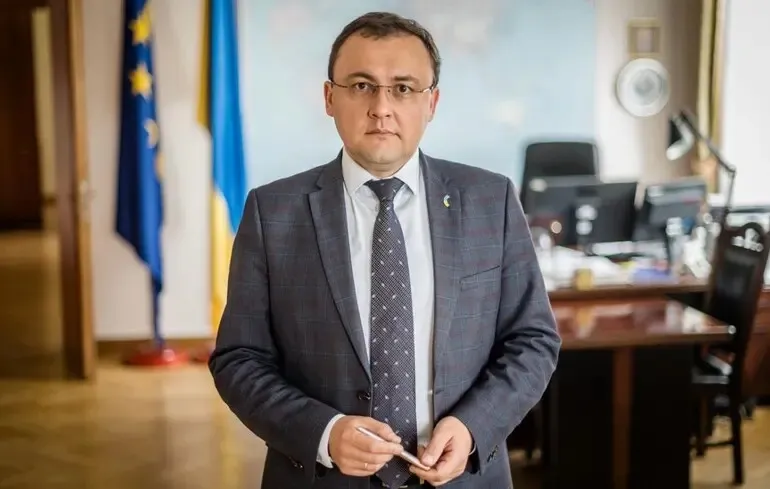
Claims that it is dangerous for Ukrainians to be in Poland are exaggerated, according to the ambassador. He said that most Ukrainian citizens do not personally face physical aggression.
Vasyl Bondar, Ukraine’s ambassador to Poland, spoke about this in an interview with RBC-Ukraine.
He said there is currently no reason for Ukrainians to leave Poland.
“Most Ukrainian citizens with whom I have personal contact have not directly encountered physical aggression. In other words, it’s mainly a matter of anxiety caused by media reports and psychological pressure, which also makes some citizens afraid to speak Ukrainian in public places,” Bondar said.
He noted that the Ukrainian language—and sometimes Russian as well—can still frequently be heard on the streets of Warsaw and other Polish cities.
“So let’s put ourselves in the shoes of an ordinary Pole who may not live in Warsaw but, when traveling from the regions to the capital, hears a language other than his own on the streets. This can evoke various emotions, which can also turn into aggressive behavior,” the ambassador said.
However, he emphasized that no sense of discomfort can justify insults, discrimination, or physical aggression against Ukrainian citizens.
At the same time, according to Bondar, it would be wrong to hold Polish society as a whole responsible for isolated crimes.
The vast majority of Polish citizens do not engage in such actions, and many support Ukraine. An example of this is last winter’s “Warmth from Poland to Kyiv” campaign. Those who resort to aggression are, for the most part, people who are generally prone to such behavior.
“From the very first days of my tenure in Poland as ambassador, I have repeatedly appealed to our citizens—both those who live here and those passing through Polish territory—to abide by the laws, rules, and traditions of the host country. The behavior of each of us affects the attitude toward the entire Ukrainian community,” the ambassador noted.
He reported that during the first half of 2026, 10,800 offenses involving Ukrainian citizens were recorded.
If we compare this number to the approximately two million Ukrainians currently in Poland, the rate comes to 0.54%, or about five cases per thousand people. This figure is within the margin of statistical error.
Furthermore, when considering these statistics, it is important to note that the same actions may be classified differently under the law in Ukraine and Poland.
For example, in Ukraine, driving under the influence or possessing a small amount of narcotics without the intent to sell are classified as administrative offenses.
In Poland, unlike under Ukrainian law, such actions are subject to criminal prosecution.
Therefore, according to Bondar, the figures alone—without an analysis of the nature of the offenses—do not provide a basis for a direct comparison. At the same time, some political forces are attempting to use these statistics—and, of course, without explaining exactly what they cover.
“It is important to discuss this issue based on actual data, without generalizations or attempts to unfairly shift the responsibility of individual offenders onto Ukrainians living in Poland who abide by its laws,” the ambassador noted.
As a reminder, a Ukrainian man was admitted to a psychiatric hospital following a fatal attack in Poland.
President Volodymyr Zelenskyy condemned the attack by a Ukrainian citizen on the Benedictine nuns’ abbey in the Polish city of Jarosław, which resulted in the death of a priest and injuries to four other people.
The attack took place on the morning of September 24 on the grounds of the Jarosław Abbey on Benedyktyńska Street. Around 9:30 a.m., police received a report of a knife attack. According to preliminary information from the Polish police, a 31-year-old Ukrainian citizen stabbed four men and one woman. All of the victims were taken to the hospital. Three men sustained serious injuries, and the fourth died in the hospital.




