
Fires in Indonesia cause hazardous haze in Southeast Asia
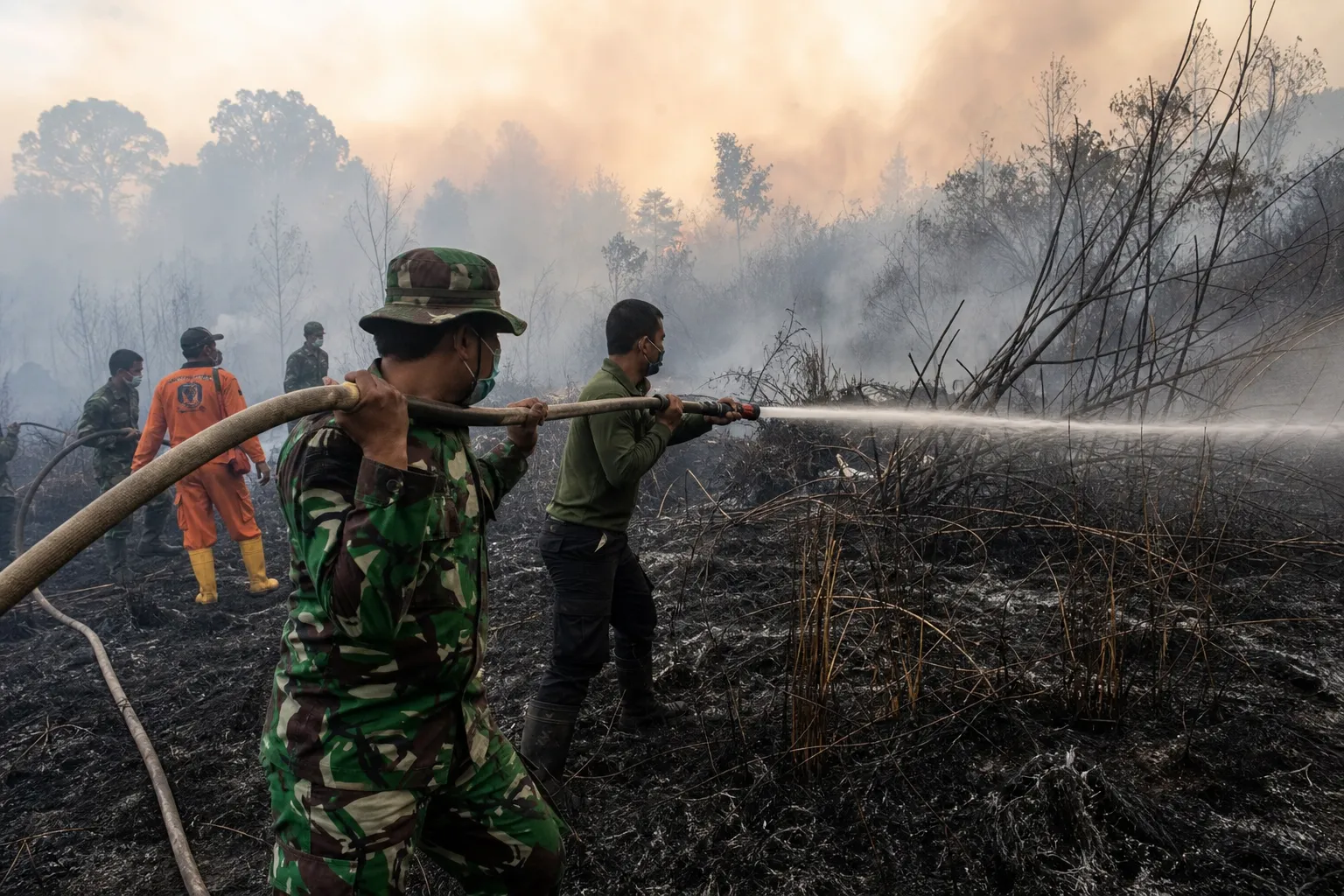
Forest fires in Indonesia, which have persisted for most of the year and intensified in recent weeks, have caused hazardous haze to spread to Singapore, Malaysia, Brunei and the Philippines. Indonesian authorities have focused firefighting efforts in six provinces of Sumatra and Kalimantan, although fire hotspots have also been recorded in Java, Sulawesi and West Papua, ABC News Australia reports.
Burned area and causes of the fires
According to SiPongi, a fire monitoring service under Indonesia's Ministry of Forestry, more than 202,000 hectares burned in the country from the start of the year through June — almost three times the area of Singapore. In July alone, fires affected nearly 95,000 hectares, of which more than 73,300 hectares were in Sumatra and Kalimantan. Official data for August had not yet been available at the time of publication.
West Kalimantan was hit hardest, where wild orangutans live in national parks and conservation areas. Indonesia's Meteorological, Climatological and Geophysical Agency links the widespread drought to a strong El Niño, while noting that an ignition source, including human activity, is required for fires to start.
Indonesia's Ministry of Forestry reported cases of illegal land sales, after which plots were burned to establish oil palm plantations. Fires were also recorded being used to clear areas for permitted road construction. Indonesian police arrested 72 people on suspicion of setting forest fires. Investigators are reviewing financial documents to determine whether companies may have financed or ordered land clearing.
More current news is available on the UA.News Telegram channel Telegram.
Firefighting and consequences for the region
More than 39,000 people, including military personnel, police officers, Ministry of Forestry staff, local authorities and volunteers, were involved in the joint firefighting operation. Operations are conducted on the ground and from the air, including water drops and weather modification measures. Authorities cited difficult access to fire sites, the remoteness of water sources, large burned areas, wind and smoke among the obstacles.
Unhealthy air quality levels were recorded in several districts of the Malaysian state of Sarawak, which borders Indonesia on the island of Borneo. Malaysia's Ministry of Health said that the number of asthma cases rose by 259% in the last week of August amid worsening air quality.
In Manila, smoke from Indonesian fires worsened air quality to an extremely unhealthy level between August 30 and September 2. According to research by the ASMPH Center for Research and Innovation and the Breathe Metro Manila network, pollution levels were more than four times above the WHO's recommended guideline. The ASEAN Specialized Meteorological Centre activated a Level 3 alert — the highest level of alarm for transboundary haze — for southern Southeast Asia.


