
Rabbi Shmuel Rabinowitz explained the meaning of Simchat Torah joy — Jerusalem Post
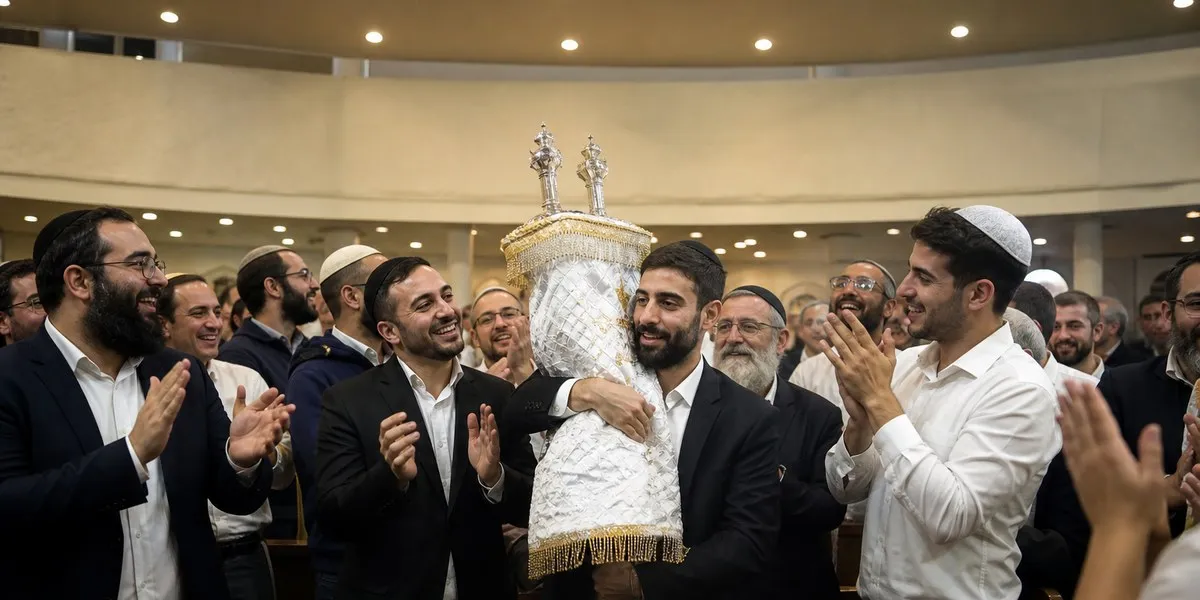
In Israel, Rabbi of the Western Wall and Holy Sites Shmuel Rabinowitz explained that Simchat Torah is a holiday not only marking the completion of the annual Torah-reading cycle, but also the immediate beginning of a new cycle. He wrote about this in a column for the Jerusalem Post.
According to Jewish custom, on this holiday, after completing the reading of the portion "Vezot HaBeracha," the first portion of the Torah, "Bereishit," is immediately read. Rabinowitz cited Rabbi Yaakov ben Rabbeinu Asher, who wrote that "Bereishit" is read immediately so that completing the Torah would not be perceived as a refusal to continue reading it.
Completion as a beginning
In Rabinowitz's view, this sequence means that completing the reading is not a farewell to the Torah. It should open a new stage of study. He stressed that participation in the holiday can also be important for those who do not study the Torah regularly.
More current news is available on the UA.News Telegram channel Telegram.
The rabbi recounted a folk story about a peasant who danced with a Torah scroll despite not having opened books for a long time. When asked about it, the man said that he was celebrating just as he would celebrate his brother's wedding. According to the author, this example conveys the idea of the Jewish people's shared joy over the Torah and the tradition of studying it.
Joy for the future
Rabinowitz also retold a story cited by Rabbi Yitzchak Hutner in the book "Pachad Yitzchak" about Sukkot. Two students of Chidushei HaRim danced on Simchat Torah, but one of them quickly grew tired while the other continued dancing. Chidushei HaRim explained this by saying that the first rejoiced in what he had already learned, while the second rejoiced in the Torah he still had to study.
As Rabinowitz conveyed the words of Chidushei HaRim, on Simchat Torah people rejoice not only at completing the reading, but above all at the beginning of a new cycle. According to him, the new reading cycle places alongside one another those who studied extensively during the year and those who are only ready to begin.




