
Mercury threatens 951 Amazon communities — Mongabay
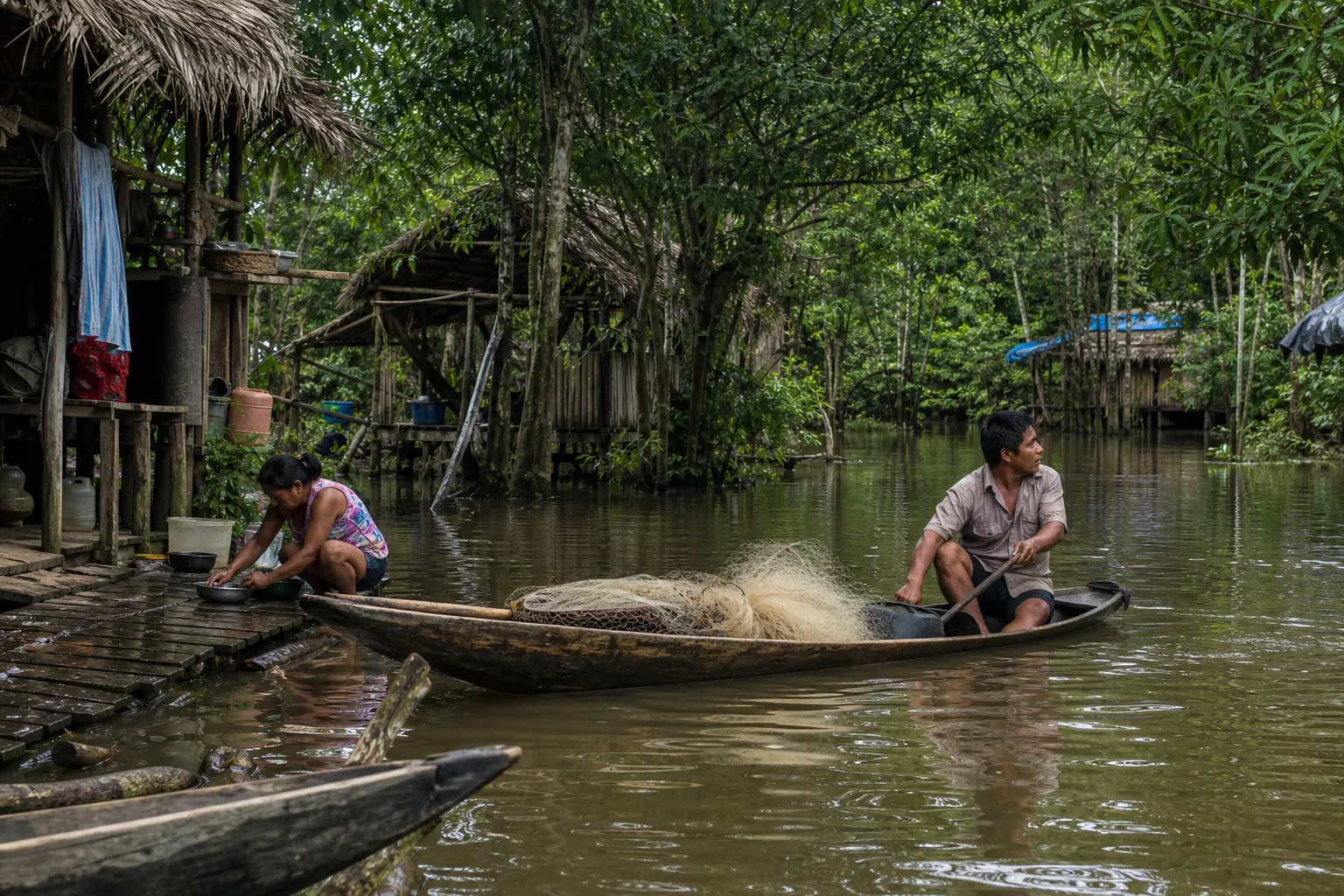
In the basins of the Madre de Dios River in Peru, the Beni River in Bolivia and the Madeira River in Brazil, 249 communities have experienced confirmed mercury exposure. Another approximately 702 communities in the region are at risk, but contamination levels have not been assessed there. These conclusions were reached by Mongabay after analyzing 39 scientific studies published between 1997 and 2024.
The publication compiled measurement data collected along 2,763 kilometers of three interconnected Amazon rivers. The database included 7,725 samples taken from people and 5,939 fish tissue samples; the studies involved at least 130 researchers.
Confirmed exposure and risks
In 220 of the 249 communities, or 88%, heavy metal levels significantly exceeded limits that the World Health Organization considers safe. At-risk communities are located no more than two kilometers from the studied rivers, between areas of active illegal gold mining and communities with confirmed contamination.
According to the data cited in the analysis, the WHO considers more than 2 micrograms of mercury per gram of hair to be a level at which health risks may arise. In some samples from the Madre de Dios basin, levels reached 44 micrograms per gram; in the Beni basin, 32 micrograms; and in the Madeira basin, 150 micrograms per gram.
More current news is available on the UA.News Telegram channel Telegram.
Fish as a route of mercury exposure
Mercury is used to separate gold from sediment during illegal mining. Once it enters water, it can be converted into methylmercury, the most toxic form. Plankton absorbs the metal, after which it accumulates in fish and its concentration increases at each successive level of the food chain.
Fish consumption is the main route by which mercury enters the bodies of residents of Indigenous and riverside communities in the studied basins. High concentrations of the metal were recorded in fish samples from at least 19 species in Brazil, 15 in Bolivia and two in Peru. According to Claudia Vega, the mercury program coordinator at the Amazonian Scientific Innovation Center, such levels are associated with risks of memory loss, headaches, and disorders of the central nervous and cardiovascular systems.
In the Madre de Dios basin, mining activities destroyed more than 95,000 hectares of forest between 1997 and 2024, according to the MapBiomas platform. In the Beni and Madeira basins, the area of land disturbed by mining exceeded 9,000 and 28,000 hectares, respectively.


