
Swiss glaciers lost 5.5% of their mass this year — Interia
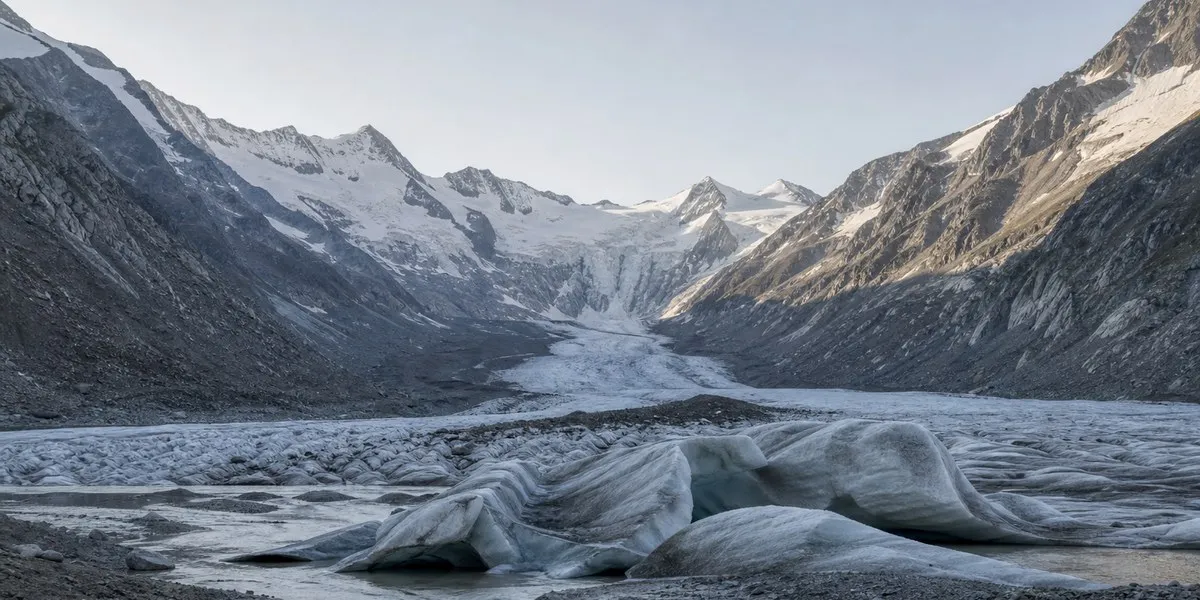
Swiss glaciers lost 5.5% of their ice mass this year, the second-largest percentage decline in the history of local observations. Switzerland has 1,289 glaciers, 166 of which are continuously monitored, Interia reports, citing the GLAMOS institute.
Accelerated melting
Glaciologist and University of Helsinki professor Petri Pellikka said that the Alps are currently experiencing an exceptionally rapid reduction in ice cover. According to him, the trend of declining glacier mass had already been recorded in the early 2000s, but the latest reduction is particularly significant.
Over the past five years, almost one-fifth of Switzerland's glaciers has melted. Pellikka believes that many Alpine glaciers may disappear completely before the end of the 21st century. The scientist noted that this process can be slowed, but there is likely no time left for its full reversal.
More current news is available on the UA.News Telegram channel Telegram.
Risks for water and energy
The disappearance of glaciers could cause drinking water shortages in Central Europe and jeopardize electricity generation at hydropower plants. Problems with water for irrigation also pose a risk to food production.
Professor Pellikka stressed that glaciers serve as natural water reservoirs and a kind of dam. Their melting or destruction may cause large masses of meltwater or water from glacial lakes to flow down into valleys, causing floods and landslides.
Experiments involving covering glaciers with special blankets, including on the Zugspitze glacier in Germany, do not solve the problem, the scientist believes. In his view, it is necessary to reduce the amount of carbon dioxide in the atmosphere by cutting the use of fossil fuels and increasing forested areas.




