
Protests against the transit of grain from Russia are taking place in Latvia

On November 7, a protest is taking place in the Latvian city of Jēkabpils calling for a halt to the transit of grain from Russia and the temporarily occupied Ukrainian territories through the country, since this grain is technically grain stolen from Ukrainian farmers.
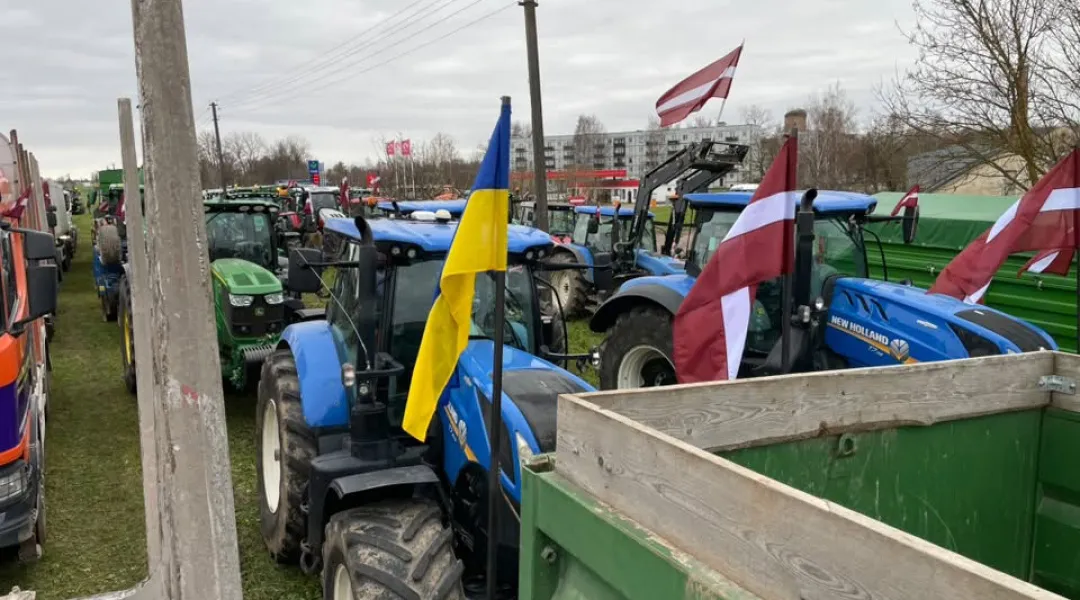
Participants in the “No to Blood-Stained Grain!” rally, carrying posters and flags, are demanding a complete halt to the transit of Russian grain through Latvian territory.
More than 300 people and about 200 vehicles are taking part in the protest. In addition to their own cars decorated with Latvian and Ukrainian flags, activists have brought agricultural machinery, tractors, and trucks.
Latvian Prime Minister Andris Kulbergs, who has repeatedly reaffirmed his stance of “No to blood-stained Russian grain!”, also took part in the demonstration.
Speaking to the protesters, he acknowledged that it is currently impossible to completely halt this transit, as the European Union (EU) has not reached a consensus on this issue, and that a unilateral decision could lead to negative economic consequences for the country, including penalties that could also affect Latvian farmers.

Kulbergs noted that all the Baltic states are raising the issue of banning the transit of “blood grain from Russia” at the EU level.
According to the Latvian State Revenue Service (VID), grain transit from Russia through Latvia increased 3.1-fold over the first 10 months of this year compared to the same period in 2025.
This was reported by Ukrinform.
As a reminder, Israeli importers no longer purchase grain if there is suspicion that it was illegally exported from Ukraine. This was stated by Israel’s new ambassador, Roy Rosenblit, while commenting on the incident involving Ukrainian grain at the port of Haifa.
Russian dictator Vladimir Putin has instructed the government to begin purchasing grain from Russian farmers for the state intervention fund. This comes amid logistical challenges and a decline in export demand for Russian grain.




